
TL;DR: why did the UK fine Wayfair over countdown timers?
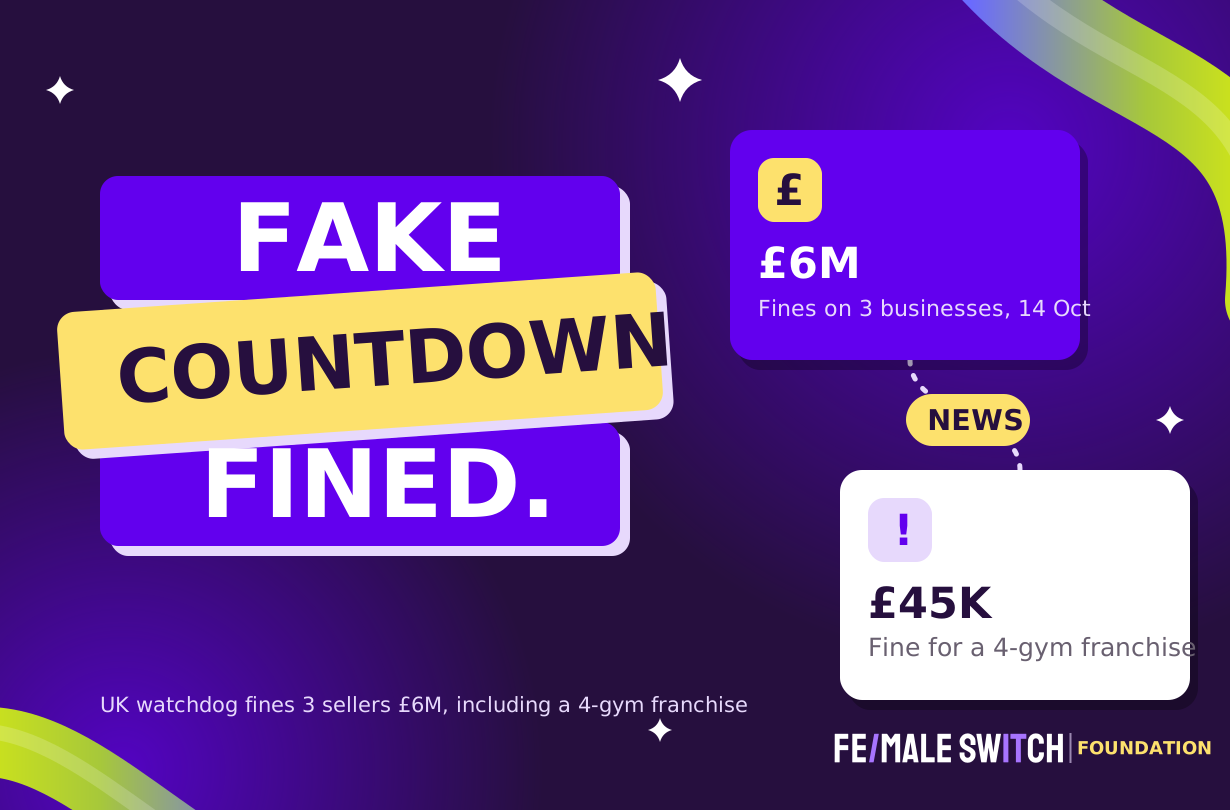
On 14 October 2026, the UK Competition and Markets Authority (CMA) fined three businesses £6 million in total for misleading sales tactics. Wayfair paid £4.8 million for one-day “deals” and countdown timers when prices stayed the same or dropped after the deadline. Appliances Direct paid £1.2 million for pre-ticked paid extras and recycled “limited-time” codes, and Gold’s Gym, a franchise with just four London gyms, paid £45,000 for hiding its joining fee. The same tactics are already illegal in the EU, and a new EU Digital Fairness Act is expected soon. If you sell online, check your checkout this week.
That countdown timer on your sales page might feel like harmless marketing. In the UK, it just cost a furniture giant £4.8 million.
The bigger news for small founders is the third name on the list. Gold’s Gym isn’t a chain with a legal department; it’s a franchise running four gyms in London. It was fined £45,000 and has to refund 726 customers because its joining fee wasn’t part of the price people saw. Regulators are not only going after the giants.
What happened
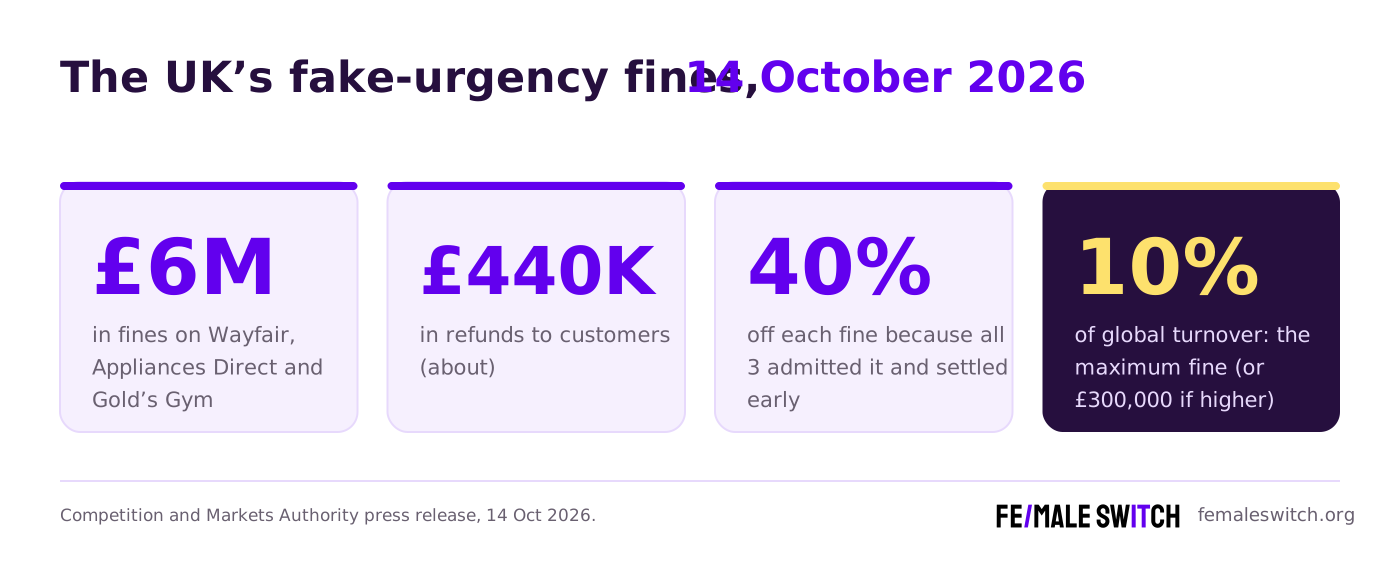
On 14 October 2026, the CMA announced fines of £6 million on three businesses for misleading sales tactics. All three admitted breaking the law and settled early, so each got a 40% reduction on its fine. Here is what each one did, according to the CMA:
Source: CMA press release, 14 October 2026.
Hayley Fletcher, the CMA’s Senior Director for Consumer Protection, said: “The time is up for this kind of behaviour. Businesses must treat their customers fairly and make sure they comply with the law – or risk hefty fines.”
Customers don’t need to do anything: Appliances Direct and Gold’s Gym will contact the people affected about their refunds.
Why a four-gym franchise matters to you
These fines come from new powers. Under the UK’s Digital Markets, Competition and Consumers Act 2024 (DMCC Act), the CMA can now decide on its own that consumer law was broken, without going to court first. It can then order refunds and fine a business up to 10% of its global turnover, or £300,000 if that’s higher.
Read that last part again. For a small business, the cap isn’t 10% of a small turnover; it can be £300,000. Gold’s Gym’s £45,000 was the fine after the 40% settlement discount, which suggests a starting figure of about £75,000 (our calculation). For a business with four sites, that’s a serious bill for one missing line on a pricing page.
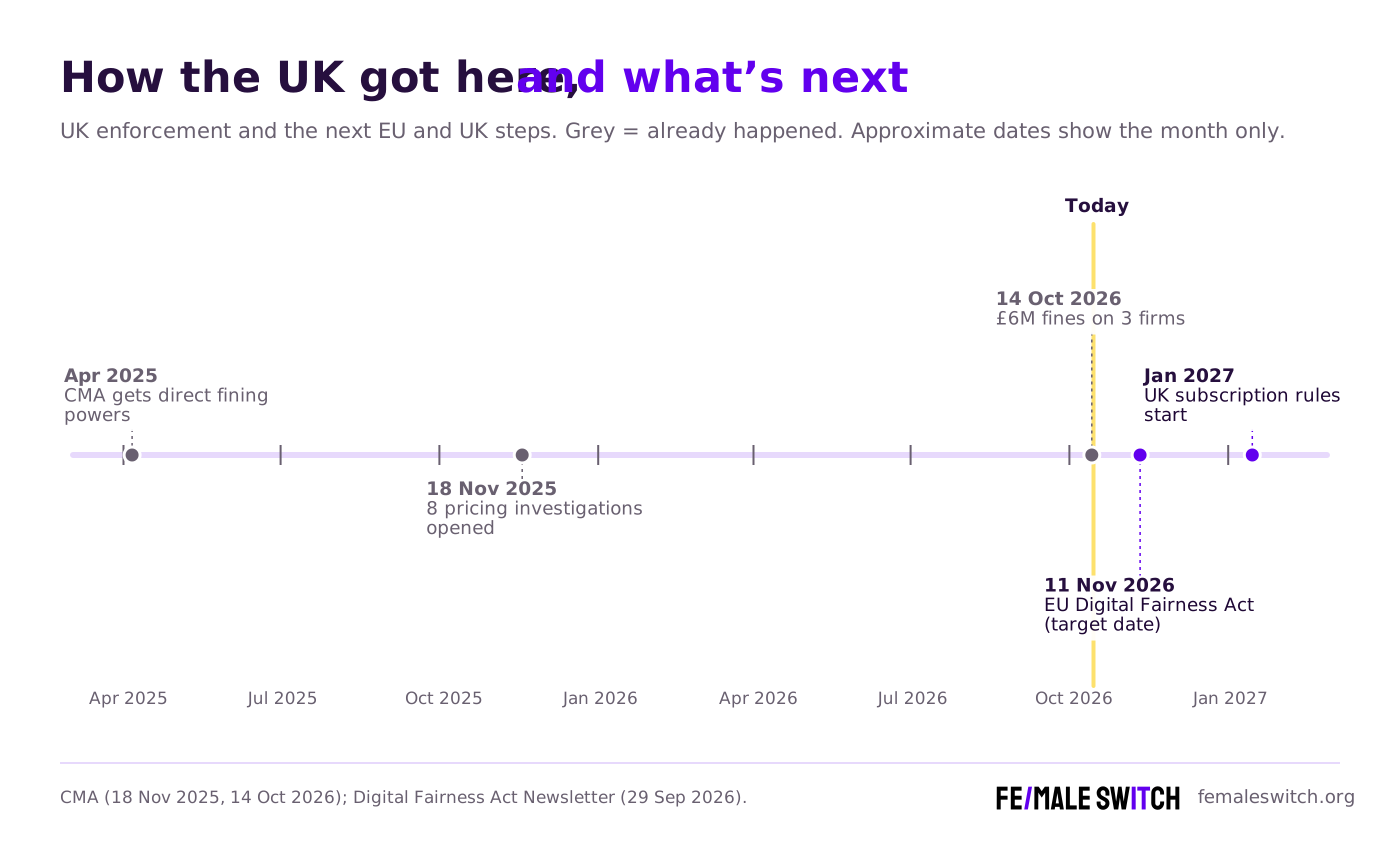
This isn’t a one-off. The case started with a CMA review of more than 400 businesses in 19 sectors, announced on 18 November 2025, which led to eight investigations and advisory letters to 100 businesses, including gyms, driving schools, fashion, cinemas and online vouchers. A Department for Business and Trade report cited in that announcement found drip pricing at 60% of the gym businesses it reviewed.
In its 18-month update, also published on 14 October, the CMA said it has now opened 20 investigations and settled 7 of its 8 original online pricing cases. It promised to “bear down on drip pricing, misleading time limited offers or fake reviews,” and said it is also reviewing how online retailers show delivery fees. Its message to businesses: “The rules are clear, and businesses have had ample time to comply.”
Does this apply in the EU?
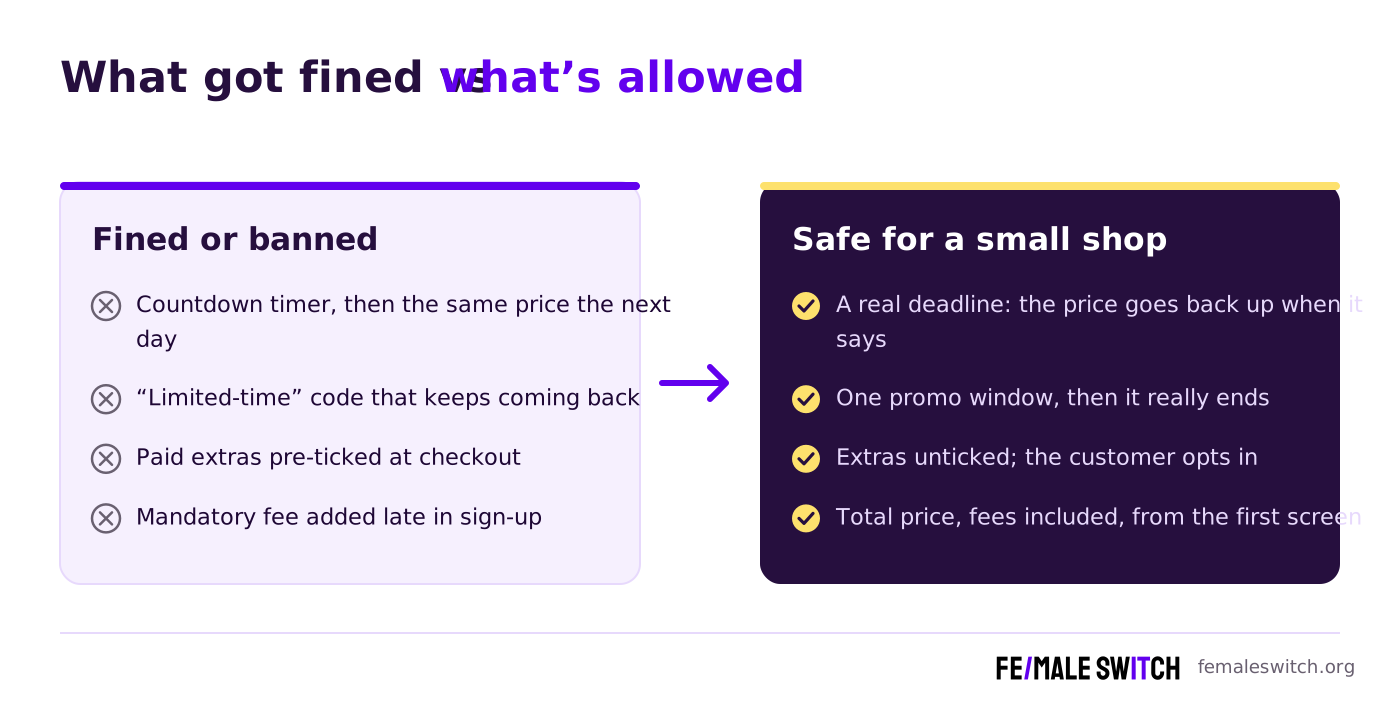
You’re reading this in Europe, so here’s the important bit: none of these tactics is legal in the EU either. The UK rules and the EU rules come from the same roots, and the EU versions are already in force. Status labels: Adopted means it’s already law, Proposed means it’s in a published bill, and Debated means there is no legal text yet.
Sources: CMA, EUR-Lex. Table simplified; national laws add detail.
The EU’s Unfair Commercial Practices Directive lists practices that are unfair in every case. Point 7 of that list is “falsely stating that a product will only be available for a very limited time” to push an immediate decision, which is the Wayfair problem almost word for word. For widespread cross-border cases handled together by EU consumer authorities, national fines must be able to reach at least 4% of the trader’s annual turnover.
Pre-ticked extras are covered by Article 22 of the Consumer Rights Directive: you need the customer’s express consent for any extra payment, and if you used a default option they had to untick, they can get that money back. And if you show a discount, the Price Indication Directive says the reference price must be the lowest price you charged in at least the 30 days before the reduction.
What’s coming next is the EU Digital Fairness Act, which is expected to deal with dark patterns, subscription traps and influencer marketing. According to the Digital Fairness Act Newsletter, the Commission’s planning document of 29 September 2026 lists a consumer package including the Act for the 11 November 2026 College meeting. That date is indicative, not final, and no legal text has been published, so for now it’s Debated. If you follow EU digital rules, you’ll know how often these dates slip; mean.ceo tracked the same pattern with the stalled Digital Omnibus on cookies and GDPR.
What this means for you
Most bootstrapped founders copy sales tactics from big brands because they seem to work. This week’s fines are a reminder that the big brands were sometimes breaking the law. Here’s what to do.
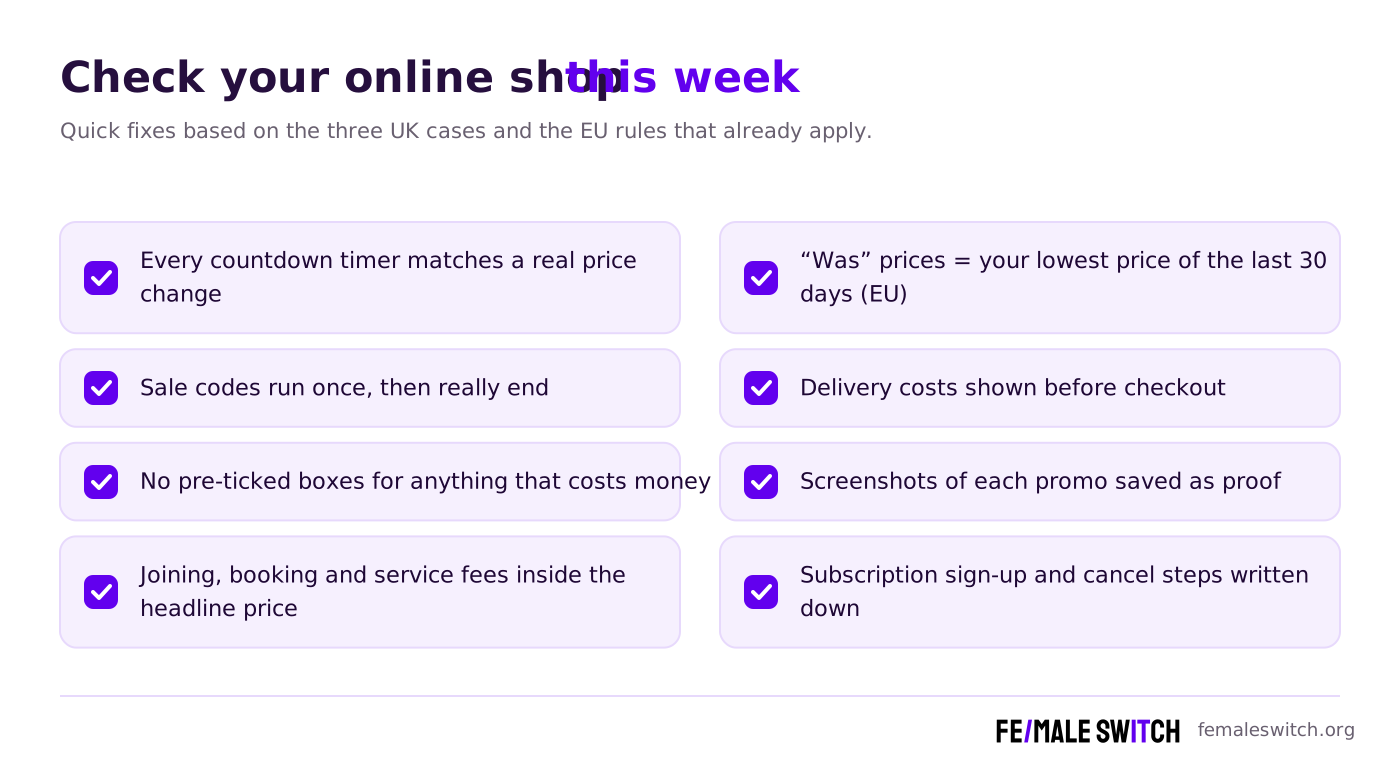
- Audit every timer and “ends tonight” banner. If the price doesn’t really change when the timer hits zero, remove the timer. Real urgency (a launch price that really ends, limited cohort places) is fine. Our guide to product pricing psychology shows honest ways to make people decide.
- Untick every paid extra. Gift wrap, express delivery, setup fees, “priority support”: let customers choose them. If you’re building a shop now, set this up from day one; our no-code e-commerce launch guide covers the checkout basics.
- Put the total price first. Joining fees, booking fees and mandatory service charges belong in the headline price, not on step three. Rework your product landing page so the first price people see is the price they pay.
- Check your “was” prices. In the EU, a discount must be measured against your lowest price of the past 30 days. A permanent “50% off” is a fake discount.
- Rewrite pressure copy. Replace “Only today!” with real reasons to buy: what the customer gets and why now. Tips on product copy that converts without tricks.
- Keep proof. Save screenshots and dates of every promotion. If a regulator or a customer asks, you can show the offer really ended when you said.
- Keep customers honestly. Tactics that trick people into buying also bring refunds and chargebacks. Work on customer retention instead: it costs less than a fine.
For the bigger picture of how EU rules are changing for women founders and small companies, see our overview of EU policy changes for women entrepreneurs. On the company-law side, the EU Inc proposal is still waiting for a committee vote, as we reported when the EU Inc vote was postponed.
Learn to sell without tricks
The Fe/male Switch startup game takes you from idea to first paying customers in weekly quests, with an AI co-founder and a community of founders. You practise pricing, offers and launches in a safe sandbox before you try them on real customers.
👉 Start the game
FAQ: fake countdown timers and drip pricing
Are fake countdown timers illegal?
Yes, in both the UK and the EU. Falsely saying a product or price is only available for a very limited time, to push people into a quick decision, is banned in all circumstances under the UK DMCC Act and is on the blacklist of the EU Unfair Commercial Practices Directive. A timer is fine if the offer really ends when it says.
Why was Wayfair fined £4.8 million?
The CMA found that Wayfair advertised products as “Daily Deals” and 24-hour “Flash Deals” with countdown timers and messages like “Here Today, Gone Tomorrow”, but many products stayed at the same price or lower after the deadline. Wayfair admitted the breach and settled, which cut its fine by 40%.
Can a small business be fined for drip pricing?
Yes. Gold’s Gym, a UK franchise with four gyms in London, was fined £45,000 and ordered to refund £9,220 to 726 customers for leaving its joining fee out of the total price. Under the DMCC Act, the maximum fine is 10% of global turnover or £300,000, whichever is higher.
Are pre-ticked boxes allowed at checkout?
Not for anything that costs money. UK and EU law require the customer’s express consent for extra payments. Under Article 22 of the EU Consumer Rights Directive, a customer charged through a pre-ticked box can get the money back. Appliances Direct was fined £1.2 million partly for this.
What is the EU Digital Fairness Act?
It’s an expected EU law on dark patterns, subscription traps and influencer marketing. A Commission planning document of 29 September 2026 lists it for the 11 November 2026 College meeting, but that date is indicative and no legal text has been published yet.
How should I show a discount in the EU?
Show the prior price next to the sale price, and make that prior price the lowest price you charged in at least the 30 days before the discount, as the Price Indication Directive requires. National rules can allow exceptions, for example for perishable goods.
