
TL;DR: what does the new GEM women's report say?
The Global Entrepreneurship Monitor's 2025/2026 Women's Entrepreneurship Report, published on 8 October 2026, surveyed more than 150,000 adults in 48 economies. Women are now almost as likely as men to start a business (12% vs 14%) and lead about 40% of high-potential new businesses. But very few of those ambitious businesses become established ones: women's high-potential rate falls from 6.0% at the start-up stage to 0.1% among established businesses. The two hurdles behind the drop are money (about 70% of informal investment goes to men) and care (women are 55% more likely to close a business for family reasons). Here's what that means if you're building a business in Europe.
For years, the story about women entrepreneurs was that too few of us start. The new data says that story is out of date. Women are starting businesses almost as often as men, and many of those businesses are ambitious: digital, innovative, international.
The problem is what happens next. According to the GEM 2025/2026 Women's Entrepreneurship Report, released on 8 October 2026, women's high-potential businesses largely disappear before they become established companies. If you're a woman building a business in Europe, this is the stage to plan for, from the first day.
What the new GEM report found
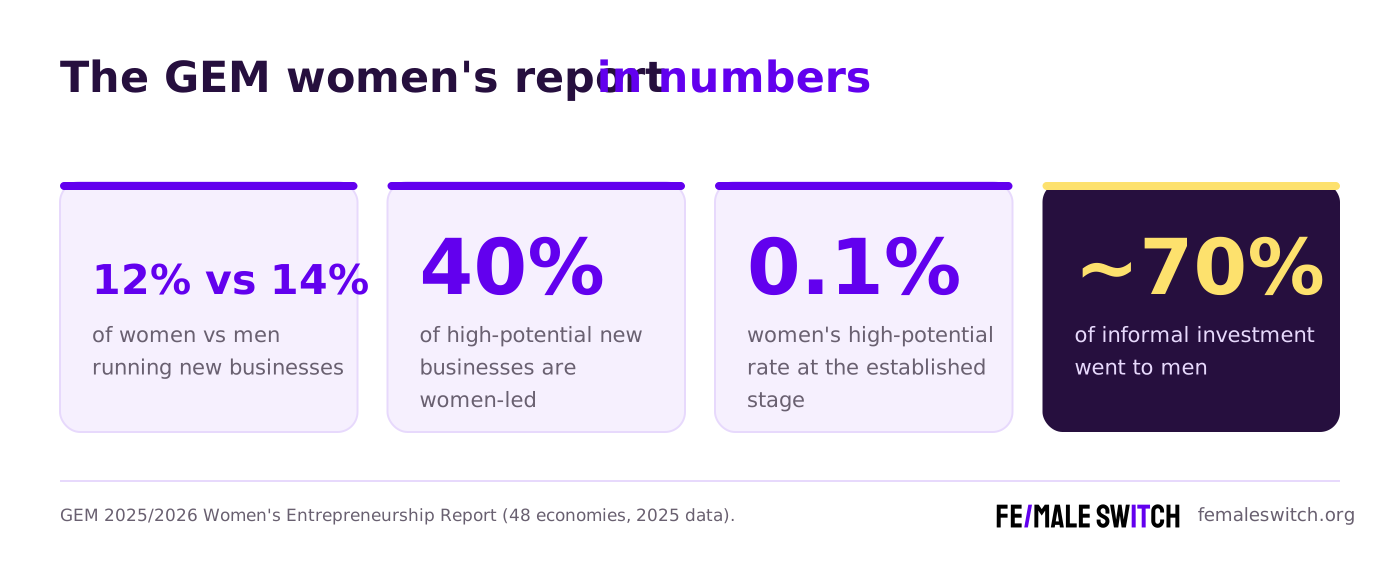
The Global Entrepreneurship Monitor is the world's largest study of entrepreneurship, run by a network of universities and research teams. This edition, subtitled "How metrics shape the narrative", is based on 2025 surveys of 150,799 adults in 48 economies. The headline findings, from GEM's announcement:
- The start-up gap is small. 12% of women and 14% of men were starting or running a new business in 2025.
- Women are ambitious. Women lead about 40% of high-potential new businesses, and a little over half of women's new businesses qualified as high-potential.
- Women innovate. Women make up 43% of entrepreneurs reporting innovation with AI, 44% of those emphasising digitalisation, 42% of those with new products or processes and about 40% of those targeting international markets.
- But the gap widens with age. Women's high-potential rate is 6.0% at the early stage and 0.1% among established businesses, which GEM describes as 98% lower. The women-to-men ratio in established business ownership is 0.69, the widest gap at any stage.
The scale stage is where women disappear
Ambition at the start isn't the issue. The drop happens between launch and the point where a business becomes stable, profitable and established, typically after three and a half years in GEM's definitions. That is the stage where a founder needs more capital, more time and usually more people.
The pattern holds in Europe too. In GEM's previous report, with 2024 data, European women's early-stage rate was 7.5% against 9.9% for men, a ratio of 0.76. For established businesses, the ratio fell to 0.63 (5.5% vs 8.7%). Across the continent, the picture varies widely:
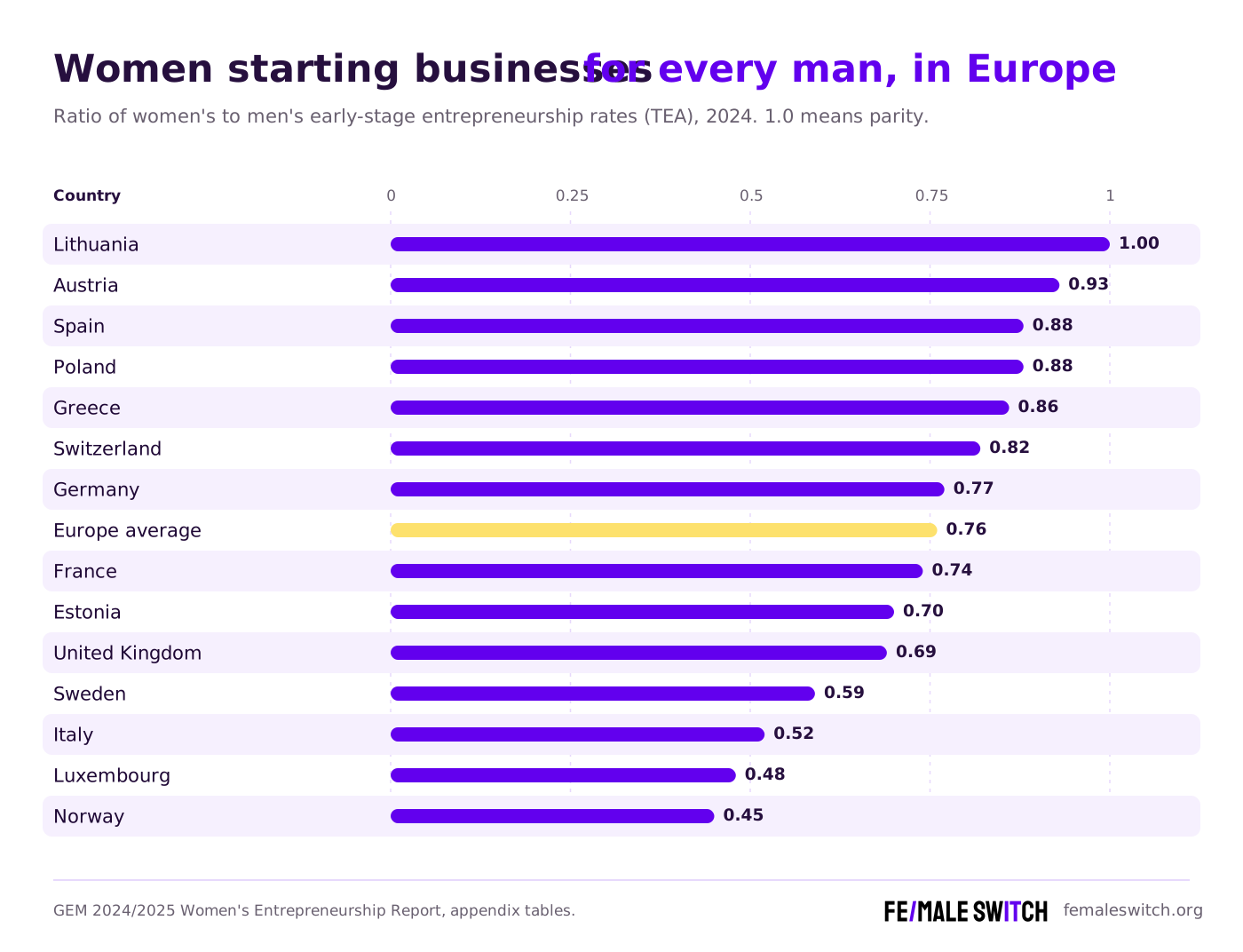
Lithuania had full parity in 2024. Women in the UK and Estonia start businesses at high rates, but men start even more. In Norway, Luxembourg and Italy, women start about half as many businesses as men. GEM's 2025 country figures for Europe are in the full report; the 2024 figures above are from the previous edition.
Hurdle 1: money
Women invest less in their businesses and receive less from others. In 2025, 6.7% of women reported a recent investment in a business, against 9.2% of men, and women invested about a third less capital on average. About 70% of informal investment, money from family, friends and angels, went to men.
In Europe, the 2024 figures show the same gap. 5.4% of women and 7.2% of men had recently invested in a business. The median investment was $2,838 for women and $4,730 for men, and only 35.1% of the most recent investments went to a woman entrepreneur.
Formal venture capital is even more unequal: in 2026, all-female teams in Europe received about 1% of VC deal value, according to PitchBook. See our deep dive into the startup funding gender gap.
Hurdle 2: care
The second reason businesses close is family. Globally, women were 55% more likely than men to name family or personal circumstances as the reason they exited a business (20% vs 13%). In Europe in 2024, the figures were 18.4% for women and 11.9% for men.
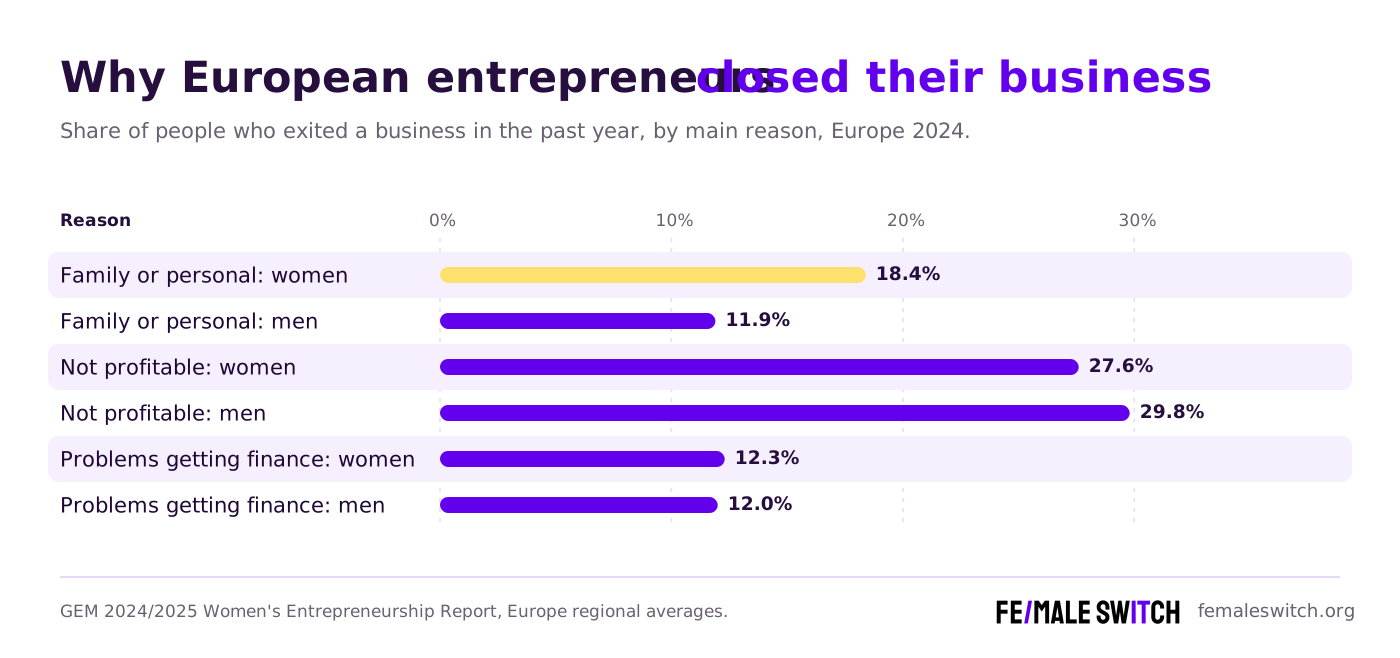
Notice what's similar: women and men in Europe close businesses for lack of profit or finance at almost the same rates. The difference is care. One of the six policy directions in the new report is to "address caregiving challenges directly". For founders planning a family, see our guide to maternity leave while founding a startup and how to balance family and business.
Why "how metrics shape the narrative" matters
The report's subtitle is a point in itself. If you only count how many women start businesses, the gap looks almost closed. If you count who becomes established, who gets investment and who exits for family reasons, the picture changes. "Better metrics lead to better understanding, better policy, and better investment decisions," said GEM Executive Director Aileen Ionescu-Somers.
For founders, the lesson is the same: track the numbers that predict survival, not just the ones that feel good at launch. Our women in tech data report and the women entrepreneurs statistics hub on mean.ceo collect the latest figures.
What this means for you
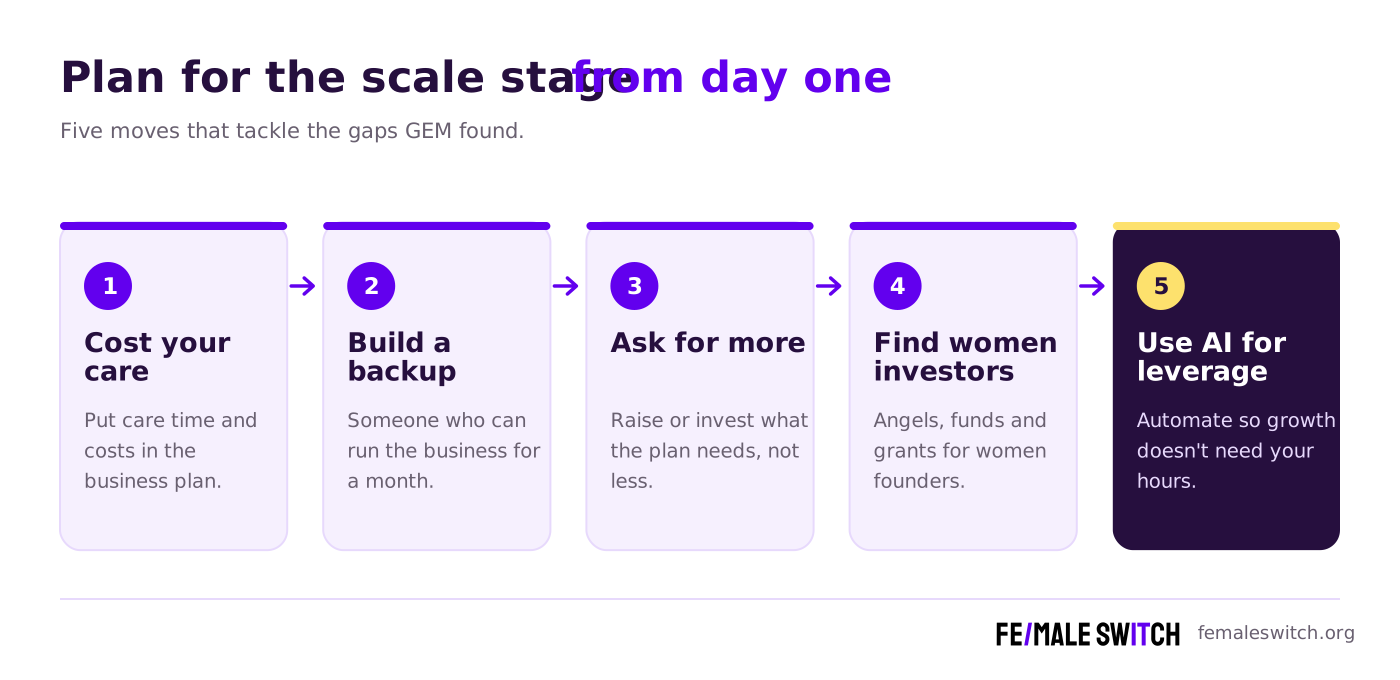
- Put care into the business plan. Count the hours and the costs of childcare or eldercare in your plan, the way you'd count rent. A plan that assumes you work 60 hours a week forever is a plan for the exit statistics.
- Build a backup before you need it. Document your processes so a freelancer, partner or co-founder can run the business for a month. See building systems as a solo founder.
- Ask for what the plan needs. Women invest a third less on average. Under-capitalising a business that could grow is one of the quietest ways it stalls.
- Go where the money for women is. Look for angel investors backing women, women-focused funds and grants for female entrepreneurs in Europe.
- Use AI to grow without growing your hours. Women are already 43% of entrepreneurs innovating with AI. Use it to automate the routine work that would otherwise eat your scale-up time.
If you're bootstrapping, you don't need to raise to become established. You do need a business that survives your life events. Our guide to bootstrapping as a female founder covers how.
Build your business with a team behind you
The Fe/male Switch startup game takes you from idea to first paying customers in weekly quests, with an AI co-founder and a community of women founders.
👉 Start the game
FAQ: the GEM Women's Entrepreneurship Report 2025/2026
What is the GEM Women's Entrepreneurship Report?
A report by the Global Entrepreneurship Monitor on women's entrepreneurship worldwide. The 2025/2026 edition, published on 8 October 2026, is based on 2025 surveys of 150,799 adults in 48 economies.
How many women start businesses compared with men?
In 2025, 12% of women and 14% of men were starting or running a new business, across the 48 economies GEM surveyed.
What is the 98% drop in the GEM report?
Women's rate of high-potential entrepreneurship is 6.0% at the early stage but 0.1% among established businesses. GEM describes this as 98% lower.
Why do women close businesses?
Lack of profit is the most common reason for both women and men. The big difference is family: women are 55% more likely than men to close a business for family or personal reasons (20% vs 13%).
How much investment do women entrepreneurs get?
6.7% of women vs 9.2% of men reported a recent business investment, women invested about a third less, and about 70% of informal investment went to men.
Which European country has the most women entrepreneurs?
In GEM's 2024 data, the UK (11.7%), Lithuania (11.6%) and Estonia (11.0%) had the highest early-stage rates for women. Lithuania was the only country at full parity with men.
