
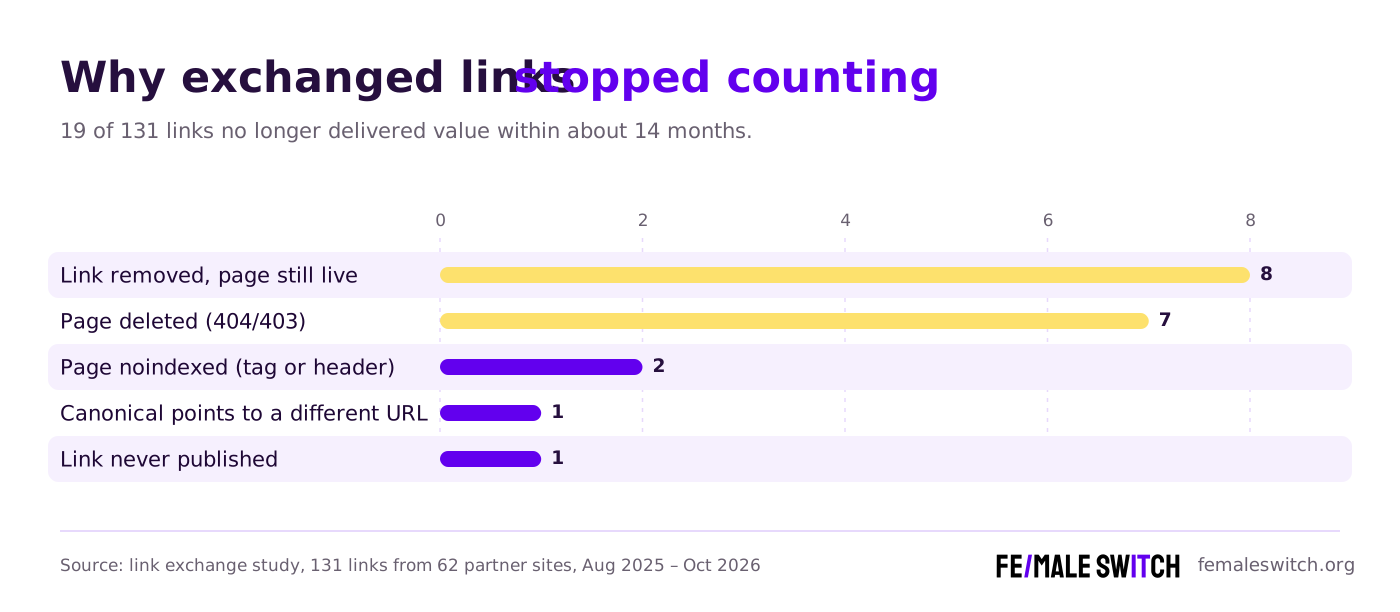
TL;DR: Link exchange can get a bootstrapped startup backlinks without a budget, but in our audit of 131 exchanged links, 14.5% stopped delivering value within about 14 months. Run 10 checks on the partner's page before you place their link, then an 11th check 7 days later. Say no to open-publishing platforms, and accept insertions into pages Google has already indexed only. The full data is in our 14-month link exchange study.
As a bootstrapping founder, I get it: a link exchange looks like free SEO. Someone emails you, offers a link, and asks for one back. No budget, no agency.
We tested exactly that. For about 14 months, our test websites said yes to inbound link exchange requests. We never pitched one ourselves; every exchange started with a partner contacting us. These were test sites in our portfolio, not the sites we run our business on.
Then we audited every link we got back: 131 links from 62 partner sites. Only 64.9% ended up as a dofollow link on a page Google has indexed.
The losses came from things you only catch if you check. So we wrote the checks down. Here they are, with what each one would have caught.
Before you say yes: is this link exchange worth it?

Some requests need a human decision before any technical check.
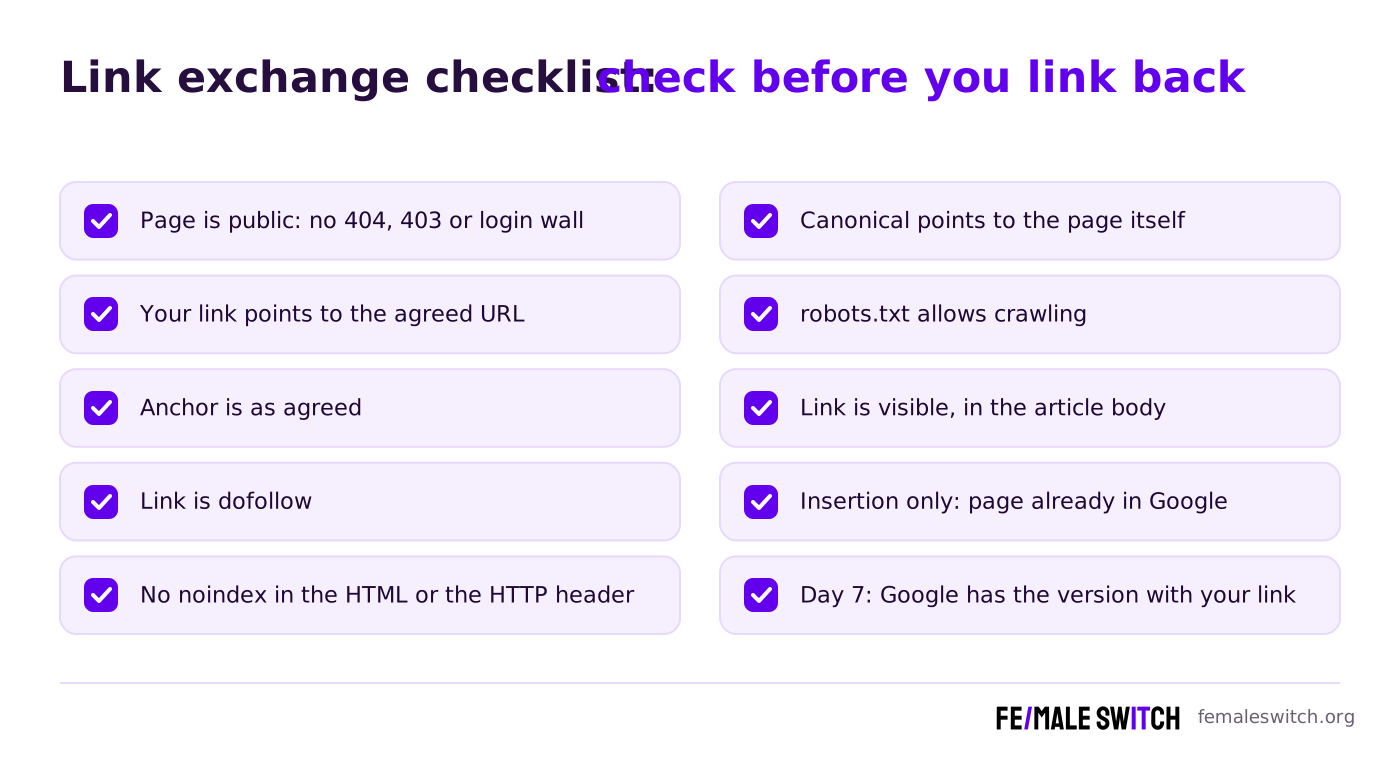
The 11 link exchange checks
Run checks 1 to 10 before you place the partner's link. Every one must pass. If one fails, publish nothing and tell the partner what to fix. Check 11 comes 7 days later.
Niche edit or new guest post? Why we accept link insertions only
A link insertion, also called a niche edit, adds your link to an article that already exists. A guest post is a new article written for the exchange.
We now accept insertions only, and only into pages Google has already indexed (check 10). We made that rule on 14 October 2026, after the audit.
The reason is simple. A page Google has already indexed has proven it can be indexed. A brand-new page might never make it, and in our data 1 in 5 live links sat on a page Google hadn't indexed.
Product placement in listicles: run the same checks
Many link exchange requests ask to add a product to a "best tools" or "top 10" list, often called product placement in listicles.
Our audit didn't track listicles separately, so we have no figure for them. But a listicle placement is just a link insertion into an existing article, so the same 11 checks apply:
- Is the list on a real, indexed page, or on an open-publishing platform?
- Is the link dofollow, visible, and in the body of the list?
- Does Google have the version of the list with your entry 7 days later?
If money changes hands, it's no longer a link exchange. Google's spam policies (outside source, not our data) say paid links must be marked rel="sponsored" or rel="nofollow". Every exchange in our experiment was unpaid.
Guest posting on open-publishing platforms: why we decline
Open-publishing platforms let anyone post an article. They look like an easy guest posting win. In our audit they were the worst placement type by far.
Of the 6 links we received on them:
- 2 pages were deleted or made private.
- 1 page pointed search engines to a different URL.
- 2 of the 3 survivors were nofollow.
- The one dofollow survivor sat on a page Google hadn't indexed.
None of the 6 ended up as a dofollow link on a Google-indexed page. We now decline these by default.
The 7-day rule
This is how the exchange works for us now:
- The partner places our link in an existing, indexed article.
- The partner requests re-indexing in Google Search Console and sends us the URL and the date.
- We run checks 1 to 10.
- If they pass, we publish their link within 24 hours.
- 7 days after the re-indexing request, we check that Google has the version of the page with our link. If it doesn't, we remove their link.
How to run the day-7 check:
- Your link is in a new sentence: search site: + the exact URL + a few words from that sentence in quotes. It passes if Google finds the sentence.
- Your link is on words that were already on the page: a text search can't prove anything, because Google already had those words. Search site: + the URL, then open the page. It passes if the page is still in Google and your link is still live.
Conditions to send your link exchange partners
We now send these with our first reply. Copy and adapt them.
When a check fails later
Passing on day 7 isn't the end. Partners remove links too: in 5 of our 8 removals, the anchor words stayed on the page as plain text, so the link was taken out on purpose.
And partners were all-or-nothing. Only 2 of 62 kept some of our links and dropped others. So when one link from a partner disappears, check every link from that partner.
These end the exchange, and we delete their link from our site:
- The page is deleted (404/410) or made private (403).
- Our link is removed, including when only the hyperlink is taken out and the words stay.
- The link becomes nofollow, sponsored or ugc.
- The page is switched to noindex, in the HTML or the HTTP header.
- The canonical changes to point elsewhere.
- Our link isn't indexed within 7 days of the re-indexing request.
These don't end it, but update your records: the page moves with a redirect and our link is still there (26.1% of our pages moved, and 96.7% of those still carried the link), or the anchor gets a small variation such as a plural. Moved and deleted pages are the main risk with partner links on funded projects.
Always confirm in a real browser before you delete anything. If the failure is a server error, re-check after 24–48 hours first.
To automate the weekly part, follow our guide to building a free link exchange tracker.
Conclusion
A link exchange isn't free if 1 in 7 links quietly stop counting. In our data, 14.5% stopped delivering value within about 14 months, and only 64.9% were dofollow links on a page Google had indexed.
The fix is boring: check before you link back, insist on insertions into indexed pages, and check again on day 7. It turns a gamble into a deal you can verify.
Building your first startup on a bootstrap budget? Our startup game walks you from idea to first customer with an AI co-founder, including the marketing basics that don't cost money. Start playing for free.
FAQ
Is a link exchange safe for a small startup?
It can be, if you keep it small, relevant and verified. Google's spam policies (outside source) treat excessive link exchanges as link spam. Our checks focus on whether the link you get is real, visible, dofollow and indexed.
What should I check before giving a backlink in return?
Run checks 1 to 10: the page is public, your link and anchor are there, the link is dofollow, there's no noindex in the HTML or headers, the canonical is correct, robots.txt allows crawling, the link is visible, and the page was already in Google. Then run the day-7 index check.
Should I accept a link on a new guest post?
We don't any more. We accept insertions into pages Google has already indexed, because 1 in 5 of our live links (19.6%) sat on pages Google hadn't indexed.
What is a niche edit in link building?
A niche edit, or link insertion, adds your link to an article that already exists. We prefer them, because an article Google already indexes has proven it can be indexed.
How do I know if a partner removed my link?
Check the page's HTML for a link to your exact URL, not just the anchor words. In 5 of the 8 removals in our audit, the words were still on the page as plain text with the link taken out.
Are listicle placements a good link exchange?
They're link insertions, so judge them with the same 11 checks. We have no separate data on listicles. If the placement is paid, it's not an exchange, and Google's policies (outside source) say it needs a sponsored or nofollow attribute.
Should I accept links on open-publishing platforms?
We decline them. None of the 6 such links in our audit became a dofollow link on a Google-indexed page.
About the Author
Violetta Bonenkamp, also known as MeanCEO, is an experienced startup founder with an impressive educational background including an MBA and four other higher education degrees. She has over 20 years of work experience across multiple countries, including 5 years as a solopreneur and serial entrepreneur. Throughout her startup experience she has applied for multiple startup grants at the EU level, in the Netherlands and Malta, and her startups received quite a few of those. She’s been living, studying and working in many countries around the globe and her extensive multicultural experience has influenced her immensely.
