
TL;DR: what is the best balanced scorecard software in 2026?
For a startup or small team, start free: BSC Designer has a free-forever plan with the same features as its paid plan, Cascade is free for up to 2 users, and Perdoo is free for up to 5. For a growing company that needs automated data and reporting, Spider Impact (30-day free trial) and ClearPoint Strategy are the established choices, both priced on request. If your data already lives in Microsoft tools, Power BI Pro (US$14 per user per month) has built-in scorecards. Below we compare 13 tools on price, free options, strategy maps, automation and mobile apps, all checked on the vendors' own websites in October 2026.
👉 Track the numbers that matter for an early startup
I run my companies on a handful of numbers, and a balanced scorecard is one of the simplest ways to make sure those numbers aren't all about money. At Fe/male Switch we use the same idea: a few goals for customers, a few for how we work, a few for what the team learns, and the money follows. The problem is the software. Many lists of balanced scorecard tools are years out of date: QuickScore is no longer sold, Datapine became a construction analytics tool, and several "tools" are really consultancies.
So we checked 13 balanced scorecard software solutions on their own websites in October 2026, from free plans for startups to enterprise platforms, with prices where they are published.
What Is Balanced Scorecard Software?
The balanced scorecard was introduced by Robert Kaplan and David Norton in the Harvard Business Review in January 1992, in an article called "The Balanced Scorecard: Measures that Drive Performance". Explore insights from Harvard Business Review to see how the idea has developed since. The method balances financial results with three other perspectives, so a company doesn't optimise this quarter's revenue at the expense of everything else.
- Financial (or stewardship): revenue, margins, cash.
- Customer (or stakeholder): retention, satisfaction, market share.
- Internal process: the operations that deliver value, such as delivery time or quality.
- Learning and growth (or organisational capacity): skills, culture and systems.
Each objective on the scorecard gets at least one KPI. Learn more from the Balanced Scorecard Institute, which has trained and certified practitioners since the late 1990s. Balanced scorecard software does three things a spreadsheet does badly: it draws the strategy map linking objectives, pulls KPI data in automatically, and shows who owns which red number.
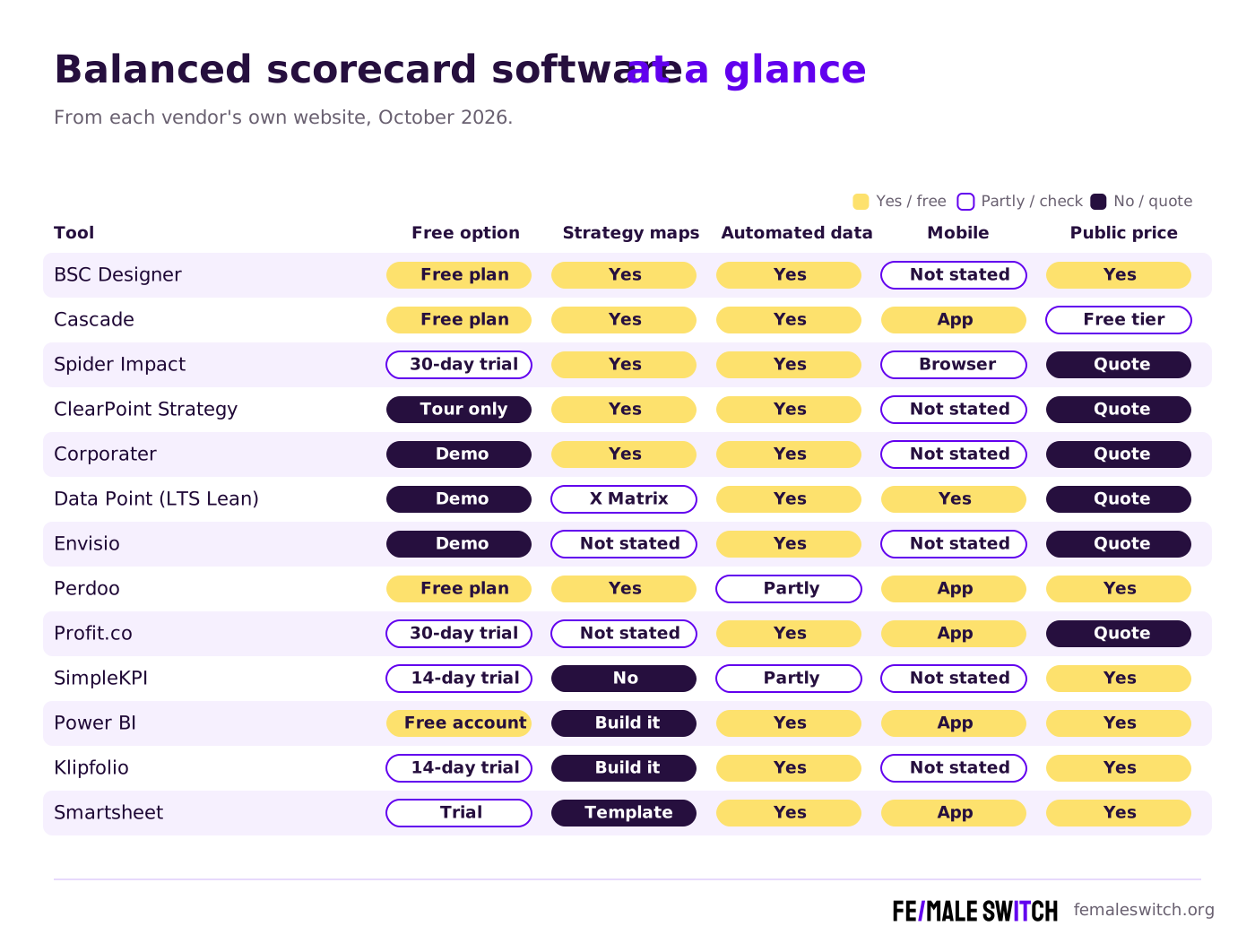
Best Balanced Scorecard Software Solutions Compared (2026)
Sources: vendors' websites, checked 15 October 2026. *Perdoo's per-user price assumes 100 users on annual billing; small teams pay more per user.
Dedicated Balanced Scorecard Software
These tools are built around the four perspectives, strategy maps and cascading objectives.
1. BSC Designer: the best free balanced scorecard software
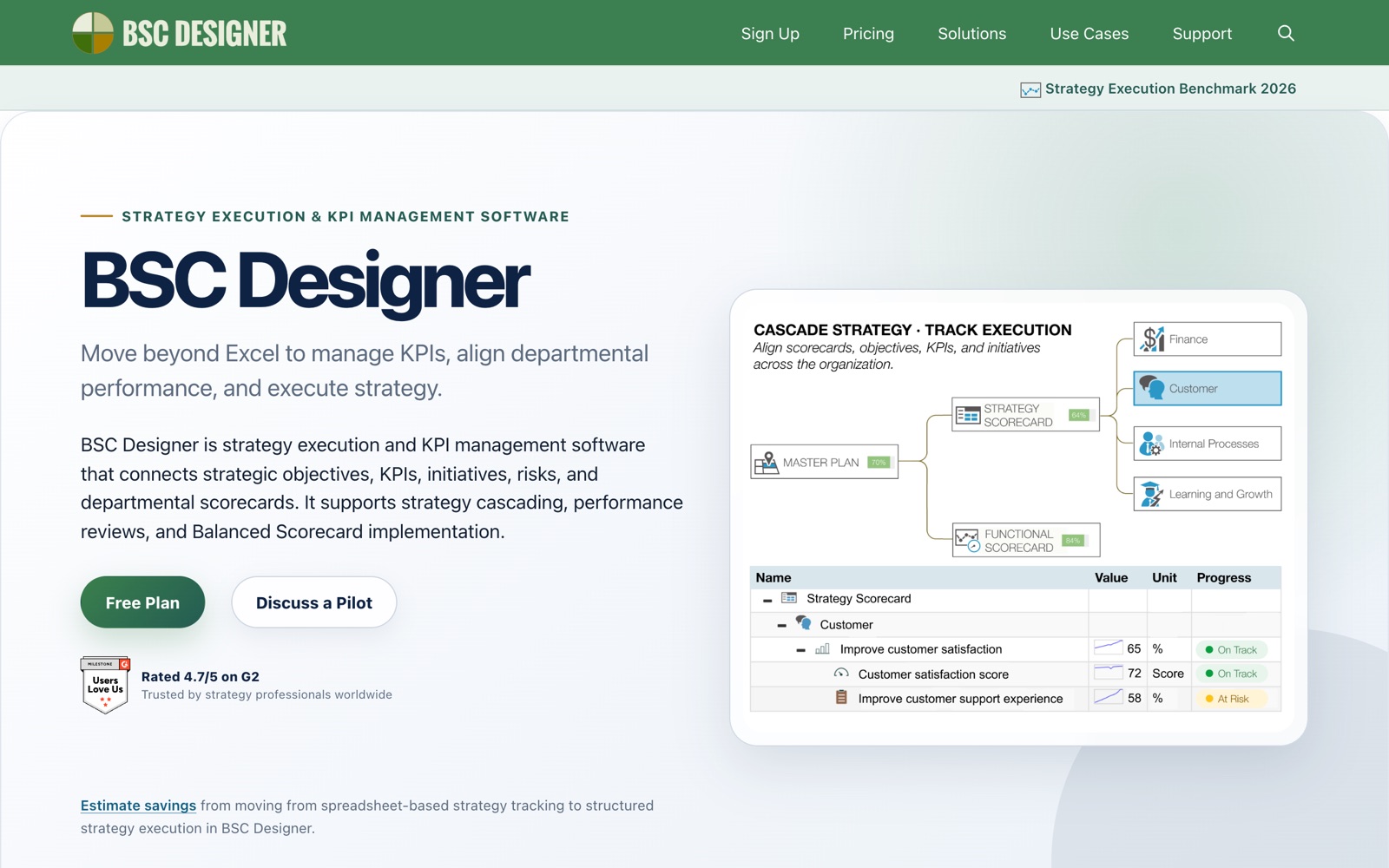
Price: free forever plan; Professional US$59.95 per user per month billed annually (US$719.40 a year); view-only users free and unlimited · Strengths: automatically generated strategy maps, cascading by perspective, templates for BSC, OKR, OGSM and Hoshin Kanri · Automation: connectors for Excel, Google Sheets, Power Automate, Zapier, databases and a REST API, plus scheduled reports
The vendor says its free plan has the same features as the paid one, including data imports and integrations, and is limited only by the number of scorecards and items. Because only editors pay, it stays affordable as more people view the scorecard. Pricing on the website.
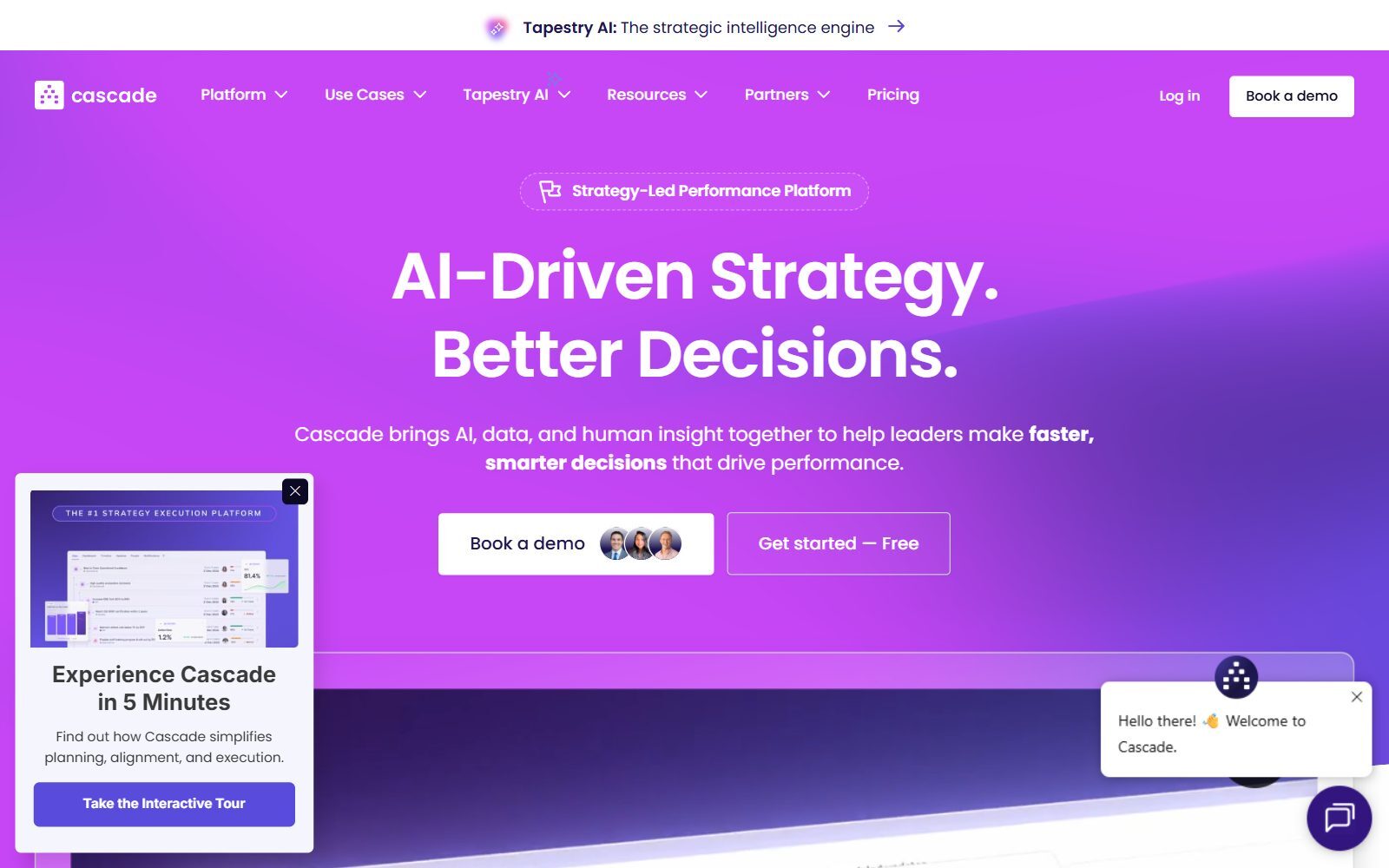
2. Cascade: free for founders
Price: free for up to 2 users, no credit card; Essentials and Enterprise on request · Strengths: the four perspectives plus custom ones, strategy maps, cascading objectives and KPIs with targets · Automation: red, amber and green status from threshold rules; syncs with Jira, Asana and Smartsheet
Cascade describes itself as the only balanced scorecard platform endorsed by the Balanced Scorecard Institute. It also has a mobile app, though reviewers say it is less complete than the desktop version. Paid tiers cap advanced metrics and reports, so check the limits before your team grows. See the website.
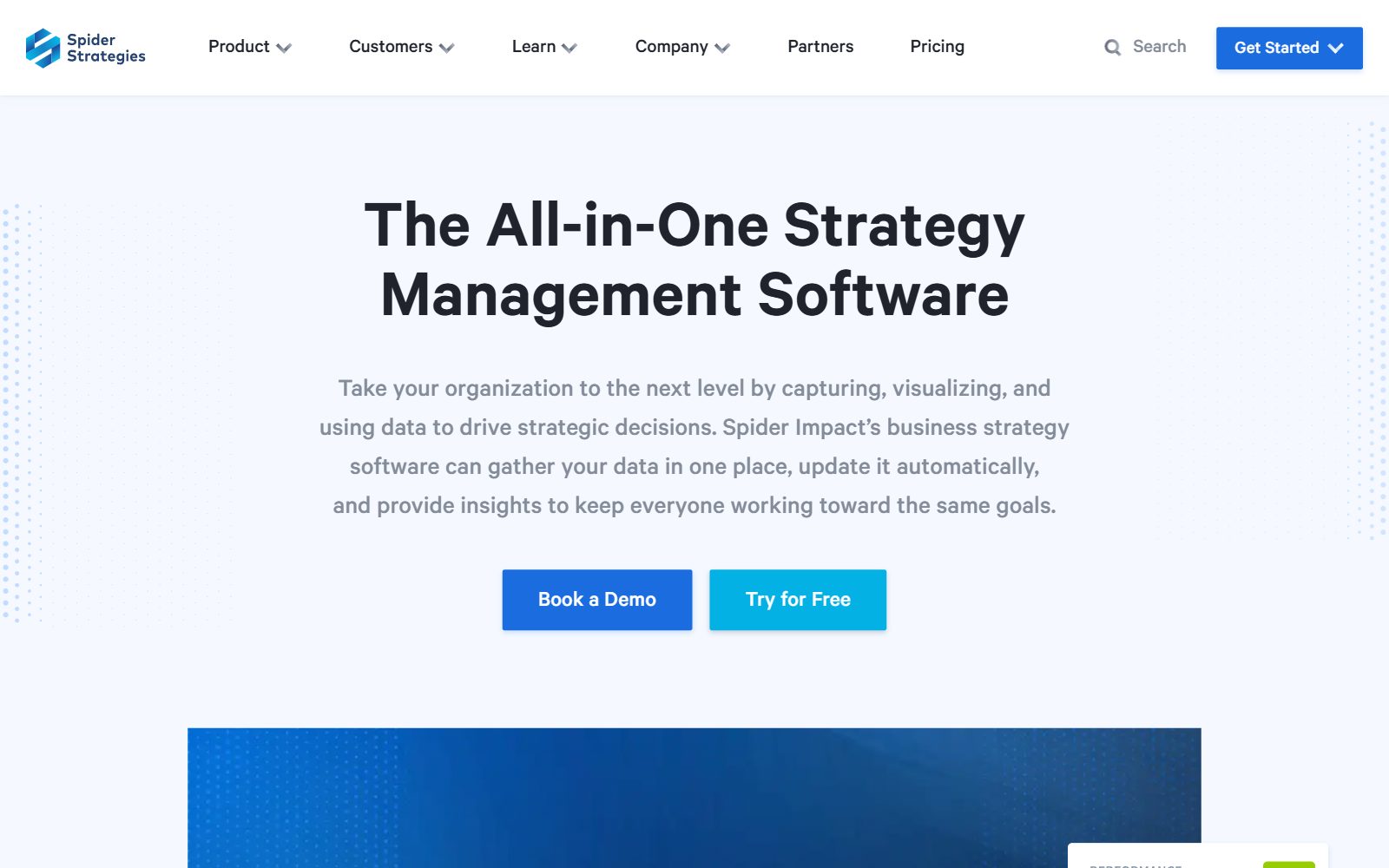
3. Spider Impact (formerly QuickScore)
Price: on request; plans for 1+, 10+, 25+ and 100+ users · Trial: 30 days, unrestricted, no credit card · Automation: scheduled imports from Excel, Google Sheets, SQL databases and web APIs; alerts to the owners of red KPIs; weekly or monthly emailed reports
Spider Strategies stopped selling new QuickScore licences and moved customers to Spider Impact. It runs in any browser, including phones. Small teams should know that under 10 licences you pay yearly, and exports need 10+ users. See the website.
4. ClearPoint Strategy
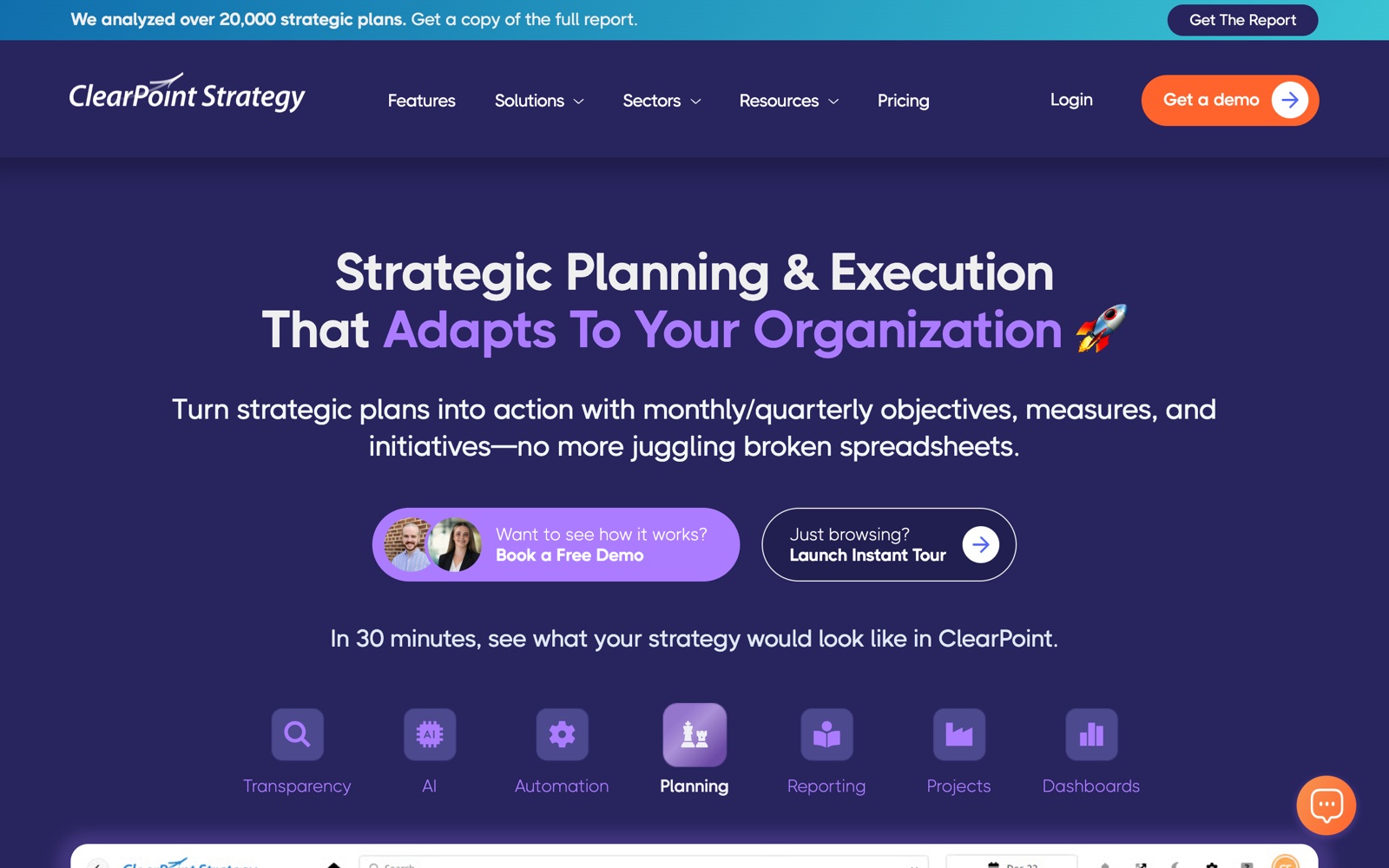
Price: on request, starting at 10 users · Strengths: strategy maps, scorecards and OKRs; AI that drafts scorecards from a prompt · Automation: scheduled data imports, a REST API with webhooks, Zapier, triggered alerts and scheduled PDF or PowerPoint reports
Popular with local government, healthcare and universities. There is no self-serve trial, only an interactive tour. See the website.
5. Corporater
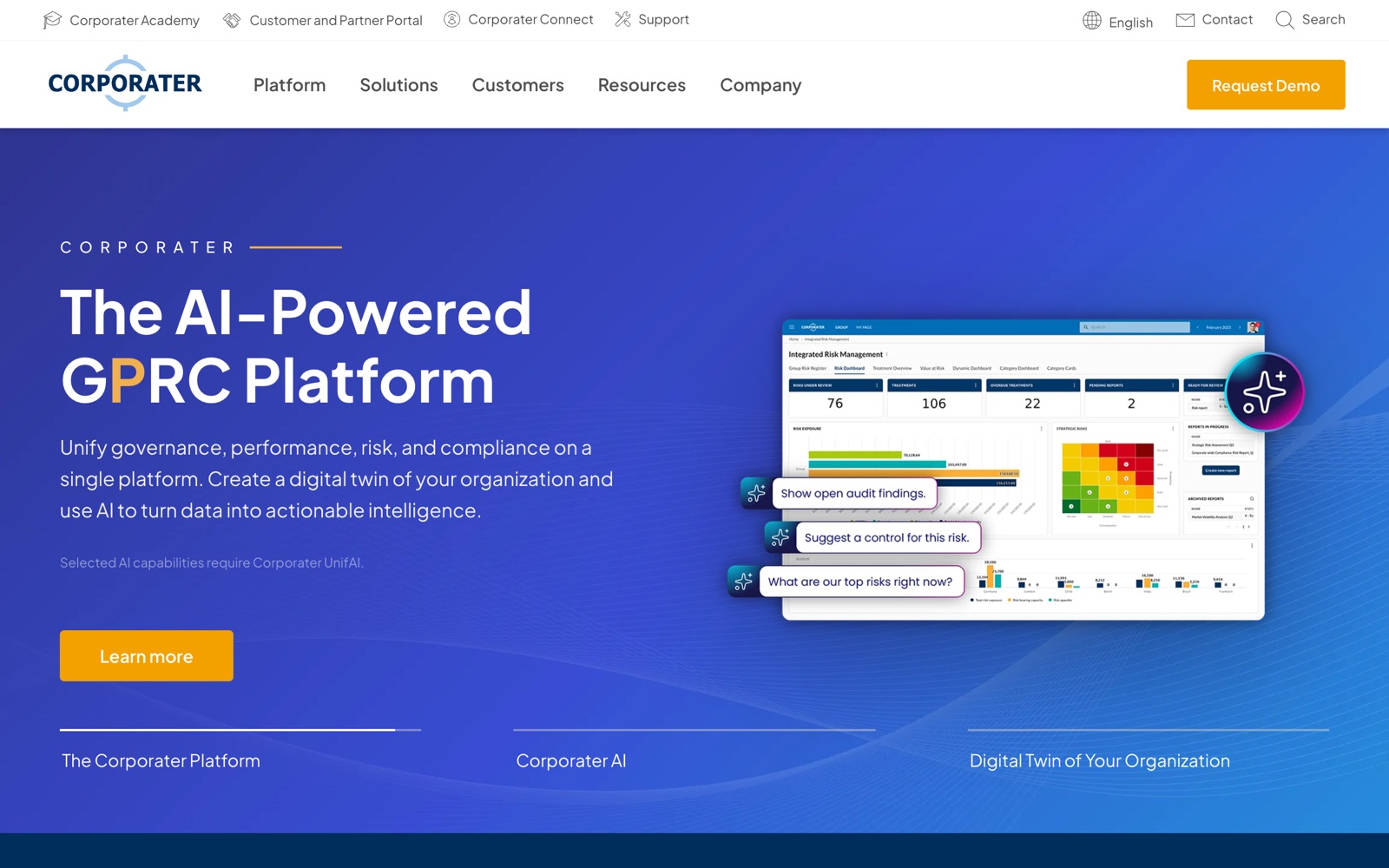
Price: on request · Strengths: strategy maps, cascading, alerts and automated reporting, combined with governance, risk and compliance · Deployment: cloud, on-premises or private cloud
An enterprise platform that says it worked with Kaplan and Norton. Likely more than a startup needs. See the website.
6. Data Point (formerly LTS Lean)
Price: tailored quote · Strengths: KPI dashboards, Hoshin Kanri X Matrix, digital huddle boards · Integrations: MES and ERP systems
Built by the UK's Lean Transition Solutions for manufacturing and operations teams, Data Point grew out of LTS Lean's Balanced Scorecard Software. It suits factories and lean teams more than early startups.
7. Envisio
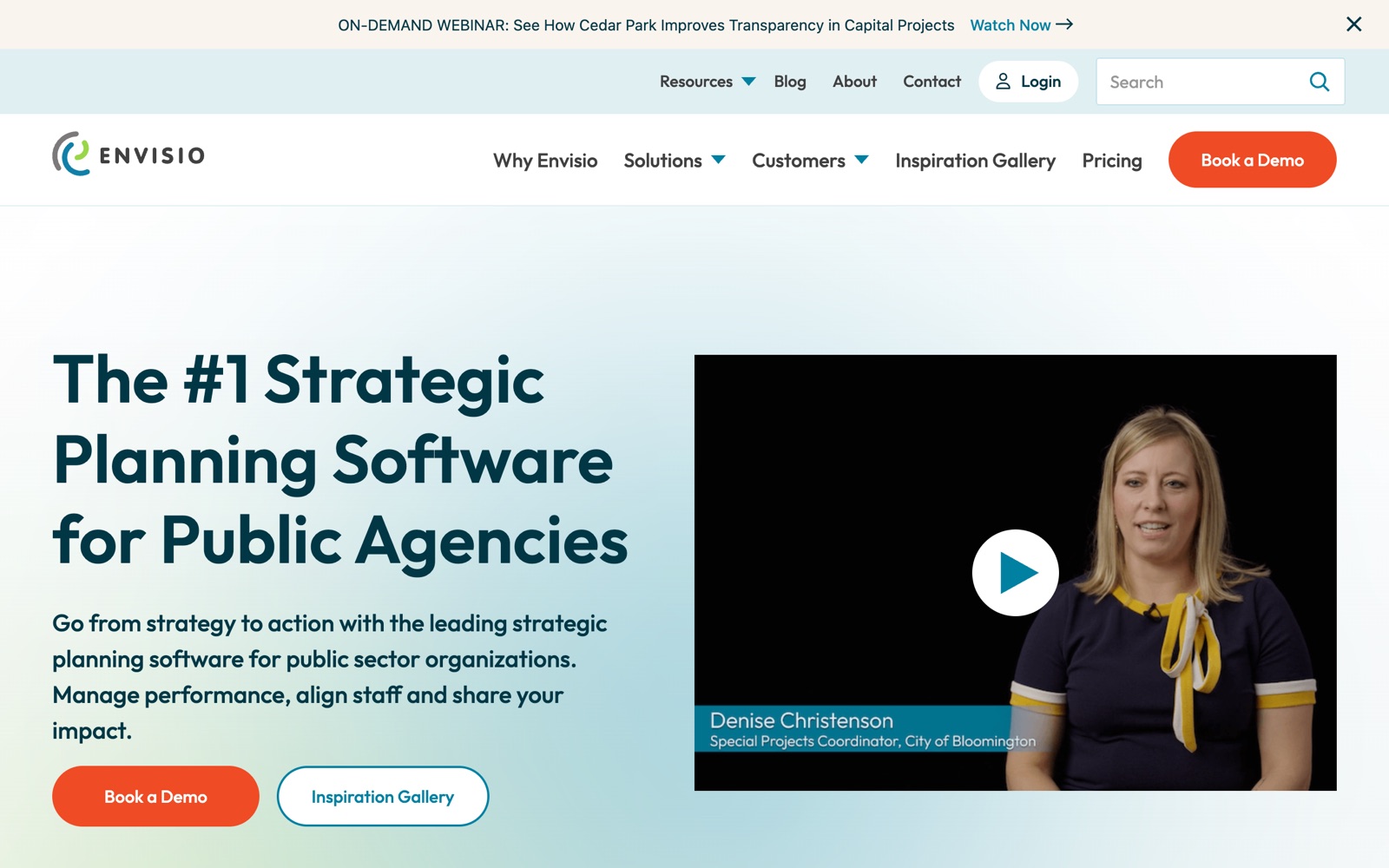
Price: quote with an implementation plan; Starter has unlimited users · Automation: scheduled automatic updates of performance data, open API
Built for local governments that publish performance dashboards. See the website.
OKR and KPI Tools That Can Run a Balanced Scorecard
8. Perdoo
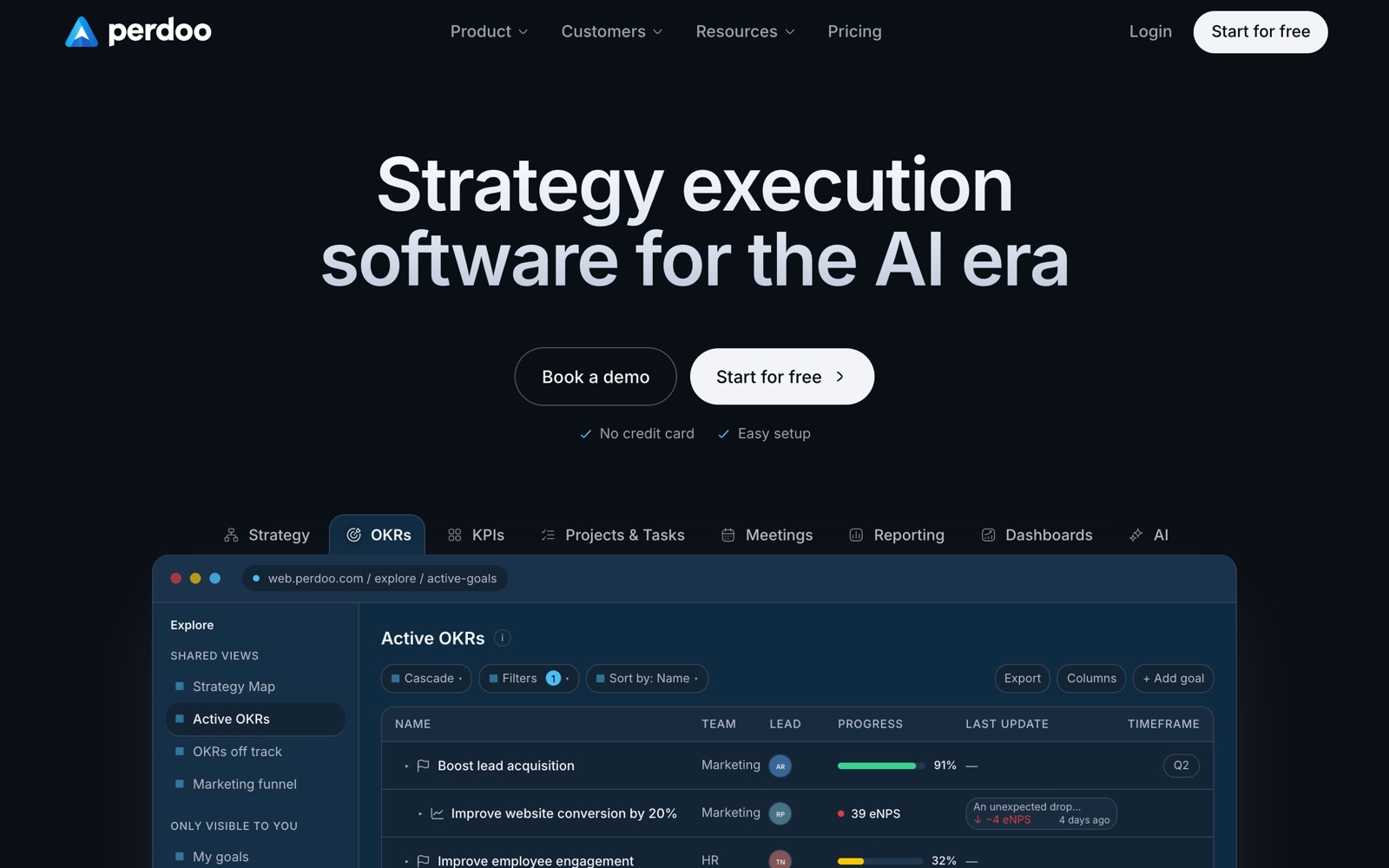
Price: free for up to 5 users; Premium €6.40 and Supreme €8.00 per user per month at 100 users, billed annually · Strengths: strategy maps, OKRs and KPIs, Slack and Teams, mobile apps for iOS and Android
An OKR tool first, but its strategy maps and KPI tracking make a lightweight scorecard; you set up the four perspectives yourself. See the website.
9. Profit.co
Price: by module and user count, on request · Trial: 30 days · Strengths: four scorecard perspectives, a cockpit dashboard and 100+ integrations including Jira, Salesforce and Tableau
Its AI features run on credits, with extra packs priced on request. See the website.
10. SimpleKPI
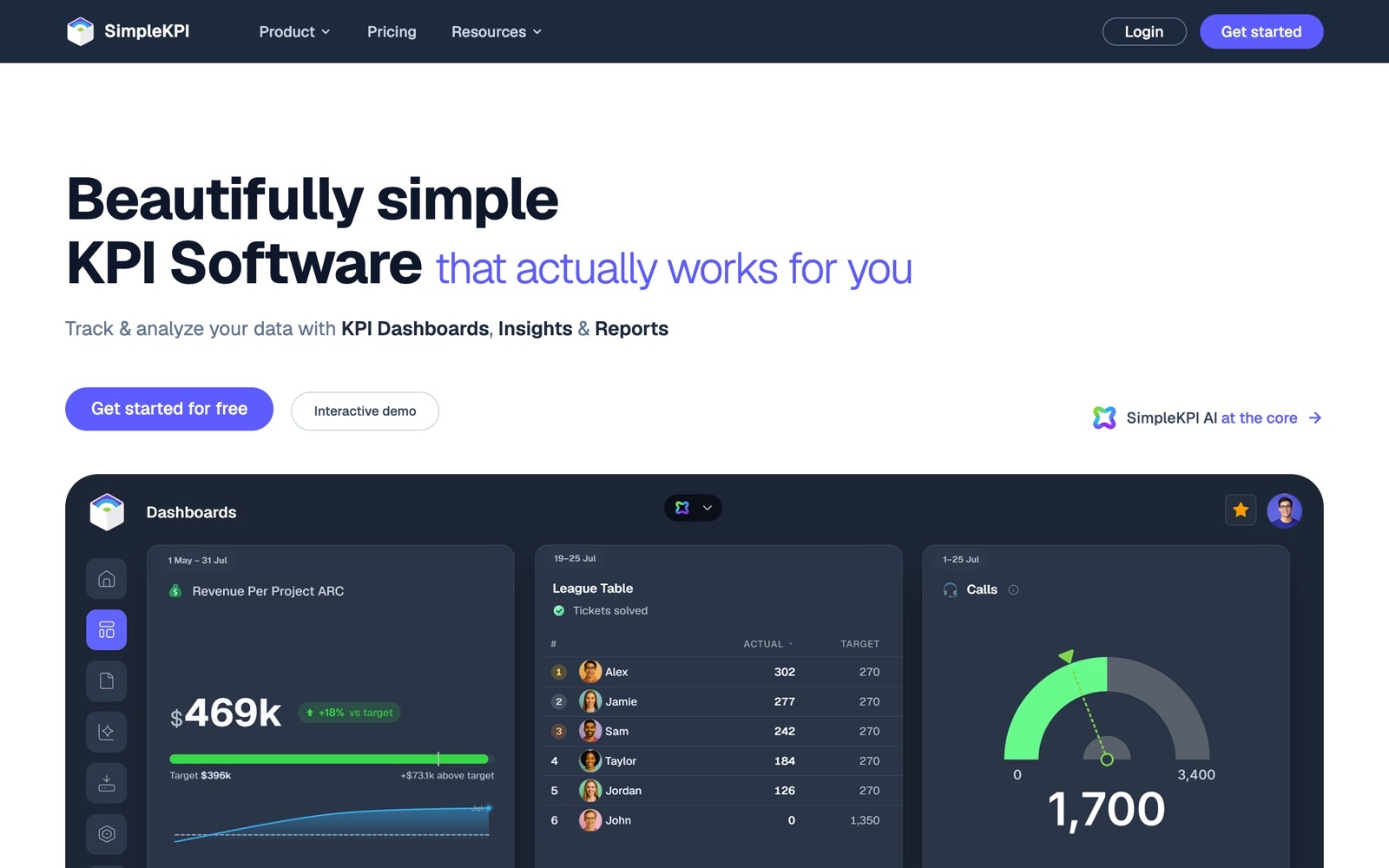
Price: US$79 a month, or US$63 a month billed annually (US$758 a year), unlimited users · Trial: 14 days, no credit card
KPI targets, red/amber/green status and anomaly alerts, but no strategy maps. A good choice if you want a simple KPI board for the whole team. See the website.
Build Your Own Balanced Scorecard in Power BI, Klipfolio or Smartsheet
11. Microsoft Power BI
Price: free account; Pro US$14 and Premium Per User US$24 per user per month, paid yearly · Scorecards: goals are a Pro feature; connected goals update when the data refreshes
Power BI has no balanced scorecard template or strategy map, so you build the perspectives yourself. Manual goals don't update on their own. See the website.
12. Klipfolio Klips
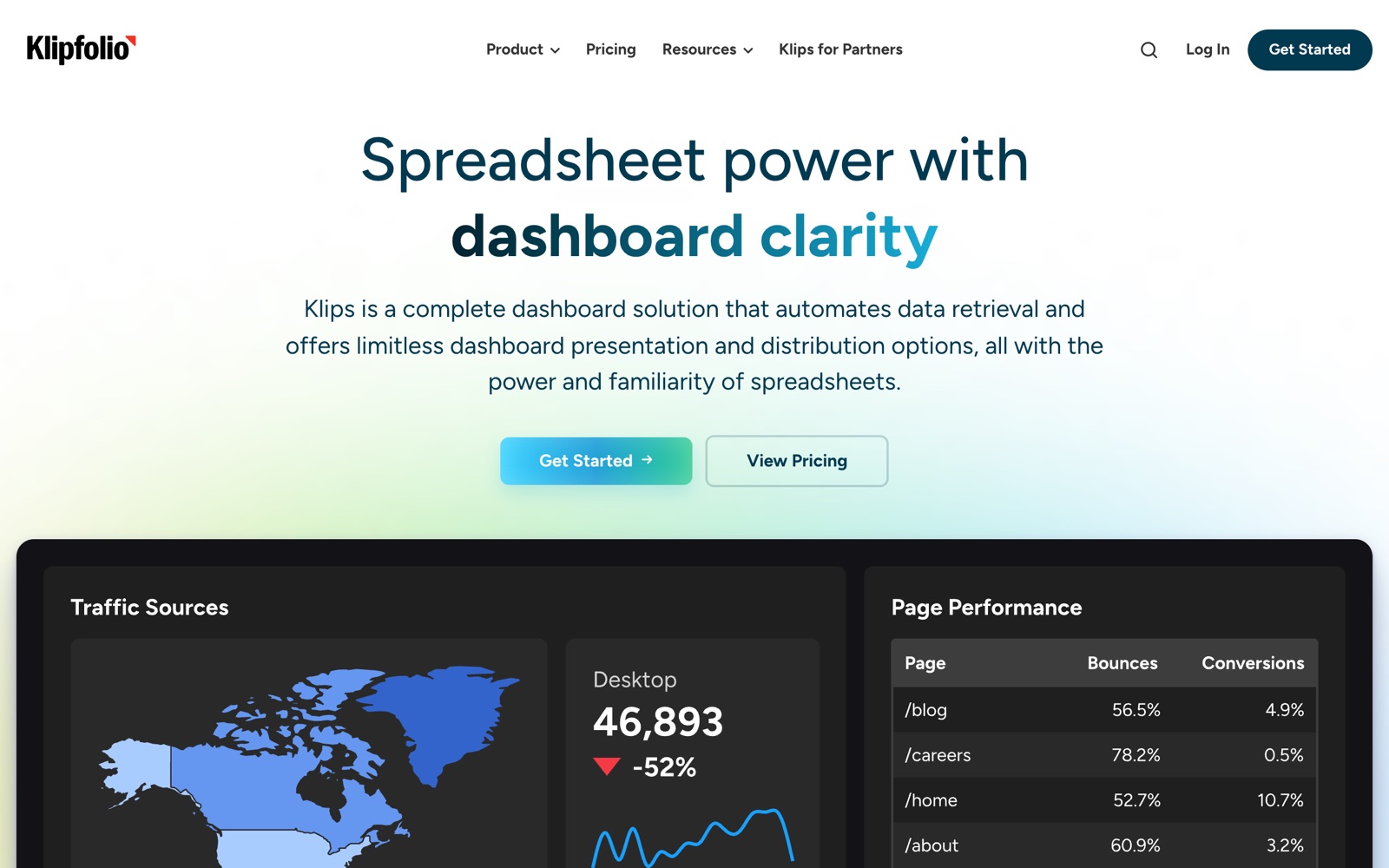
Price: from US$120 a month billed annually (US$140 monthly) for 3 dashboards, up to US$600 for 40; unlimited users · Refresh: every 4 hours on Base, down to near real time on Team+
130+ data integrations and a 14-day trial. Good for data-heavy teams that will design their own scorecard. See the website.
13. Smartsheet
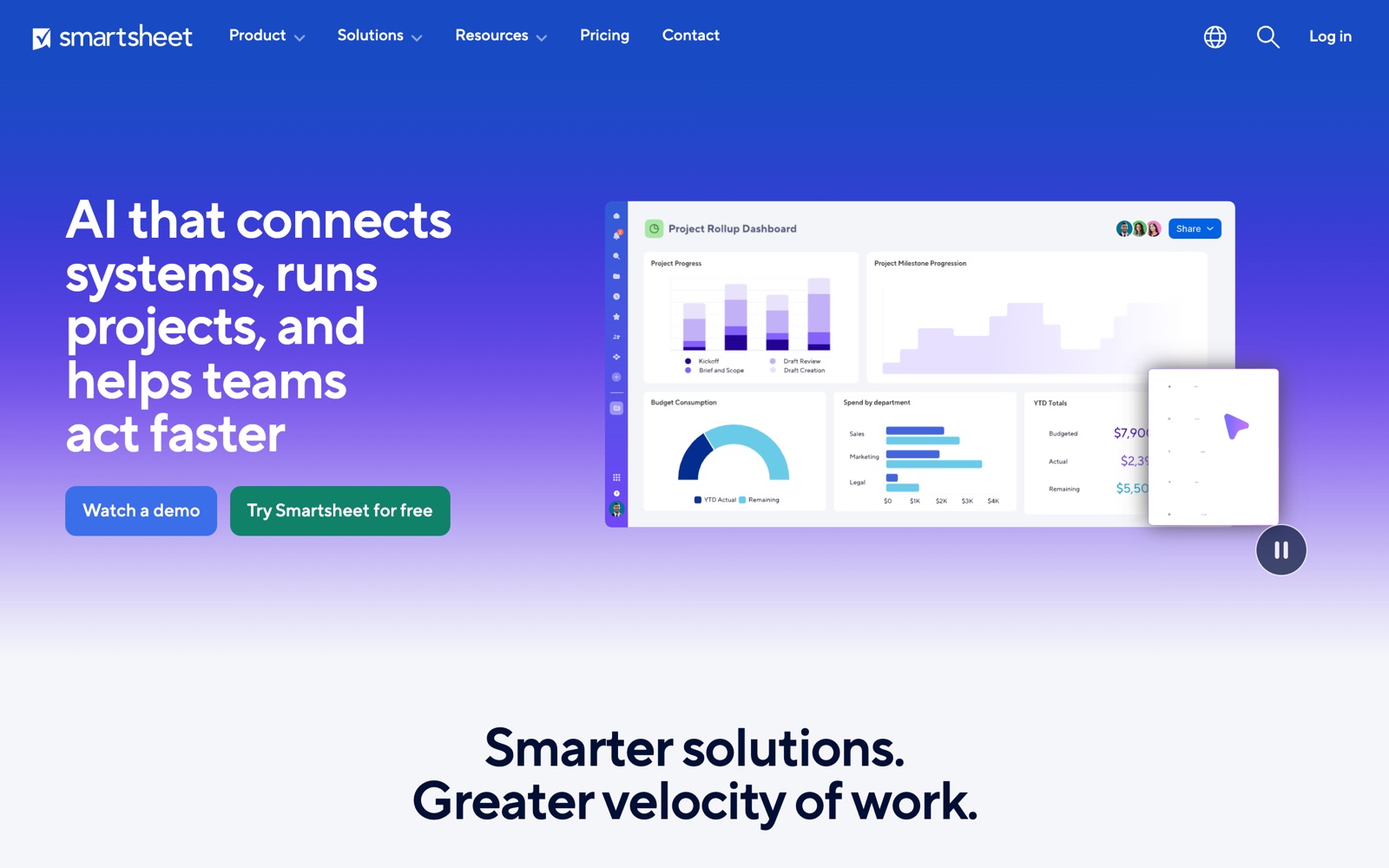
Price: Pro US$9 per member per month billed yearly (US$12 monthly); Business US$19 (US$24) · Template: a ready balanced scorecard template
A template rather than a strategy engine: you link the perspectives by hand. Pro includes 250 automations a month, Business unlimited. See the website.
Balanced Scorecard Automation: What to Look For
Balanced scorecard automation means your scorecard updates itself instead of someone copying numbers into it every month. When you compare tools, look for five things:
- Data connectors and scheduled imports from spreadsheets, databases and SaaS tools (Spider Impact, ClearPoint, BSC Designer, Envisio).
- A refresh rate that fits your reviews. Klipfolio ranges from every 4 hours to near real time; Power BI goals update only when the data model refreshes.
- Automatic status and alerts: red/amber/green rules (Cascade) and alerts to the owner of a red KPI (Spider Impact, ClearPoint).
- Scheduled reports and reminders before each strategy review.
- Open integrations: Zapier, Power Automate, REST APIs and webhooks, and increasingly AI assistants through MCP (ClearPoint, Perdoo).
Tech media have covered this shift from static reports to connected data for years; Check out CIO insights on data integration, or Learn from The Strategy Institute about strategy execution. For the tools that connect your startup's apps, see our guide to integration tools for founders and automating your business without developers.
Balanced Scorecard Apps for Small Teams and Startups
A startup doesn't need an enterprise platform. These are the cheapest ways to run a real balanced scorecard:
- BSC Designer free plan: a true balanced scorecard with strategy maps, at no cost.
- Cascade free plan: two users, four perspectives and strategy maps, plus a mobile app.
- Perdoo free plan: up to five users, strategy maps and KPIs, with iOS and Android apps.
- Power BI Pro: if your data already lives in Microsoft tools.
- Smartsheet template or a spreadsheet: the simplest start; move to software when updating it takes more than an hour a month.
Not sure which numbers to track? Start with our guides to SaaS metrics for non-technical founders, measuring product-market fit and customer retention strategies.
How to Set Up a Balanced Scorecard in 3 Steps
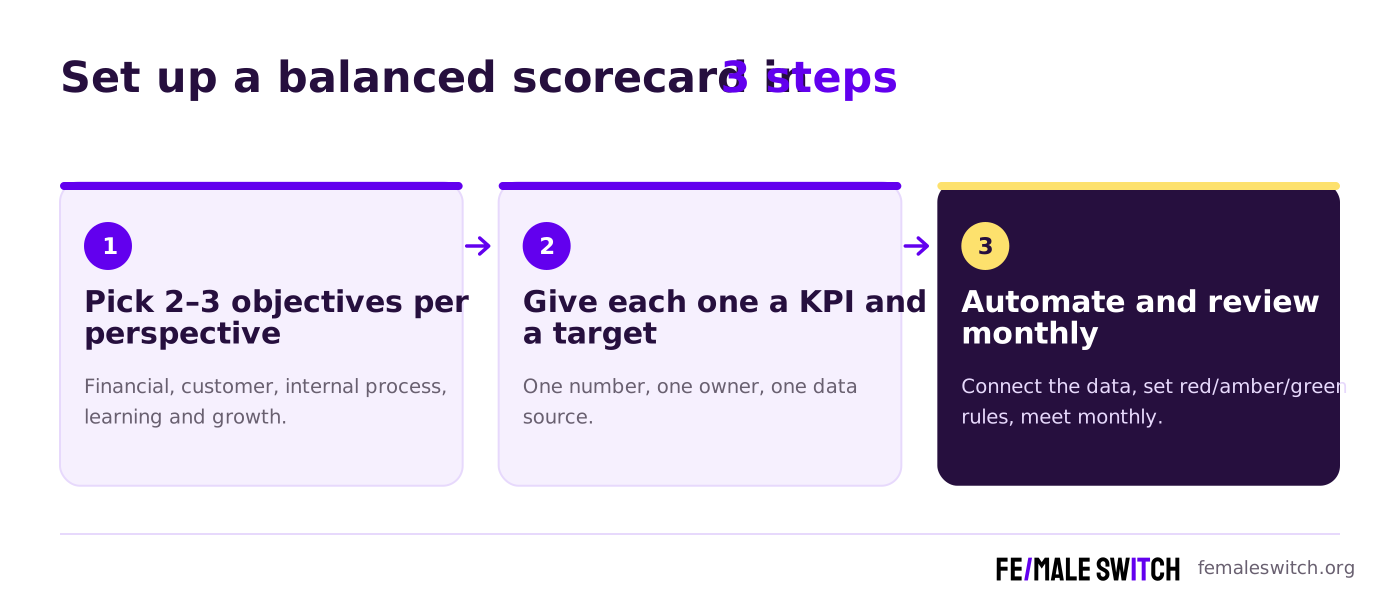
- Pick two or three objectives per perspective. For an early startup: monthly revenue and runway (financial), retention and referrals (customer), delivery time (internal process), and one skill the team must learn (learning and growth).
- Give each objective one KPI, a target and an owner. Write down where the number comes from. If nobody owns it, it won't move.
- Automate and review monthly. Connect the data sources, set red/amber/green thresholds and hold a 30-minute review each month. Change a KPI if it doesn't help you decide anything.
Balanced Scorecard Tools That Changed or Disappeared
- QuickScore and Scoreboard are no longer sold; Spider Strategies replaced them with Spider Impact.
- Datapine is now RIB BI+, a construction analytics product.
- Quantive now redirects to WorkBoard.
- SAP Strategy Management is a legacy product with no meaningful recent development.
Practise running a startup by the numbers
In the Fe/male Switch startup game you build a real business in weekly quests with an AI co-founder, including the customer, process and money numbers a balanced scorecard tracks, and you can try ideas on customers in the game's sandbox before spending real money: Discover SANDBOX. And if the customer side of your scorecard needs content, Write articles for free with our AI SEO tool.
👉 Start the startup game
Conclusion: Start Free, Automate Later
You don't need to pay for balanced scorecard software on day one. Start with a free plan from BSC Designer, Cascade or Perdoo, keep it to 8–12 KPIs across the four perspectives, and review it monthly. Move to Spider Impact, ClearPoint or a BI tool when updating the scorecard by hand starts taking real time. Explore BSC insights from Forbes and other business media if you want examples from larger companies, and see our comparison of financial management software for the money side.
FAQ: Balanced Scorecard Software
What is the best balanced scorecard software?
For startups and small teams, BSC Designer (free plan) and Cascade (free for 2 users). For growing organisations that need automated data and reporting, Spider Impact and ClearPoint Strategy. For Microsoft users, Power BI Pro.
Is there free balanced scorecard software?
Yes. BSC Designer has a free-forever plan, Cascade is free for up to 2 users, Perdoo is free for up to 5 users, and Power BI has a free account.
How much does balanced scorecard software cost?
From free to enterprise quotes. BSC Designer Professional costs US$59.95 per user per month billed annually, SimpleKPI US$63 a month for unlimited users on annual billing, and Power BI Pro US$14 per user per month. Spider Impact, ClearPoint and Corporater quote on request.
What is balanced scorecard automation?
Software that pulls KPI data in on a schedule, sets red/amber/green status automatically, alerts the owner of a failing KPI and sends reports before each review, so nobody has to copy numbers by hand.
Is there a balanced scorecard app for phones?
Cascade, Perdoo, Power BI and Smartsheet have mobile apps. Spider Impact works in a phone's browser.
What are the four perspectives of the balanced scorecard?
Financial, customer, internal process, and learning and growth (also called organisational capacity).
Who created the balanced scorecard?
Robert Kaplan and David Norton, in a Harvard Business Review article in January 1992.
Can I make a balanced scorecard in Excel or Power BI?
Yes. Many small teams start in a spreadsheet or a Smartsheet template. Power BI Pro has built-in scorecards and goals, but no strategy maps, so you design the perspectives yourself.
What happened to QuickScore?
QuickScore and Scoreboard are no longer sold. Spider Strategies moved customers to Spider Impact.
Does a startup need a balanced scorecard?
Not a heavy one, but a simple scorecard with a few KPIs per perspective stops you from tracking only revenue. For the customer side, our guide to web analytics for startups shows which numbers to track first.
