
TL;DR: The best startup accelerators for a bootstrapping woman founder in Europe match her stage, her country and her hours, and several pay you instead of taking shares. I checked 12 programmes on their own pages on 12 November 2026, from Women TechEU's €75,000 equity-free grant and Grace Berlin's €2,500 monthly stipend to EXIST-Women, which runs alongside a job, and set them against full-time investors such as Entrepreneur First (8% for $125,000) and Antler (around 10% for €500K). Five of the twelve are open for applications right now or take them all year. Put your stage, country and hours into the free accelerator fit finder below for your shortlist.
Women-founded startups got 11.0% of European venture capital in the first nine months of 2026, down from 13.4%, according to Dealroom's 12 October update (see our report on the falling VC share of women-founded startups). Cherry Ventures' Heartbeat report tracked 10,000 new European companies and found that only 7% went near an accelerator, as covered in our piece on why most new European founders start alone.
As a bootstrapping founder, I read an accelerator's terms before its alumni list. Most "top startup accelerators" lists repeat five American names and never ask whether a mother with a day job can attend. This guide lists startup accelerators in Europe running in 2026: which are women-only, which take NO EQUITY, which are part-time or remote, what each asks for, and what to do if you are not ready yet.
How does the accelerator fit finder work?
Choose your stage, country, hours, sector, whether you can relocate and whether you would give up shares. The finder scores the 12 programmes in this article on their published terms and shows your top matches, each with one reason it fits and one thing to watch.
Pick "idea" as your stage and the finder adds a not-ready-yet path with pre-accelerators and practice steps. Copy the readiness checklist and keep it next to your application form.
What is a startup accelerator, and how is it different from an incubator?
A startup accelerator is a fixed-length programme for a group of startups that start together, called a cohort. It gives training, mentors and investor contacts and ends with a demo day, where each founder pitches to investors. Accelerator programs differ most in money: some invest for shares, others give grants or charge a fee.
An incubator works earlier and slower: desk space, advice and community with no fixed end date, so incubator vs accelerator comes down to speed and stage. A pre-accelerator is a short programme for people with an idea or first prototype that prepares them for a real accelerator. A venture builder starts its own startups with in-house teams and keeps a large share of each.
Four money terms come back in accelerator deals:
- SAFE (Simple Agreement for Future Equity): money now that turns into shares at your next priced funding round.
- Pre-money valuation: your company's worth before new money comes in; post-money valuation adds the new money.
- Dilution: your percentage shrinks each time new shares go to someone else.
- Warrant: a right to buy or receive shares later, on agreed terms.
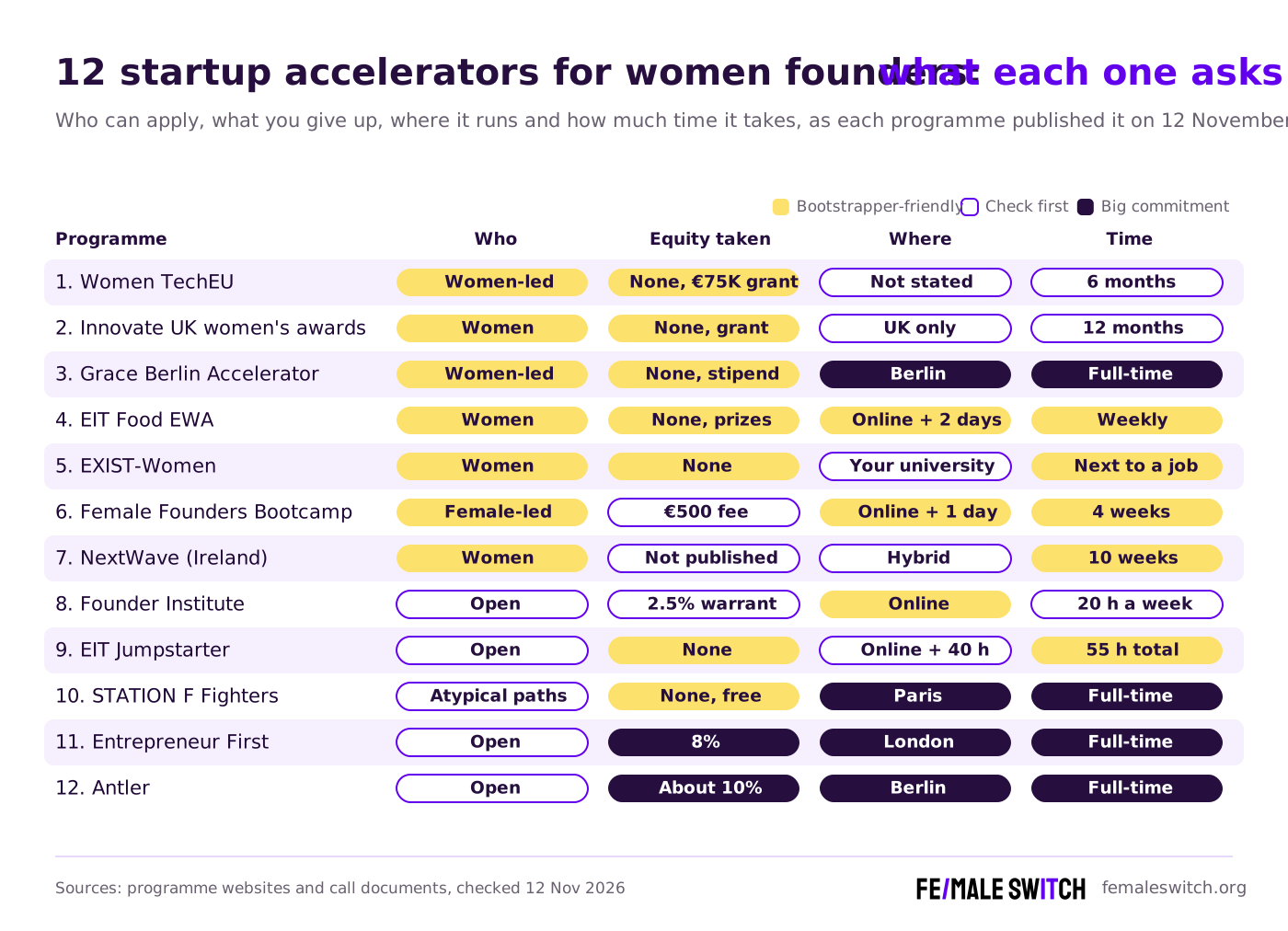
Which startup accelerators fit women founders in Europe? The comparison
Sources: programme websites and official call documents, checked 12 Nov 2026.
Which accelerators give money to women founders and take no equity?
These four put cash in your hands and leave your cap table (who owns what) untouched. They ask the most paperwork, so read our guides to EU grants for startups and grants for women entrepreneurs in Europe before you start writing.
1. Women TechEU: the EU's €75,000 grant for women-led deep tech
Women TechEU is an EU-funded scheme, now run by a European consortium for EISMEA, the agency behind the EIC. The current round awards €12 million in equity-free grants to 160 startups, €75,000 each, plus a six-month programme of one-to-one mentoring, training and investor matchmaking. The EIC reports 344 women-led companies backed since 2021; three recent cohorts raised over €53.8 million in private money within a year.
- What they ask: a woman founder or co-founder in a CEO, CTO or CSO role, women holding at least 25% of the shares, a company registered for six months to five years, less than €1 million raised in equity, and real deep tech at TRL 4 to 6 (technology readiness level, a 1 to 9 scale from lab idea to proven product).
- Deal terms as published: €75,000 grant, NO EQUITY.
- Fit for bootstrappers: strong for hardware, biotech, climate tech or real AI research; eCommerce apps and eLearning content platforms do not count. Next full-proposal deadline: 14 January 2027.
2. Innovate UK's awards for women founders: up to £75,000 and a year of support
Innovate UK, the UK government's business funding agency, runs an award scheme for women founders. The 2025/26 round offered up to 60 awards of up to £75,000, with 12 months of business support from a dedicated growth specialist, at least 10 hours of training and four hours of role-model work.
- What they ask: a woman founder or co-founder of a UK-registered small business, living in the UK, with a new product or service to develop.
- Deal terms as published: grant, NO EQUITY. Funded projects run from 1 July 2026 to 30 June 2027.
- Fit for bootstrappers: excellent money, hard odds: 3.4% of applicants won in 2024/25. The 2025/26 round closed on 4 February 2026; no date for the next one yet.
3. Grace Berlin Accelerator: a paid full-time programme for women-led ventures
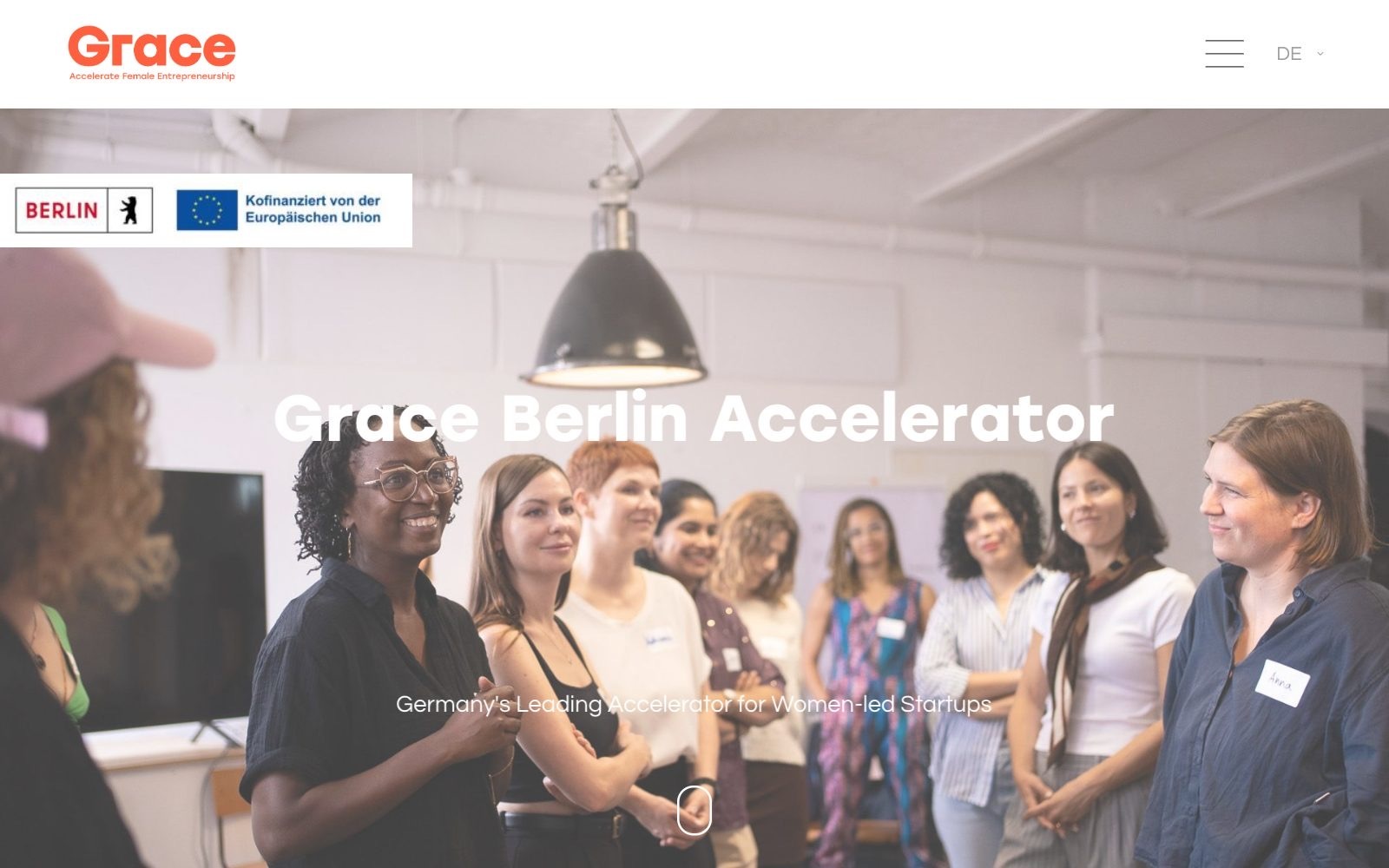
Grace Berlin pays you to build: €2,500 gross a month for 8 months, funded by the European Social Fund Plus, the EU and the State of Berlin, and no company shares taken.
- What they ask: you identify as a woman founder or belong to a mixed team, you live in Berlin or move there, your company is registered in Berlin during the programme, you have no revenue yet, and you have not received EXIST or the Berlin Startup Scholarship.
- Deal terms as published: stipend, NO EQUITY, founders keep at least 51% of the company.
- Fit for bootstrappers: a FULL-TIME programme for a founder who can pause a job. The 2026 cohort started on 1 November after applications from 24 August to 22 September.
4. EIT Food EWA: mentoring and prizes for women in food and farming
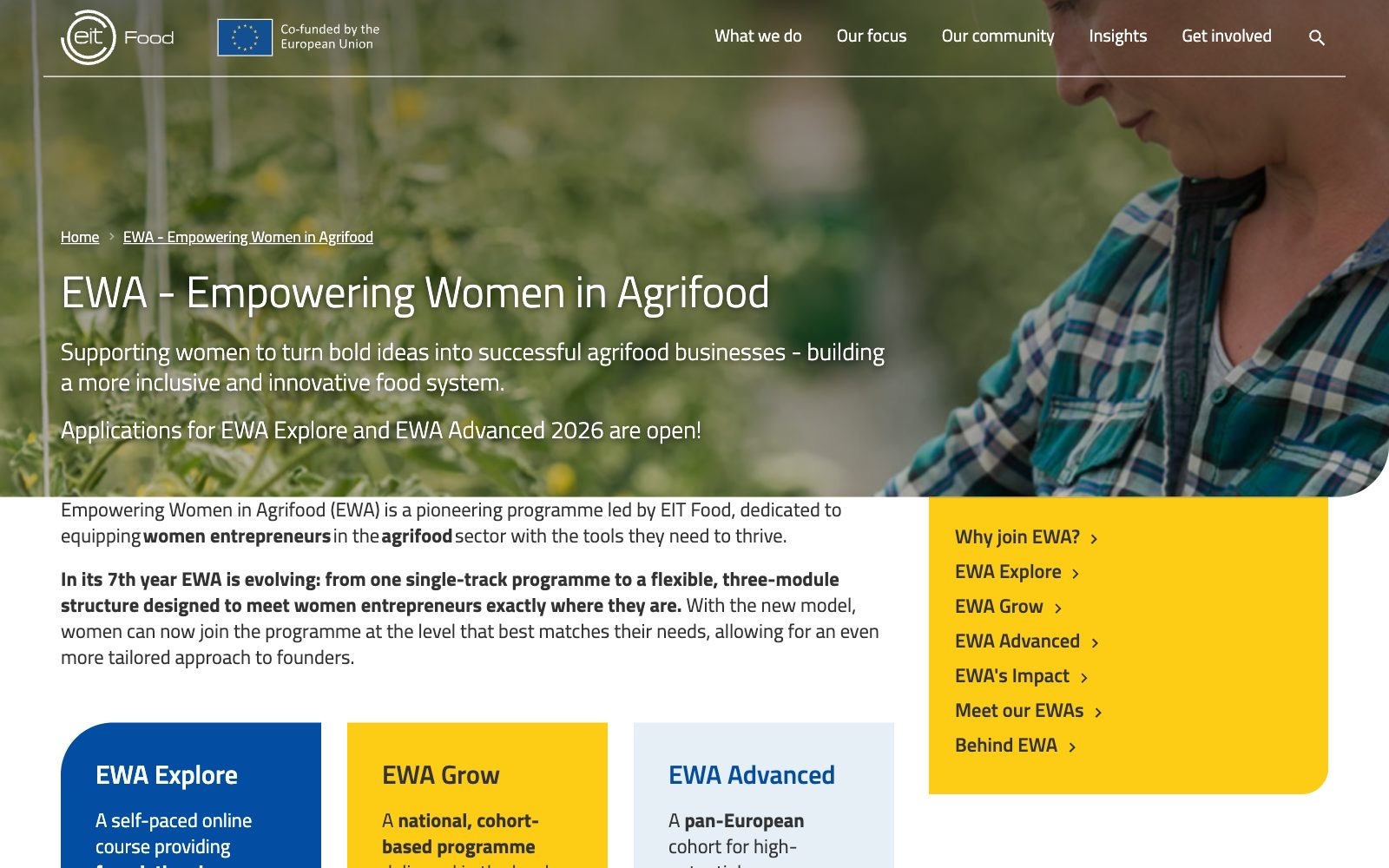
EIT Food, the EU-funded food network, runs Empowering Women in Agrifood (EWA). EWA Grow takes women with an idea or a business under three years old in 12 countries, from Spain and Italy to Lithuania and Ukraine; EWA Advance takes up to 10 founders who already sell.
- What they ask: an agrifood idea or business, residence in a listed country (Grow) and 80% attendance.
- Deal terms as published: Grow gives up to €1,000 for travel and Demo Day prizes of €10,000 and €5,000; Advance offers up to €21,200 gross per participant. No equity is mentioned.
- Fit for bootstrappers: six months of mostly online sessions with 1.5 hours of one-to-one mentoring a week, plus in-person matchmaking and Demo Day. The 2026 calls closed in April and May.
Which women's startup accelerators fit next to a job or kids?
Most of our community builds in the evenings, as our guide to self-funding your startup while working full-time shows. These four fit that life.
5. EXIST-Women: Germany's part-time programme for women from universities
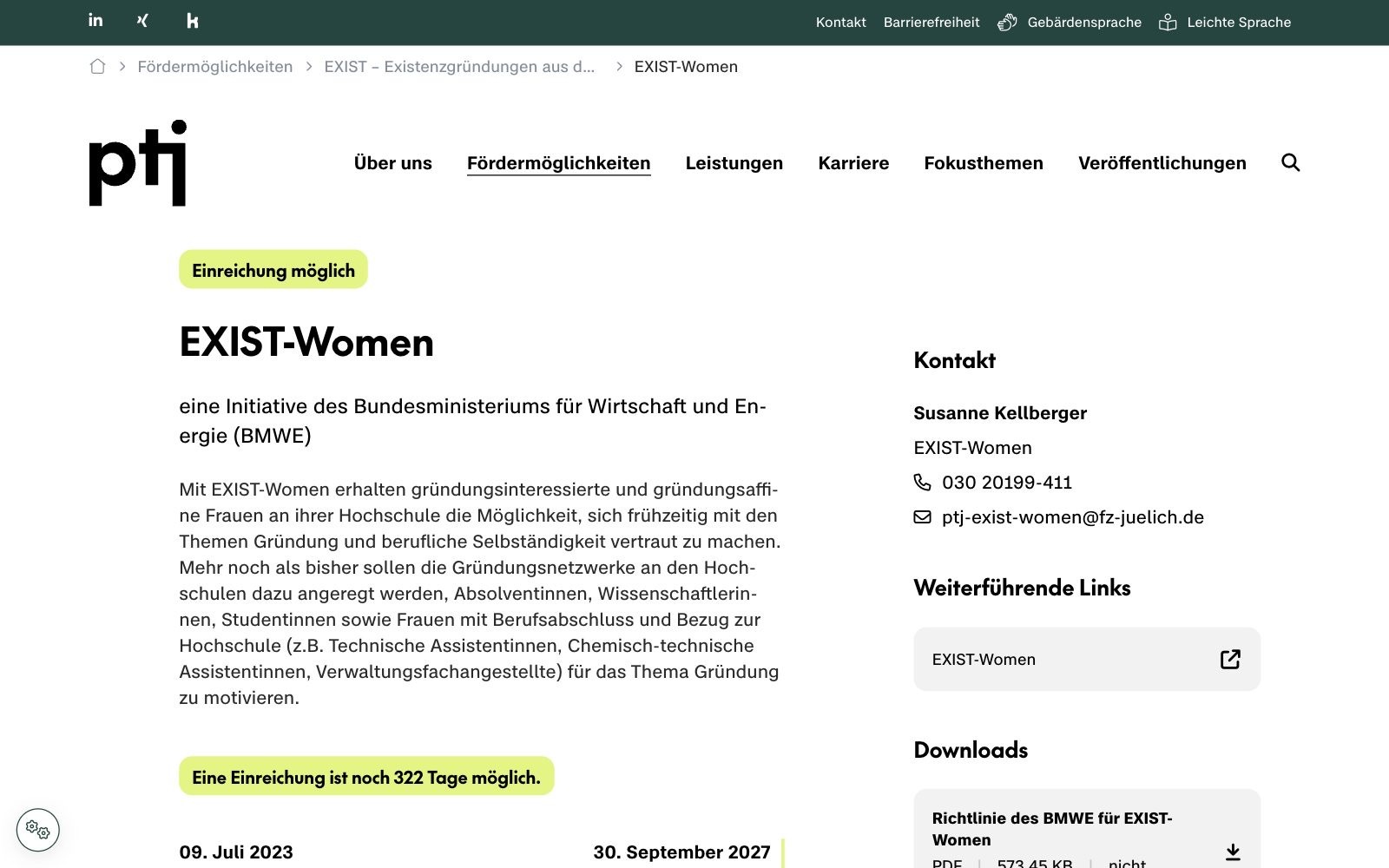
EXIST-Women is a programme of Germany's Federal Ministry for Economic Affairs and Energy, run through universities. It gives a 12-month qualification phase you can do alongside a job or studies.
- What they ask: a link to a German university or research centre as a graduate, researcher, student with a bachelor's degree or woman with a vocational qualification; you apply through its start-up office.
- Deal terms as published: NO EQUITY. An optional 3-month stipend pays €1,000 to €3,000 a month depending on your degree, plus €150 a month per child, if you work no more than 20 hours a week.
- Fit for bootstrappers: the best part-time option here for women in Germany; funding runs to 30 September 2027.
6. Female Founders Bootcamp: four weeks online with one summit day
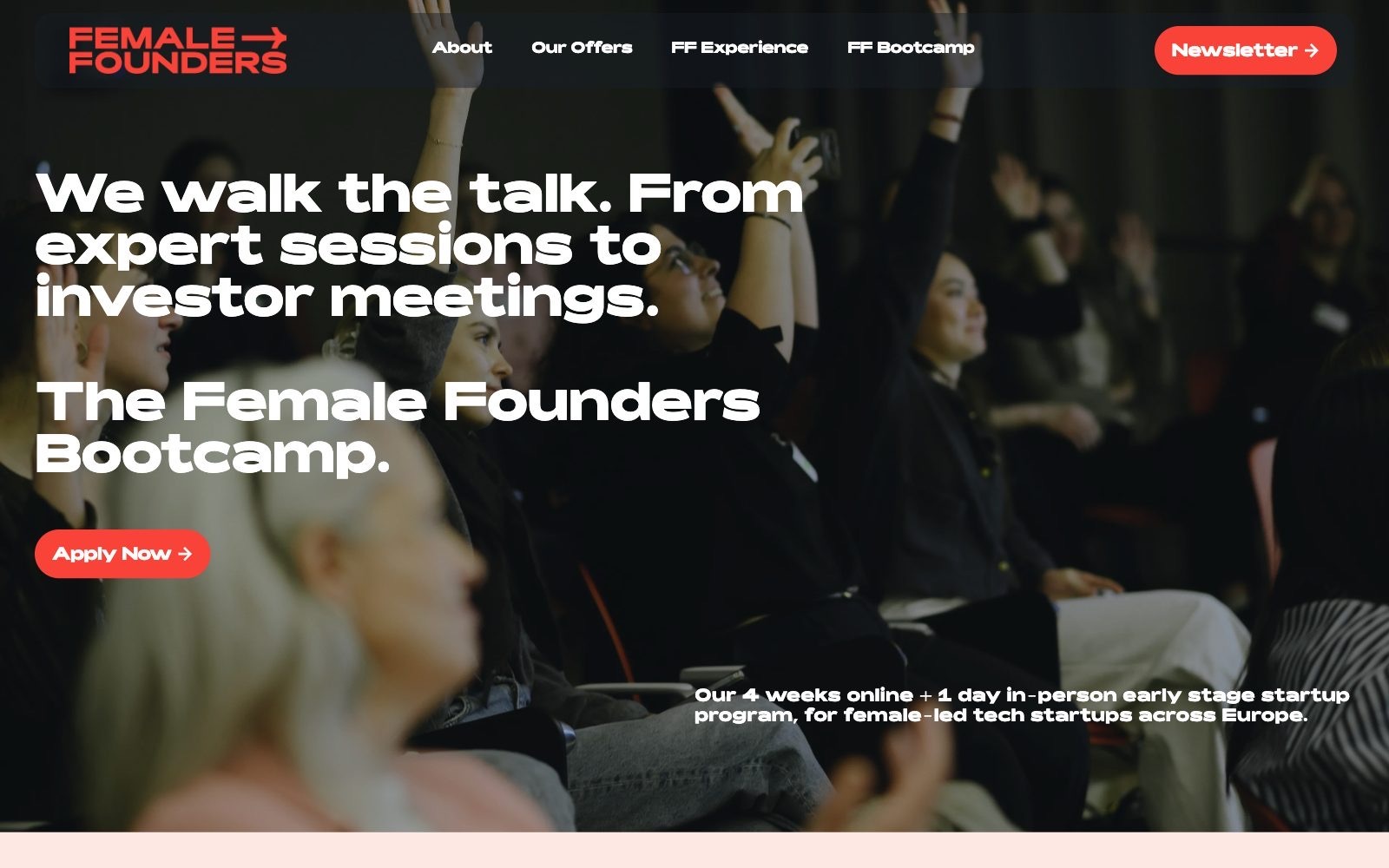
Female Founders, the network behind Fund F (which has raised €28 million for female co-founded teams), runs a 4-week hybrid accelerator for female-led tech startups from pre-seed to Series A across Europe. It packs 20+ online expert sessions and one in-person summit, held in Berlin on 10 November 2026.
- What they ask: a female-led tech startup at pre-seed or later, and 90% attendance for the certificate.
- Deal terms as published: €500 excluding VAT, plus €100 per added founder, non-refundable. No equity is mentioned.
- Fit for bootstrappers: short, cheap and mostly remote. Next cohort dates are not published yet.
7. NextWave: Ireland's national accelerator for women founders
Enterprise Ireland launched NextWave in November 2025 with 24 companies in its pilot, delivered by Ireland's four regional business centres (BICs). The format mixes in-person "surge" days with online tracks you follow at your own pace, over 10 weeks. An Irish Times feature from May 2026 calls it "hugely oversubscribed".
- What they ask: a company ideally incorporated less than three years ago, a first product already tested with customers, export plans and the aim to raise pre-seed or seed money.
- Deal terms as published: cost and equity are not published.
- Fit for bootstrappers: a bridge for Irish founders heading for a first round. The next cohort date is not published.
8. Founder Institute: a part-time, online pre-seed accelerator
The Founder Institute runs online cohorts and European chapters, from London and Spain this autumn to Germany and the Nordics in spring 2027. Its FAQ mentions a mix of full-time and part-time founders and asks for at least 20 hours a week, including a weekly two-hour session.
- What they ask: anything from "I have an idea" to early revenue, and the weekly homework.
- Deal terms as published: a $499 fee for the Antwerp cohort until 15 December 2026 ($699 after), and a 2.5% equity warrant that only activates if you raise $100,000 or more from outside investors.
- Fit for bootstrappers: built for founders with a job, and the warrant costs nothing if you stay bootstrapped.
Which pre-accelerators take founders at the idea stage?
If you have an idea and no company yet, start here. Our 90-day plan for starting a startup covers the same ground step by step.
9. EIT Jumpstarter: Europe's free pre-accelerator for early ideas
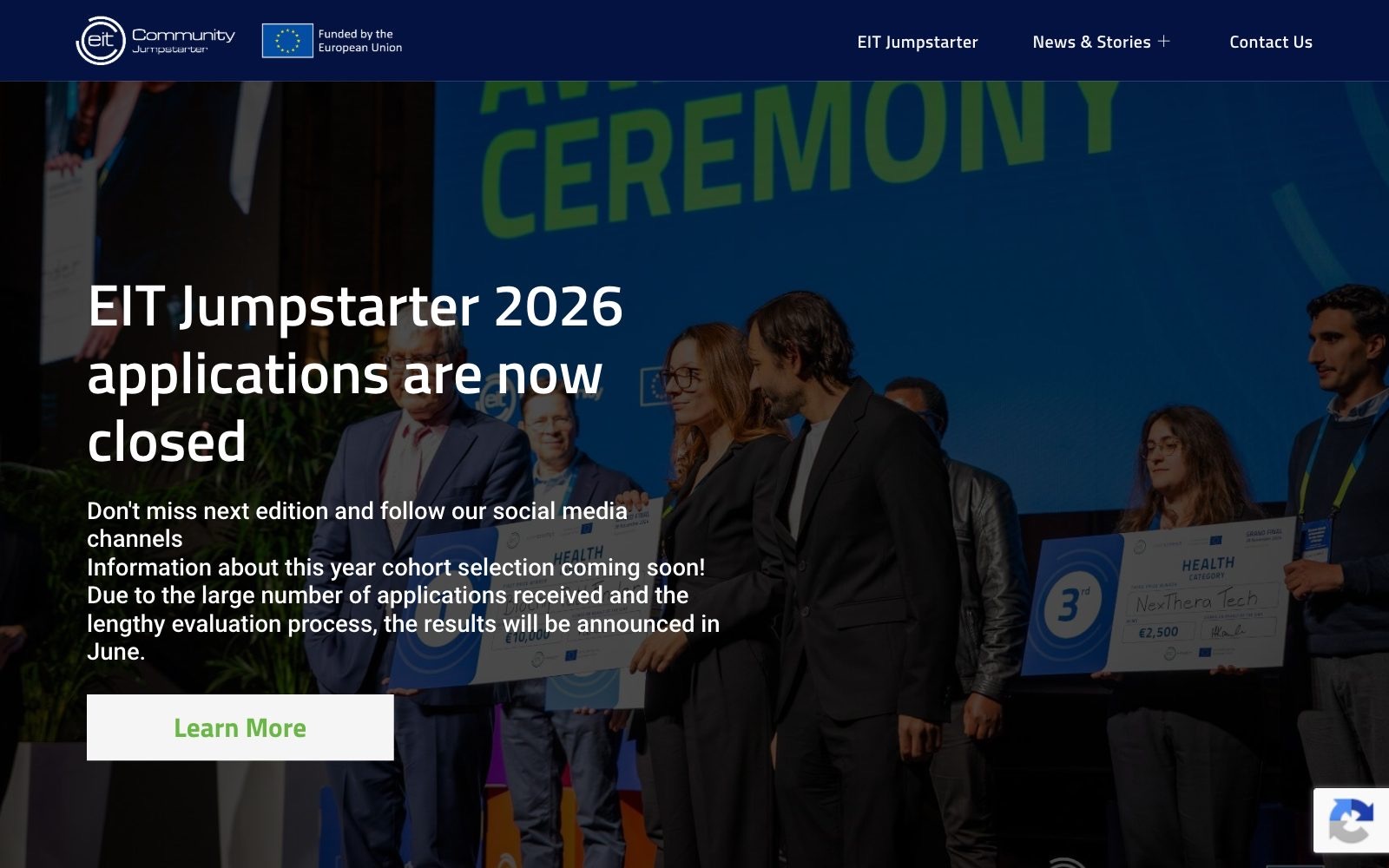
EIT Jumpstarter, a European pre-acceleration programme, gives teams a 15-hour online bootcamp and 40 hours of in-person training, prizes of €2,500, €5,000 or €10,000 and a travel budget. 2026 categories: health, food, raw materials, energy and smart cities.
- What they ask: an early idea with no startup registered before 1 January of the programme year, and one team member with citizenship of an eligible country (university notices list fewer countries than the homepage, so check the rules).
- Deal terms as published: no fee and no equity are mentioned.
- Fit for bootstrappers: a gentle first step. The 2026 call closed in May.
10. STATION F Fighters Program: free, for founders from atypical backgrounds
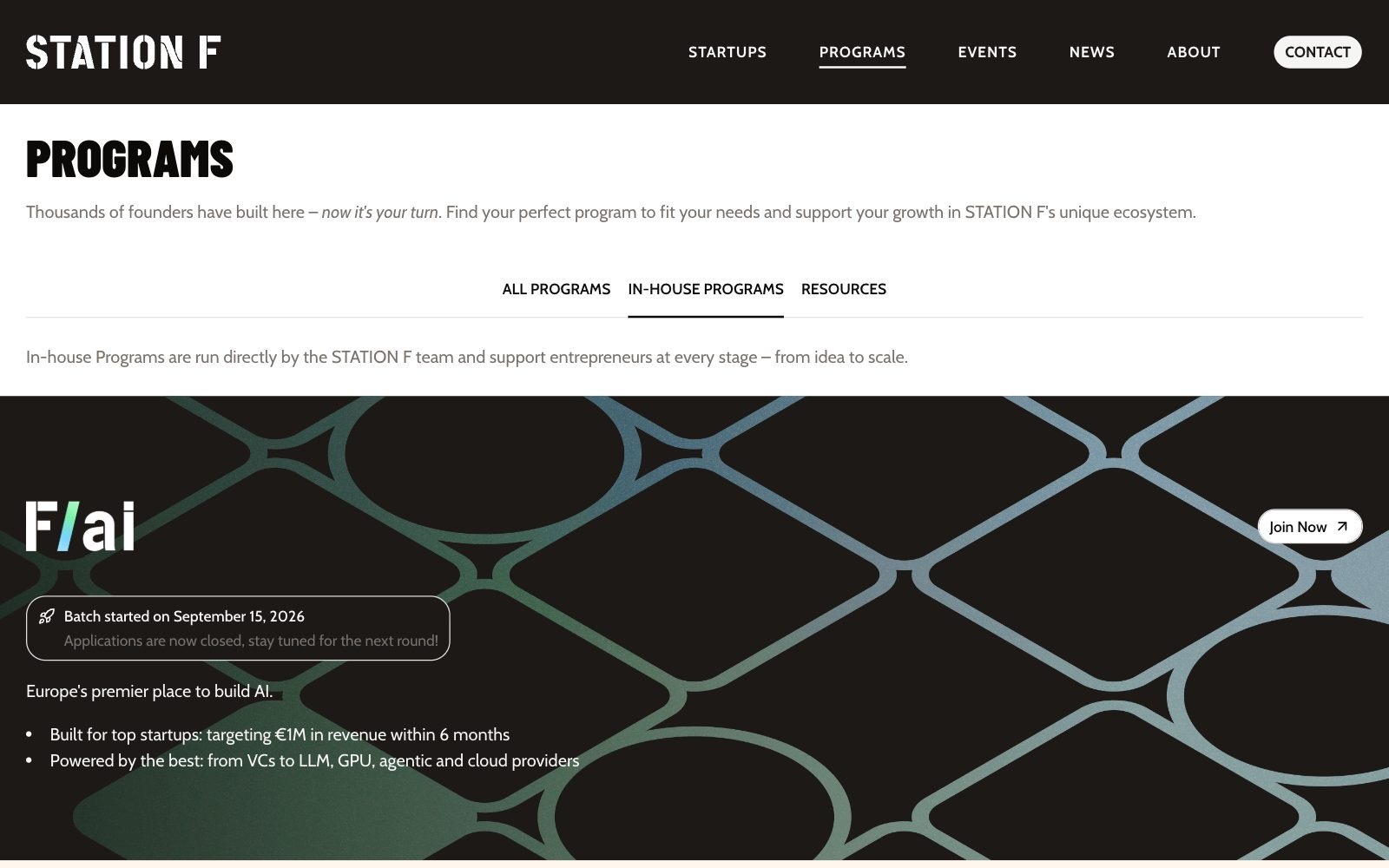
The Fighters Program at STATION F in Paris is for entrepreneurs from atypical or underprivileged backgrounds. It is free: one month of basics, then work on campus. The January 2026 batch drew more than 500 applicants for 12 places; a 2025 batch had 54% of startups led by at least one woman.
- What they ask: an idea with a tech component, French (the programme language), and on-site presence in round two.
- Deal terms as published: free; no equity is mentioned.
- Fit for bootstrappers: a door into the STATION F campus if you can be in Paris. Closed until the next round.
How do full-time, equity accelerators compare?
Most lists call these two the best startup accelerators in Europe. Here is what a classic investor deal costs.
11. Entrepreneur First: for individuals who have no co-founder yet
Entrepreneur First takes individuals with no co-founder and no idea, helps them form a team over 12 full-time weeks in London, then invests.
- What they ask: a strong track record and a move to London.
- Deal terms as published: a £6,000 equity-free talent grant, then $125,000 for 8% via a post-money SAFE, and an optional extra $125,000 if you move to San Francisco and incorporate in Delaware.
- Fit for bootstrappers: low. Read our guide to finding a co-founder as a female entrepreneur first.
12. Antler: €500K at the start for around 10%
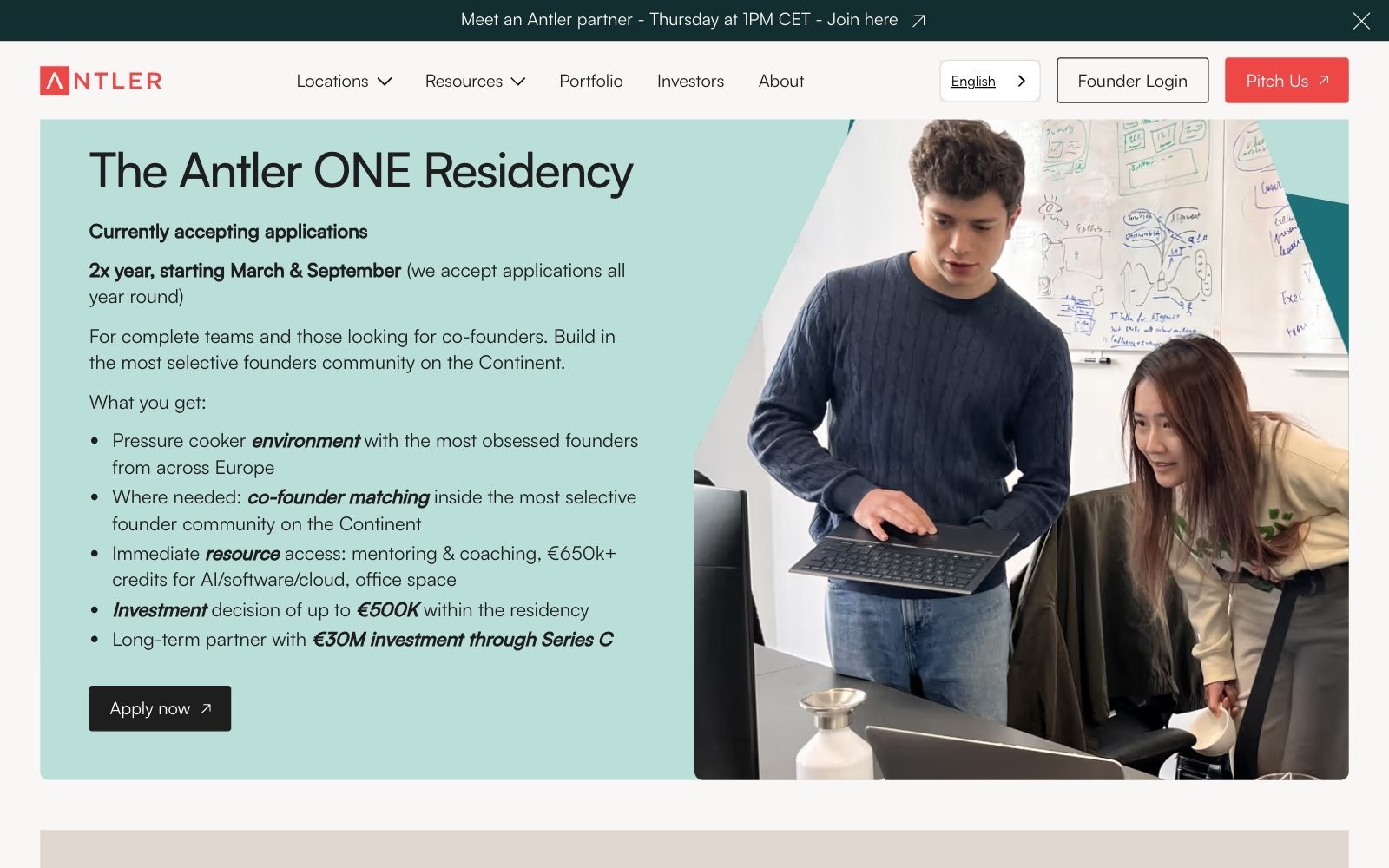
Antler's Continental Europe residency runs from Berlin with a launch pad in Amsterdam: about six weeks for teams, about ten for solo founders matching with a co-founder. Cohorts start in March and September, and applications are open all year.
- What they ask: time in Berlin and a team, or the will to form one.
- Deal terms as published: €500K at inception (€200K at once, up to €300K follow-on), typically converting into around 10% at a €5 million valuation.
- Fit for bootstrappers: only if you want venture money full-time.
How much does an equity accelerator really cost you?
Here is the maths most lists skip: Entrepreneur First's $125,000 for 8% means your company is valued at $1.56 million post-money ($125,000 divided by 8%). If you later raise at a $10 million valuation, that 8% stake is worth $800,000 before further dilution. Antler's 10% becomes €2 million at a €20 million valuation.
Women TechEU's €75,000 grant and Grace Berlin's €20,000 in stipends cost 0% of your company. The Founder Institute's 2.5% warrant sits in between: €50,000 at a €2 million valuation, and only if you raise outside money.
My rule as a bootstrapper: take equity money only when you know exactly what it buys, such as a hire or a production run that turns into revenue. For a fair split inside your own team, see our guide to equity distribution in startups, and for realistic round sizes, read pre-seed funding expectations for female founders.
What if you are not accelerator-ready yet?
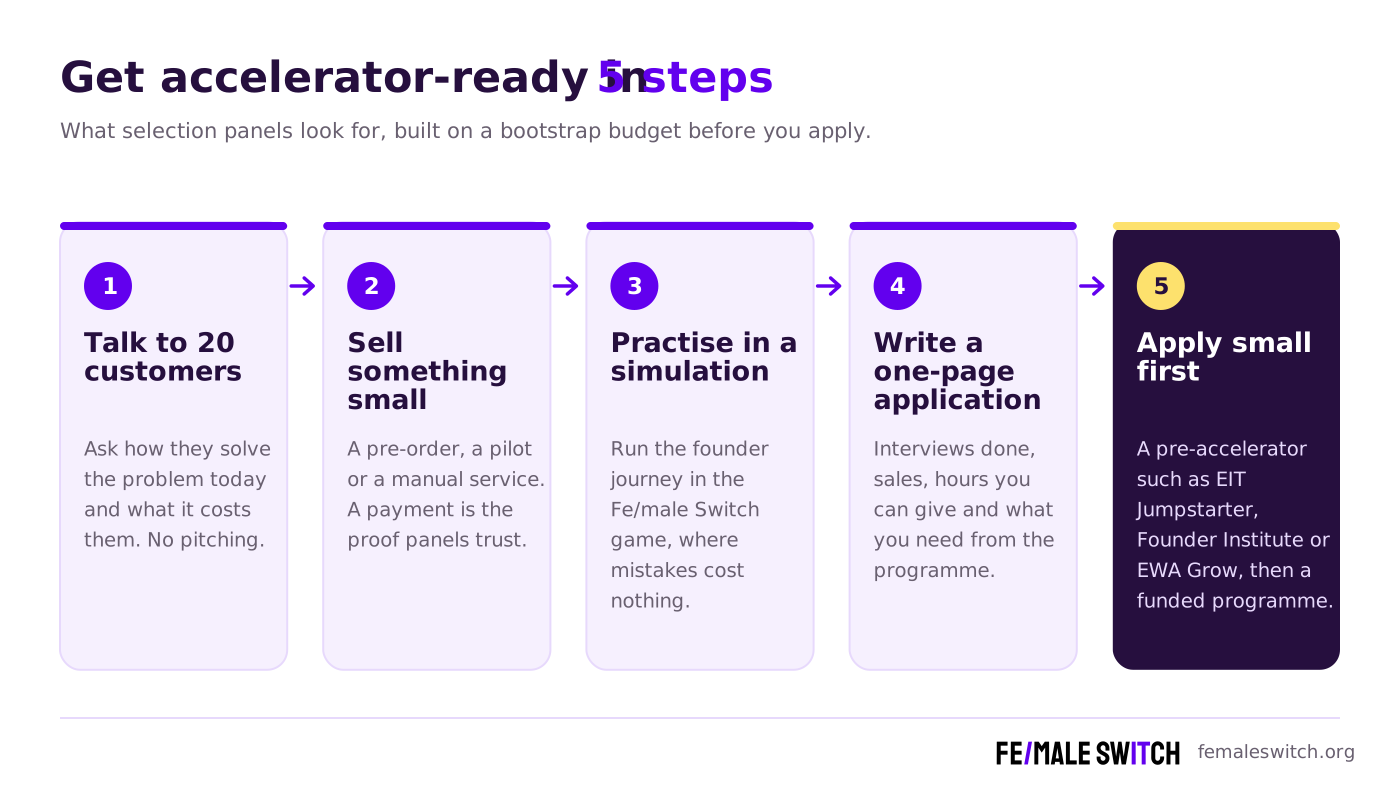
Selection panels look for proof: customer conversations, a first sale, a prototype. Next steps:
- Talk to 20 potential customers this month. No pitching; ask how they solve the problem today. Our guide on how to validate a business idea without spending money has the questions.
- Sell something small before you build: a pre-order, a pilot, a manual service. See minimum viable product tests under €500.
- Practise the whole founder journey in a simulation, where mistakes cost nothing. Our list of business simulation games compares the options.
- Write your one-page application with numbers: customers interviewed, sales, hours you can give.
- Apply to a pre-accelerator first (EIT Jumpstarter, Founder Institute, EWA Grow), then use what you learn for a funded programme.
Practise before you apply. In the Fe/male Switch startup game you build a startup with an AI co-founder called PlayPal: validate the idea in the Sandbox, learn in Skill Lab modules and earn micro-credentials to show a selection panel. The Start plan is FREE, and it fits next to a job or kids. Then read how to bootstrap your startup as a female founder.
What should you write in your application? Copy these
Accelerator forms ask the same five things. Copy this outline and fill in your numbers:
Application answer outline:
- Problem: [who] loses [time or money] when [situation]. I spoke to [number] of them in [month].
- Solution: we [what you do] so they [result]. Today [number] people use or paid for it.
- Why me: I [experience] and saw this problem as [role] for [years].
- Proof: [sales, sign-ups, pilots, letters of intent], growing [x]% a month.
- Ask: from this programme I need [mentor type, contacts, money] to reach [next goal] by [date].
Before you sign, ask two alumni these questions and run the term check:
Questions to ask alumni:
- How many hours a week did the programme take, and when were sessions held?
- Which mentor or contact made a real difference, and how did you meet them?
- Did the programme help you raise money or win customers within six months?
- What would you skip if you did it again?
Term check:
- What do I receive: grant, stipend, SAFE, loan or nothing?
- What do I give: equity %, warrant, fee, attendance, relocation?
- At what valuation does any equity convert, pre-money or post-money?
- What happens to the stake if I never raise outside money?
Your deck needs the same numbers; see our pitch deck examples from women-led startups.
Which accelerator mistakes cost women founders the most?
- Applying too early. Women TechEU wants TRL 4 to 6 and a registered company; NextWave wants a tested product. Check the stage line first.
- Ignoring the hours. Grace Berlin, STATION F and Entrepreneur First are full-time; EXIST-Women and the Founder Institute suit part-timers.
- Giving equity for training you can get free. Before you trade 8%, check the grants above and how far product-market fit on a bootstrap budget gets you alone.
- Missing the window. Most of these open once a year, so diary the next calls today.
For side income while you validate, our list of side hustles for women that fit next to a job or kids has real rates.
Where should you start this week?
Open the fit finder, enter your real hours and stage, and look at the top three. If one is open now (Women TechEU, EXIST-Women through your university, the Founder Institute, Antler or Entrepreneur First), start the form this week. If your matches are closed, diary their next calls and use the gap to talk to customers and practise in the Fe/male Switch game. A strong application in six months beats a rushed one tomorrow, and no-equity programmes are worth the wait.
FAQ: best startup accelerators
What is the best startup accelerator for women in Europe?
For deep tech, Women TechEU (€75,000 equity-free grant plus mentoring). For full-time founders in Berlin, Grace Berlin (€2,500 a month). For part-timers in Germany, EXIST-Women. The best match depends on your stage, country and hours.
Which startup accelerators take no equity?
Women TechEU, Innovate UK's awards for women, Grace Berlin, EIT Food EWA and EXIST-Women publish grant or stipend terms with no shares taken. The Female Founders Bootcamp charges €500 and mentions no equity.
Can I join an accelerator part-time or while I have a job?
Yes. EXIST-Women runs alongside a job or studies, the Founder Institute asks for at least 20 hours a week, and the Female Founders Bootcamp is four weeks online plus one day.
What is the difference between an incubator and an accelerator?
An accelerator is a fixed programme for a cohort that ends with a demo day and may invest for shares. An incubator supports early companies over an open period with space and advice. A pre-accelerator prepares idea-stage founders for an accelerator.
Is there an incubator for female entrepreneurs with no company yet?
Yes. EXIST-Women and EIT Food's EWA Grow take women at the idea stage, and Grace Berlin takes founders with no revenue yet. EIT Jumpstarter and the Founder Institute accept ideas from anyone.
How much equity do startup accelerators take?
Entrepreneur First takes 8% for $125,000 via a post-money SAFE, Antler around 10% for €500K, and the Founder Institute a 2.5% warrant. Grant-based programmes take none.
Do I need a co-founder to get into an accelerator?
No for most programmes here. Entrepreneur First needs neither a co-founder nor an idea, Antler runs a co-founder matching track, and Grace Berlin accepts solo founders.
