
TL;DR: why are profitable bootstrapped companies raising now?
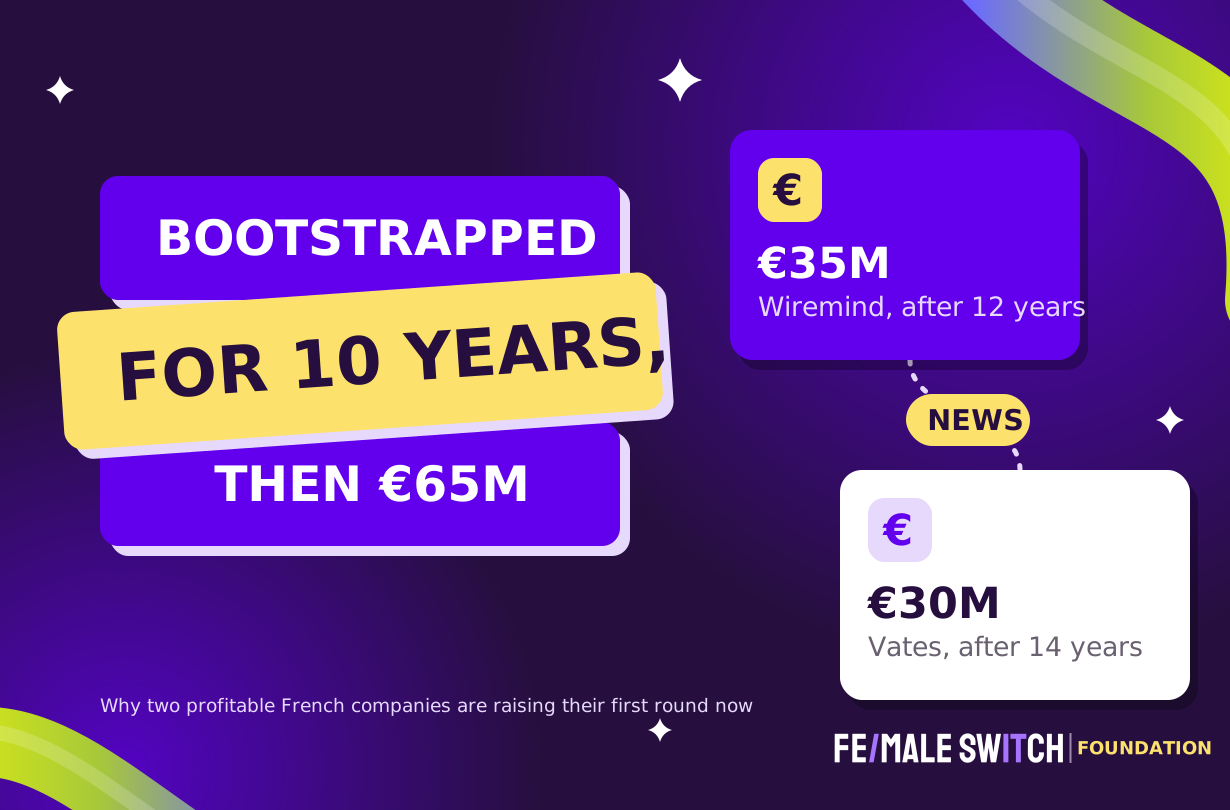
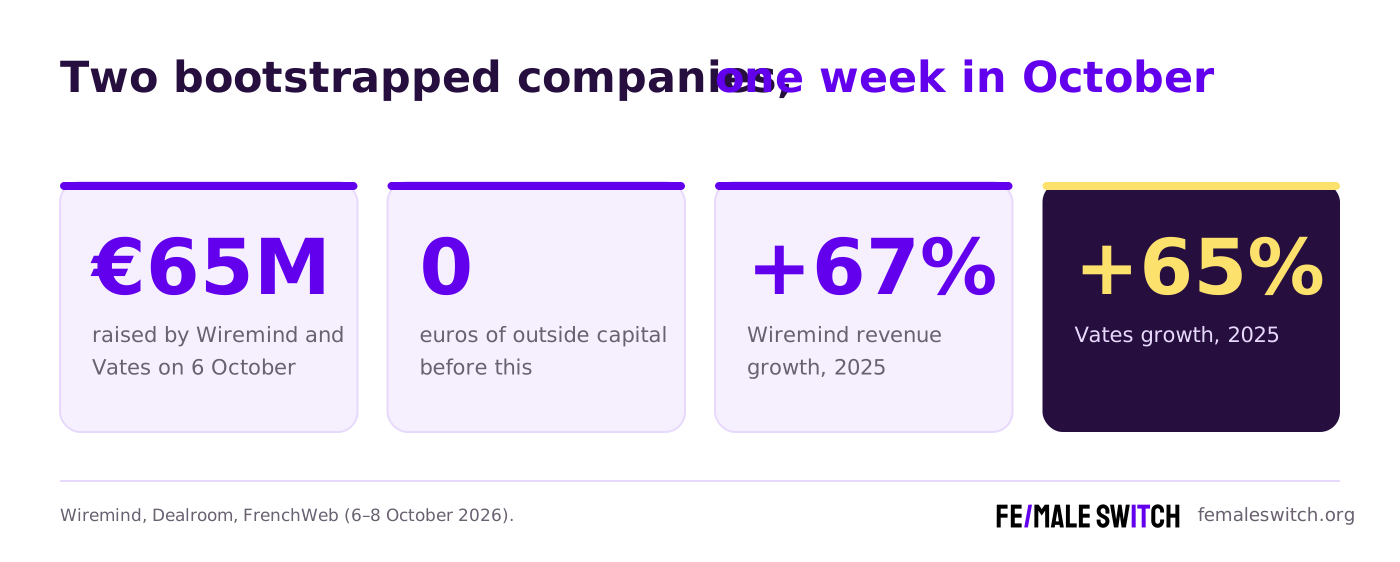
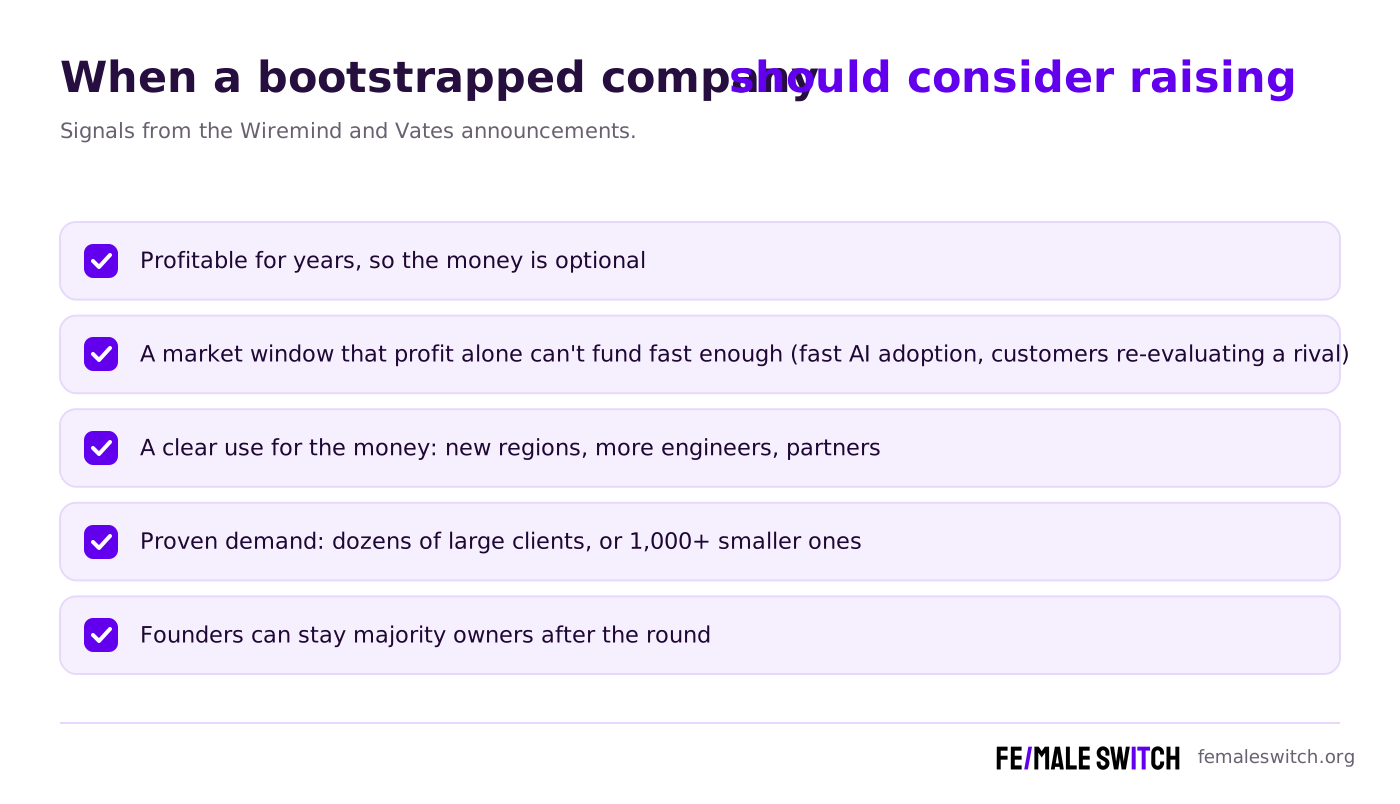
On 6 October 2026, two French software companies that had never taken outside money announced their first rounds. Wiremind, a Paris revenue-management company founded in 2014, raised €35 million. Vates, a Grenoble virtualisation company founded in 2012 and co-founded by Nithida Vialle, raised €30 million. Both have been profitable for years, both grew more than 65% in 2025, and in both cases the founders remain majority owners. Their reasons: a market window that profit alone can't fund fast enough. Here's what bootstrapped founders can learn from them.
In a quarter when European venture money poured into AI mega-rounds, two of the most interesting deals came from companies that spent more than a decade proving they didn't need investors. They raised anyway, on their own terms.
For founders who bootstrap, this is the version of fundraising worth studying: not raising to survive, but raising because you've earned the choice.
Wiremind: 12 years without a single outside euro
Colin Girault-Matz and Charles Pierre met in 2012 in the revenue management department of SNCF, France's national railway. In 2014 they started Wiremind in Paris to build revenue-management software for transport companies. For 12 years they financed it from its own revenue.
On 6 October 2026, Wiremind announced a €35 million first round from IronWave (formerly Wendel Growth), Bpifrance Large Venture and Seaya Andromeda, which Dealroom reports as the lead investor. The two founders remain majority shareholders. Dealroom puts the round above the 99th percentile of 350 comparable rounds.
- Products: CAYZN, its revenue-management software, used by more than 20 operators including SNCF, Trenitalia, Eurostar and SJ; PAXONE, an inventory and distribution system launched in 2023; and EVENTORI, an events ticketing platform launched in 2022 and used mostly by sports clubs.
- Growth: revenue up 67% in 2025; CAYZN's annual recurring revenue up 81%; EVENTORI up 140%, with more than 2 million tickets sold.
- Size: more than 80 clients, 23 of them new in 2025, and about 180 employees.
- Profitable: the company says it has been self-financed and profitable since 2014.
Why raise now? "The speed at which the market is adopting artificial intelligence tools," Girault-Matz said in the company's announcement. He told Maddyness that the company had reached "a critical size" that let it consider accelerating. The money goes to expansion in the Middle East and Asia-Pacific and to AI, including large language models. Victoire Laurenty of IronWave summed it up: Wiremind grew "without a single euro of outside capital".
Vates: profitable since 2016, now taking on a giant's customers
On the same day, Grenoble-based Vates announced its first raise: €30 million from IRIS (through its Growth fund) and Bpifrance Large Venture, according to FrenchWeb. The company was founded in 2012 by Olivier Lambert, Nithida Vialle and Julien Fontanet, who remain majority owners.
- What it makes: virtualisation software. XCP-ng, built on the open-source Xen hypervisor, runs virtual machines, and Xen Orchestra manages, backs up and automates them.
- Track record: profitable and self-financed since 2016, more than 1,000 clients in about 100 countries, growth above 65% in 2025.
- Global from day one: 90% of revenue comes from outside France, and North America makes up nearly half of the business.
The window: many companies are re-evaluating VMware, the market leader, and Vates wants the teams and partners to win large deployments. "We are not raising funds to change our strategy, but to accelerate the one we have pursued from the start," Olivier Lambert said, as quoted by FrenchWeb.
What bootstrappers can learn
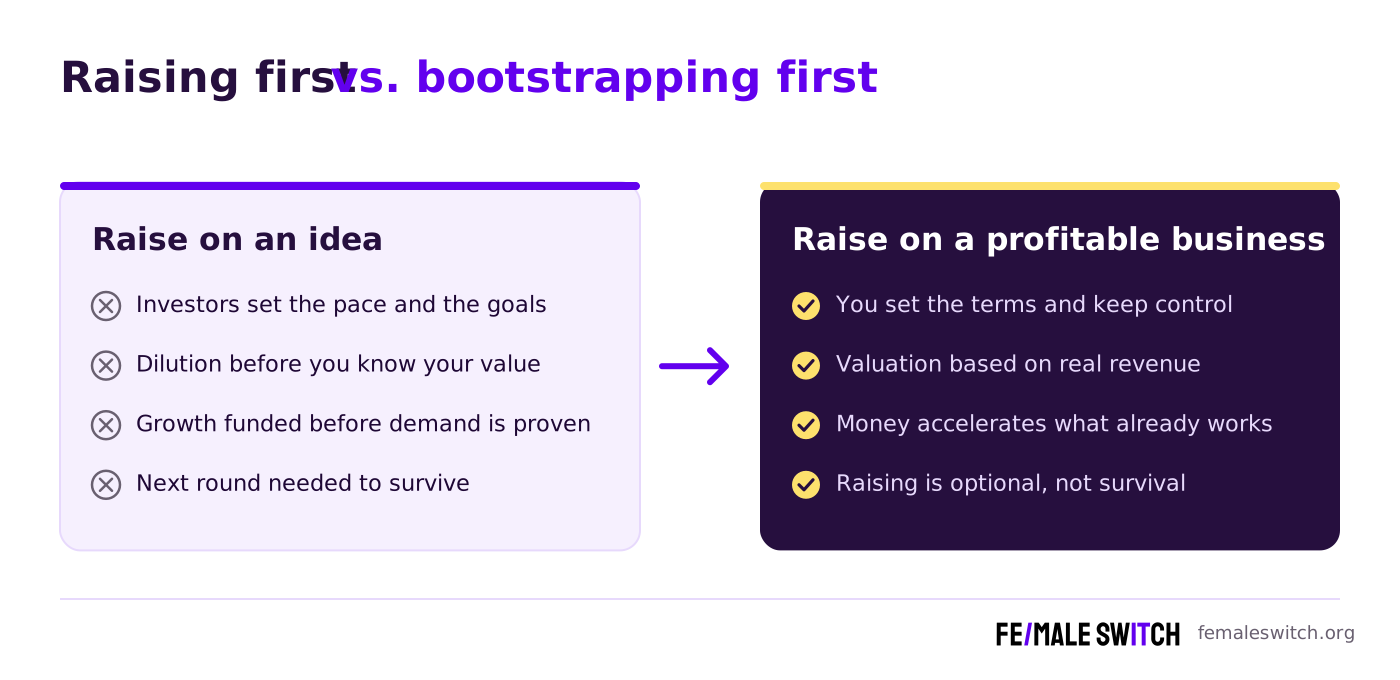
- Profit buys you choice. Both companies could have kept going without investors. That's why their founders still own the majority after raising. If you want that position, start with how to build a startup without funding.
- Bootstrapping isn't the same as staying small. Wiremind has about 180 employees and works with national railways; Vates sells to more than 1,000 clients in about 100 countries. Both grew more than 65% last year.
- Domain expertise is a bootstrapper's edge. Wiremind's founders came out of SNCF's revenue-management team and sold back into that industry. Start where you already know the customers' problems.
- Raise for a window, not for a gap. Both companies raised to seize a specific opportunity, not to cover losses. Read our comparison of sustainable versus rapid growth and when to scale your startup.
- Public investors back profitable companies too. Bpifrance, France's public investment bank, took part in both rounds. Look for your country's equivalent and for alternative funding sources.
This happened in the same quarter that European VC hit $25 billion while seed funding stayed flat; see Europe's best VC quarter in four years. For more on the decision itself, read bootstrapping versus VC funding on mean.ceo, and if you're a woman building without investors, our guide to bootstrapping as a female founder.
Build a business that makes investors optional
The Fe/male Switch startup game takes you from idea to first paying customers in weekly quests, with an AI co-founder and a community of founders.
👉 Start the game
FAQ: Wiremind, Vates and raising after bootstrapping
How much did Wiremind raise?
€35 million in its first funding round, announced on 6 October 2026, from IronWave, Bpifrance Large Venture and Seaya Andromeda. The founders remain majority shareholders.
What does Wiremind do?
It builds revenue-management, inventory and ticketing software for transport operators and event organisers, used by companies such as SNCF, Trenitalia and Eurostar, as well as sports clubs.
How much did Vates raise?
€30 million from IRIS and Bpifrance Large Venture, its first raise after being profitable and self-financed since 2016. Its co-founders, including Nithida Vialle, remain majority owners.
Why do profitable companies raise money?
To seize a market window faster than profits allow: expanding into new regions, hiring engineers, or winning customers from a competitor. Raising from profit also lets founders keep control.
Can a bootstrapped company raise venture capital later?
Yes. Wiremind raised after 12 years and Vates after 14. A profitable track record usually means better terms and less dilution.
Is bootstrapping better than raising venture capital?
It depends on your market. Bootstrapping keeps control and forces profitability; venture capital buys speed. Many founders bootstrap first and raise once they know what works.
