
TL;DR: what are great business ideas that also do good?
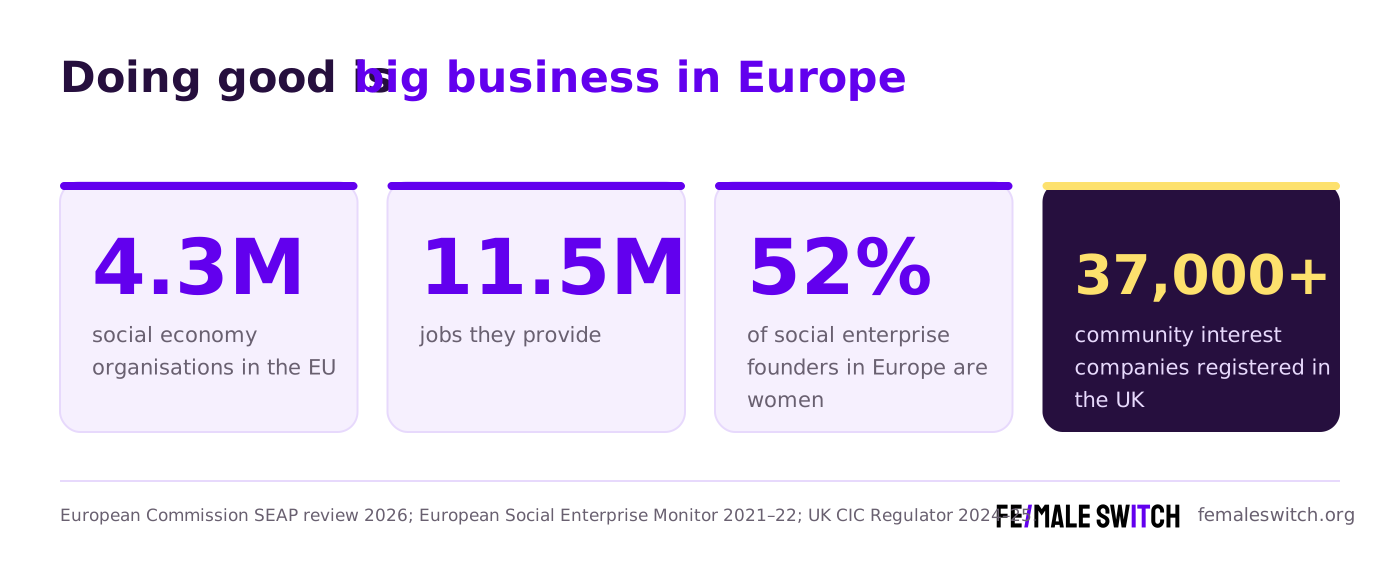
Ideas where the impact is built into how the business makes money: turning waste into products, reselling and repairing, buy-one-give-one, hiring people others overlook, or committing profits to a cause. Europe's social economy already counts 4.3 million organisations and 11.5 million jobs, and about half of social enterprise founders are women. Below are six models, 14 European examples with the version you could start in 2026, the legal forms that protect your mission, and where to find funding.
👉 Test your impact business idea in the Fe/male Switch startup game
When women founders tell me about their ideas, many of them want more than income. They want to fix something: food waste, period poverty, people shut out of work. The good news is that you don't have to choose between doing good and running a real business. Some of Europe's most interesting companies prove that impact and profit can grow together, if the impact is built into the business model rather than bolted on.
This guide focuses on great business ideas that do good. For 20 founders who started small with more classic ideas, from Spanx to Vinted, see our sister guide to great business ideas proven by real founders.
A great impact business doesn't ask customers for charity. It sells something they want, and the good happens every time they buy.
What makes an impact business idea great?
Three questions separate great impact ideas from good intentions. Who pays? The person who benefits often can't pay, so someone else must: customers, companies, or public buyers. Does the impact grow with sales? If every sale creates more good, mission and money pull in the same direction. Can it make a profit? According to Euclid Network, women-led social enterprises in Europe tend to be smaller and younger, and more often break even than make a profit. Pricing for profit is what lets the impact last.
For a general check of any idea, see signs your business idea is worth pursuing.
6 business models that turn impact into income
Turn waste into value
Rubies in the Rubble (UK, early 2010s)
Jenny Costa makes ketchups and mayonnaise from surplus fruit and vegetables and sells them through retailers; the company is a certified B Corp.
The version you could start in 2026: A local preserve, juice or snack brand made from surplus from farms or markets near you.
Olio (UK, 2015)
Tessa Clarke and Saasha Celestial-One built a food-sharing app with millions of users. It earns money from businesses that pay its volunteers to collect and redistribute their surplus food, plus in-app subscriptions.
The version you could start in 2026: A surplus-collection service for bakeries, cafés and offices in your city.
Karma (Sweden, 2016)
Co-founded by Elsa Bernadotte, Karma lets restaurants and shops sell surplus food at a discount through an app and takes a share of each sale.
The version you could start in 2026: A marketplace for one type of surplus in your region: flowers, bread, produce.
Phenix (France, 2014)
Phenix helps retailers donate unsold food, sell short-dated stock and offer anti-waste baskets, working with around 16,000 points of sale.
The version you could start in 2026: Food-waste consulting for supermarkets and caterers, paid from the savings you find.
Resell, repair and refurbish
Vestiaire Collective (France, 2009)
Co-founded by Fanny Moizant and Sophie Hersan among others, Vestiaire Collective resells pre-owned luxury fashion and earns a commission on each sale. It became a certified B Corp in 2021.
The version you could start in 2026: A curated resale shop for one niche you know: children's clothes, outdoor gear, designer bags.
Back Market (France, 2014)
A marketplace for refurbished phones and laptops with 17 million customers in 17 countries; it reported its first global profit in 2025.
The version you could start in 2026: A local repair and refurbishment service for phones, laptops or bikes.
Fairphone (Netherlands, 2013)
Fairphone sells modular, repairable phones. It reported €73.3 million in revenue and 145,259 phones sold in 2025, with a workforce that is almost half women, according to its 2025 annual report.
The version you could start in 2026: A repair-friendly product in a category you understand, sold with spare parts and guides.
Buy one, give one
Hey Girls CIC (Scotland, 2018)
Celia Hodson and her daughters sell period products on a buy-one-donate-one basis through shops and public-sector contracts and have donated more than 42 million products. The company has no shareholders.
The version you could start in 2026: A one-for-one product in a category where need is hidden: school supplies, baby items, hygiene.
Hire and train people others overlook
Social Bite (Scotland, 2012)
Alice Thompson and Josh Littlejohn run cafés whose profits support people experiencing homelessness, and create jobs for them. Social Bite says it has helped house more than 1,000 people.
The version you could start in 2026: A café, catering or cleaning business that hires and trains people facing barriers to work.
Change Please (UK, 2015)
A coffee business that puts all its profits into fighting homelessness and trains people experiencing homelessness as baristas.
The version you could start in 2026: A coffee cart or kiosk with a training programme attached.
auticon (Germany, 2011)
An IT consultancy where more than 75% of the workforce is neurodivergent, now with over 500 people in 15 markets.
The version you could start in 2026: A service business that builds on the strengths of a group employers overlook.
Profit for purpose
Ecosia (Germany, 2009)
A search engine that funds tree planting from its profits and passed 250 million trees in April 2026. Since 2018 it has been steward-owned, so it can never be sold and no profits can be taken out.
The version you could start in 2026: A digital product whose profits fund a cause your users care about.
Einhorn (Germany, 2015)
Einhorn sells condoms and period products, has no investors and is steward-owned; half of its profits go to non-profit projects or back into the business.
The version you could start in 2026: A consumer brand in a category where ethics are missing, with the purpose written into ownership.
Make better products for overlooked customers
Wildling Shoes (Germany, 2015)
Anna and Ran Yona built a minimalist-shoe brand with a largely remote team of parents and sold about 360,000 pairs in 2021. In 2025 it closed its showrooms and cut more than 100 jobs to survive, a reminder that impact brands face the same market forces as any other.
The version you could start in 2026: A product for a group you belong to that big brands ignore, launched lean.
How to turn a problem into an impact business
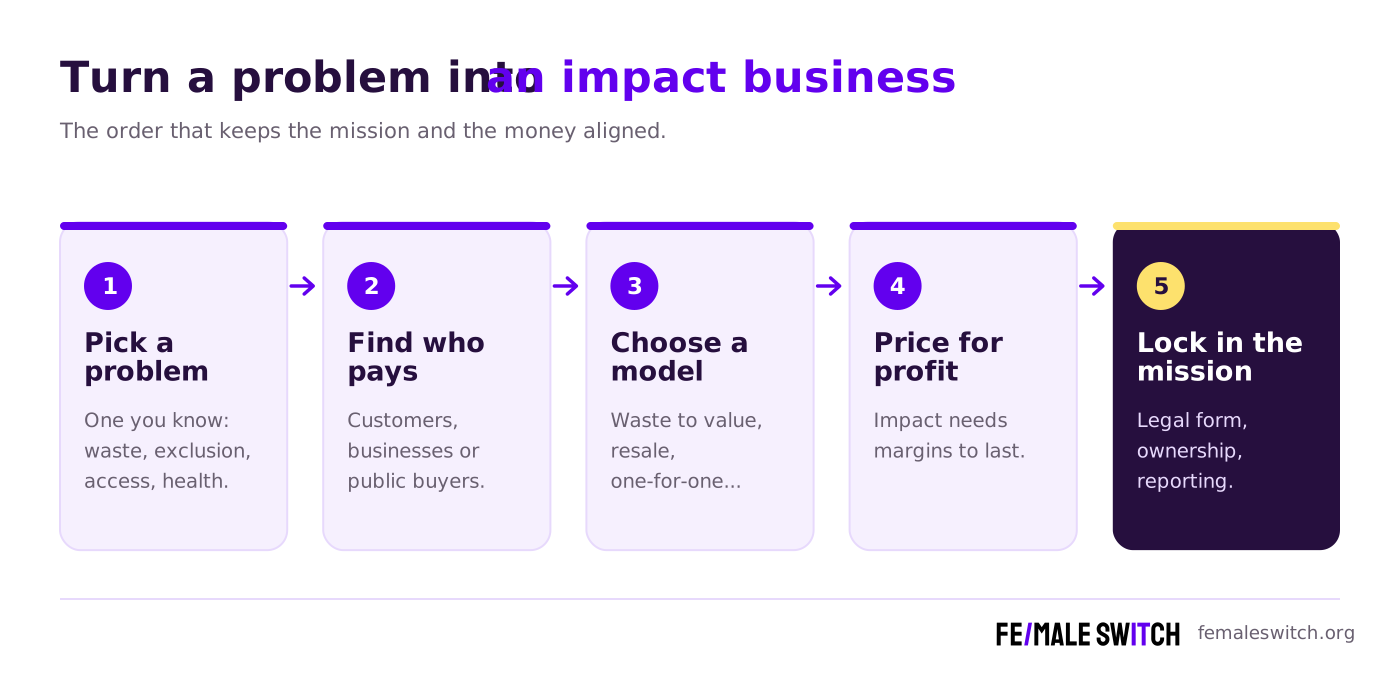
Start with a problem you know well, because credibility matters more in impact businesses than anywhere else. Then find who will pay before you build anything; our 90-day plan to start a startup shows how to test that in a few weeks next to a job. Read sustainability and impact in startups and scaling with purpose for the longer journey.
Legal forms that protect your mission
Sources: UK CIC Regulator, DREETS, German tax code (§52 AO), Italian D.Lgs. 112/2017, Purpose Foundation, B Lab Europe.
A CIC is one of the simplest ways to start; the UK approved a record 8,376 new ones in 2024–25, according to the CIC Regulator. You don't need a special form to start, though: many impact businesses begin as an ordinary company and add the legal lock once the model works.
Where impact businesses find money
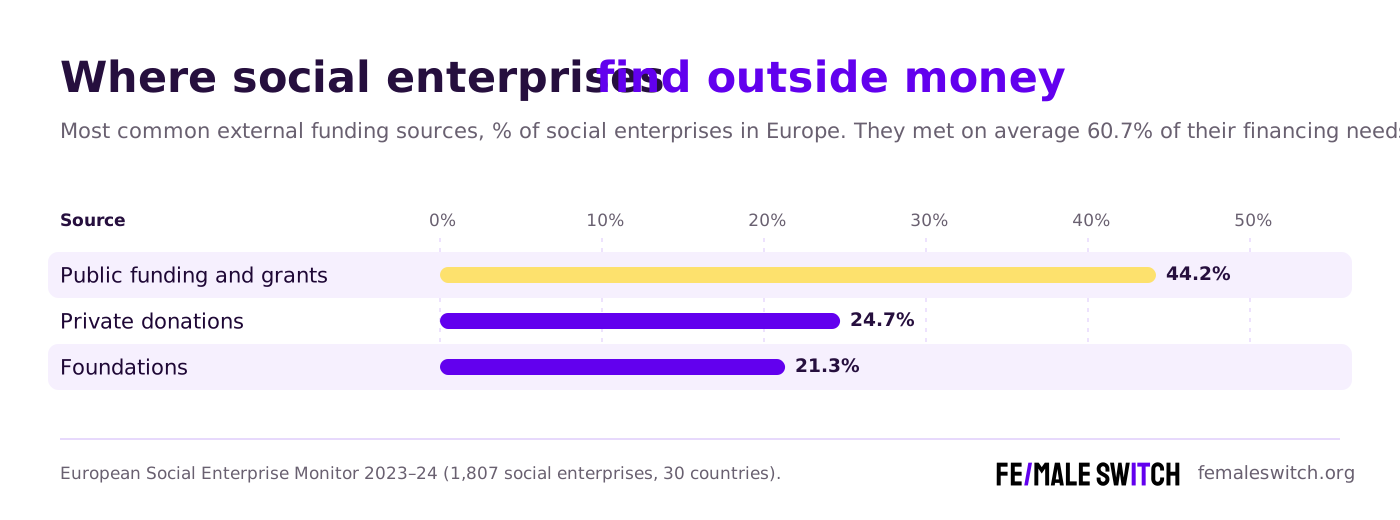
Social enterprises in Europe met on average only 60.7% of their financing needs in the latest European Social Enterprise Monitor, and public money is their most common outside source. Useful routes:
- EU programmes: the European Social Fund Plus funds social enterprises and social innovation through national programmes.
- Microloans and social enterprise loans: under InvestEU, banks offer EU-guaranteed loans, for example microcredit up to €50,000 and social enterprise loans up to €2 million in one Spanish programme.
- Grants and competitions: see grants for female entrepreneurs in Europe and search open calls with the free finder at grant-grants.com.
- Revenue first: as with any business, the strongest funding is customers who pay; read building a profitable business without external investment.
The EU is pushing too: its social economy action plan review counts strategies adopted or in preparation in 21 member states and expects more than €11.7 billion for social enterprises and microfinance through InvestEU, according to the European Commission.
Mistakes that sink impact businesses
- Pricing like a charity. Low prices feel kind but leave nothing for growth or the mission.
- Depending on grants. Grants help you start; customers keep you alive.
- Mission drift. Without a legal or ownership lock, growth and investors can pull you away from the purpose.
- Forgetting the market. Even good brands struggle: Wildling Shoes had to close its showrooms in 2025. Impact is not a substitute for demand.
- Growing too fast. Read sustainable versus rapid growth before you chase scale.
Build an impact business, step by step
The Fe/male Switch Foundation runs a startup game where women build real businesses in weekly quests, with an AI co-founder and a community of founders. Many of them start with a problem they want to solve.
👉 Start your impact business in the game
Conclusion: the greatest business ideas solve two problems at once
The great business ideas in this guide solve a customer's problem and a social or environmental one with the same sale: surplus becomes ketchup, a phone becomes repairable, a coffee becomes a job. Pick a problem you understand, find out who will pay, choose a model where impact grows with sales, and price for profit so the good you do can last.
FAQ: great business ideas that do good
What is a good business idea that helps people?
One where the impact grows with every sale: turning surplus food or materials into products, reselling and repairing goods, buy-one-give-one products, or a café or service that hires people facing barriers to work.
Can a social enterprise make a profit?
Yes. Many do, and profit is what makes the impact last. Fairphone reached €73.3 million in revenue in 2025 and Back Market reported its first global profit the same year. Profits are usually reinvested or shared with the mission.
What is the difference between a social enterprise and a charity?
A charity relies mainly on donations and grants. A social enterprise sells products or services and uses its income and profits to achieve a social or environmental goal.
How do I start a social enterprise in Europe?
Start like any business: pick a problem, find who will pay and test it with real customers. Then choose a legal form that protects your mission, such as a UK CIC, a German gGmbH, an Italian impresa sociale or French ESUS approval.
Are women more likely to start social enterprises?
In Europe about half of social enterprise founders are women, a much higher share than among startup founders overall, according to the European Social Enterprise Monitor.
How do social enterprises get funding?
Mostly from customers, plus public funding and grants, private donations and foundations. EU programmes such as ESF+ and InvestEU-backed loans also support social enterprises.
What is steward ownership?
An ownership model in which voting control stays with the people running the company and profits serve its purpose; the company can't be sold for private gain. Ecosia and Einhorn are steward-owned.
What are examples of successful social enterprises in Europe?
Fairphone, Back Market, Vestiaire Collective, Ecosia, Olio, Social Bite, Hey Girls, Phenix and auticon, among many others.
