
TL;DR: how do you start a startup?
Don't start with a company, an app or a pitch deck. Start with a problem people already pay to solve, talk to 20 of them, pre-sell an offer, deliver the smallest version by hand, and register only once someone has paid you. Next to a job, that takes about 90 days at 8–10 hours a week and usually less than €500. Below is the week-by-week plan I give first-time founders, with real registration costs across Europe.
👉 Practise the whole journey for free in the Fe/male Switch startup game
Most guides on how to start a startup list the steps. What first-time founders tell me they're missing is a calendar: what to do this week, how many hours it takes, what it costs and how to know when a step is done. So this is a 90-day plan for someone who keeps her job, has little money and wants to find out whether her idea can pay before risking anything.
If you'd like the bigger picture first, read our sister guide on how to start a startup in 9 steps, which covers co-founders, AI tools, EU Inc and grants in depth. Updated October 2026.
You don't need permission, investors or a company to start. You need one problem, twenty conversations and the courage to ask for money.
Why a 90-day plan works for first-time founders
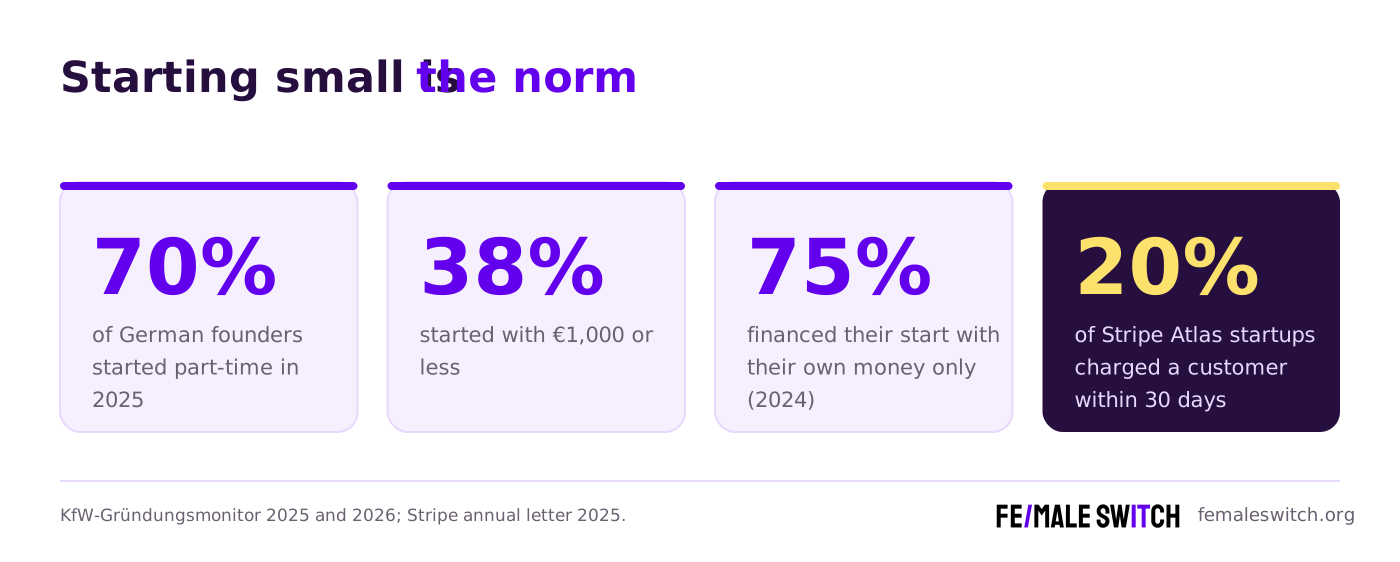
Ninety days is long enough to get real evidence and short enough to keep your motivation and your household budget intact. It also matches how most people actually start. According to the KfW start-up monitor, 70% of Germany's 690,000 founders in 2025 started part-time, 38% started with €1,000 or less, and the median part-time start needed just €2,000. Keeping your job while you test also lowers the odds of failure: in a study of US entrepreneurs, people who started on the side were about a third less likely to fail than those who quit first.
And the first customer can come quickly. Stripe reports that 20% of startups incorporated through Stripe Atlas in 2025 charged their first customer within 30 days, up from 8% in 2020.
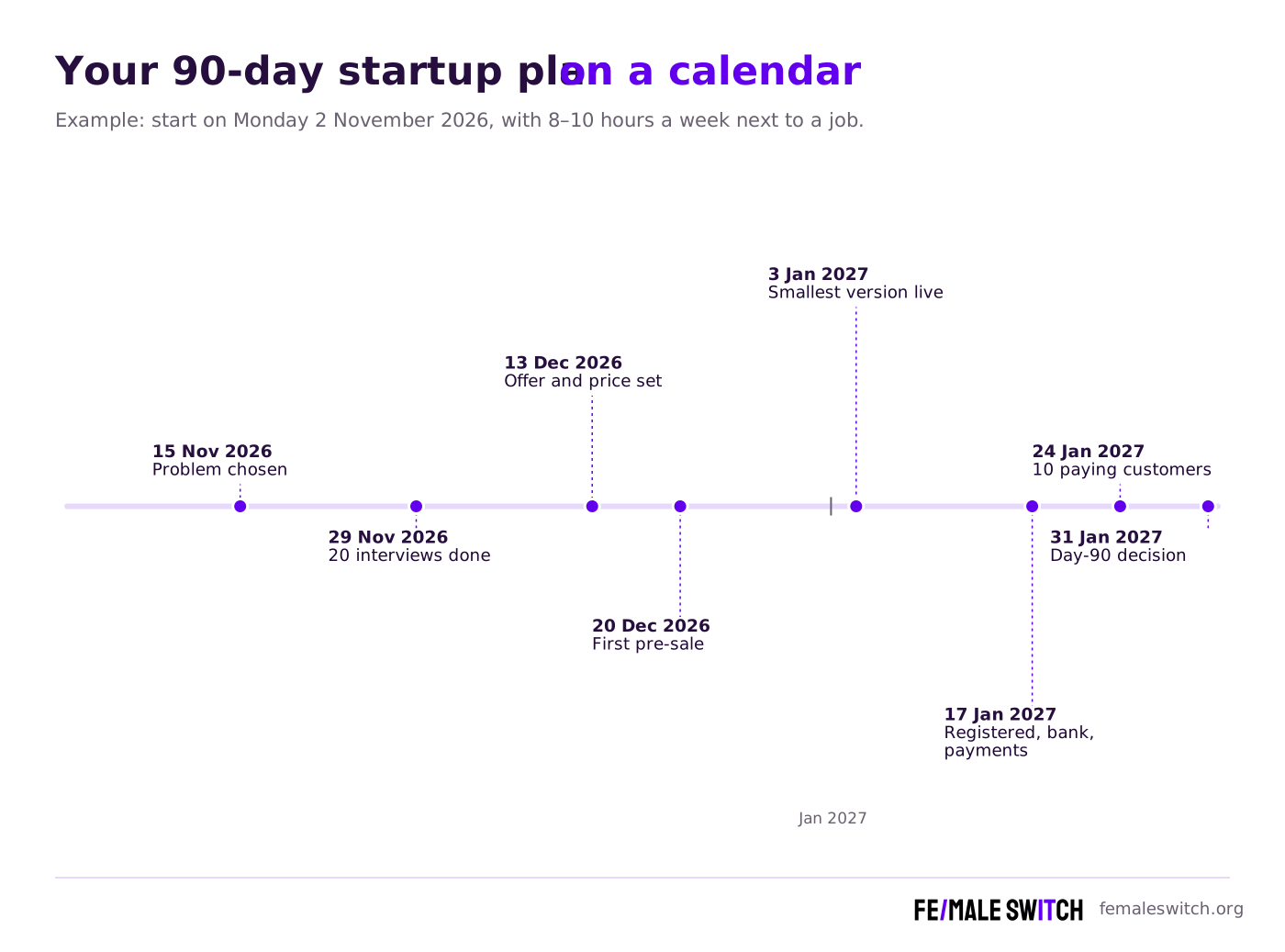
How to start a startup: the 90-day plan at a glance
Hours and costs are my estimates for a service or simple digital product, excluding a laptop and phone you already own. Registration costs depend on the country; see the table in weeks 9–10.
Weeks 1–2: choose a problem, not an idea
Week 1: list problems you already understand
Write down 20 problems from your job, your family, your hobby or your community that people already spend money or time on. Circle the three you would happily talk about for a year.
Done when: A list of 20 problems, 3 circled. Cost: €0.
Week 2: pick one problem and one customer
For each of the three, write who has it, how they solve it today and what that costs them. Pick the one where people already pay for a bad solution. That is your first market.
Done when: One sentence: who has the problem, and what it costs them. Cost: €0.
Weeks 3–4: talk to 20 people
Week 3: book the conversations
Message people who have the problem: former colleagues, LinkedIn groups, local associations, online communities. Ask for 20 minutes to learn, not to pitch. Ten conversations a week is realistic next to a job.
Done when: 10 interviews booked or done. Cost: €0.
Week 4: listen for money
Ask how they handle the problem now, what they have tried, what it costs and what happens if they do nothing. Note exact phrases; they will become your marketing copy. Stop when you hear the same answers again.
Done when: 20 interviews, one page of patterns. Cost: €0.
For interview scripts and the questions that don't lead people, see how to validate a business idea without spending money and our lean validation framework.
Weeks 5–6: design the offer and pre-sell it
Week 5: write the offer and the price
Describe the result you promise, for whom, by when, and at what price. Price from the value and from what people pay today, not from your costs. A one-page landing page or a simple PDF is enough.
Done when: A one-page offer with a price. Cost: €0–50.
Week 6: ask for money before you build
Go back to the people who had the problem most acutely and offer a founding-customer deal: a discount, a deposit or a pre-order. A pre-sale is the strongest proof you can get, and it funds the build.
Done when: Your first pre-sale or deposit. Cost: €0–50.
Pre-selling is how many lasting companies were built. Business professor John Mullins calls it the customer-funded business: let customers' cash, not investors', pay for your growth, through pre-payments, deposits, subscriptions or a service that later becomes a product. Mojang funded Minecraft by selling the game in early alpha, and Tally in Belgium grew to several million dollars of annual revenue without outside investors. Plausible Analytics, an EU-made analytics tool, is self-funded, profitable and passed $1 million in annual revenue in 2022.
Pricing is the hardest part for most of us; read pricing services versus products before you set yours.
Weeks 7–8: build the smallest version
Week 7: deliver it by hand
Deliver the first version manually: a service, a workshop, a spreadsheet, a no-code page. Doing things that don't scale shows you what customers really value.
Done when: First customers served. Cost: €0–200.
Week 8: fix what customers complain about
Collect feedback after every delivery. Fix the top two complaints and ignore the rest for now. Ask every happy customer for a quote you can use.
Done when: Version 2 and three testimonials. Cost: €0–100.
If your product is digital, a no-code tool is usually enough for the first version: see how to build an MVP with no code and marketing your MVP.
Weeks 9–10: make it official
Week 9: choose a legal form
Most first-time founders should start as a sole trader or micro-entrepreneur and only form a limited company once there is real revenue or liability risk. Check your country's small-business VAT threshold before you charge VAT. If you are leaving a job or receiving benefits, check the safety nets for founders first: many must be approved before you register.
Done when: Registered business, tax number. Cost: €0–600.
Week 10: set up money properly
Open a separate business account, connect a payment provider and a simple bookkeeping tool, and set aside about a third of every payment for tax until your accountant tells you otherwise.
Done when: Business account, payments, bookkeeping. Cost: €0–30/month.
Sources: service-public.gouv.fr, §19 UStG, business.gov.nl, Agenzia delle Entrate, European Commission. Rules change; confirm with your tax office or an accountant.
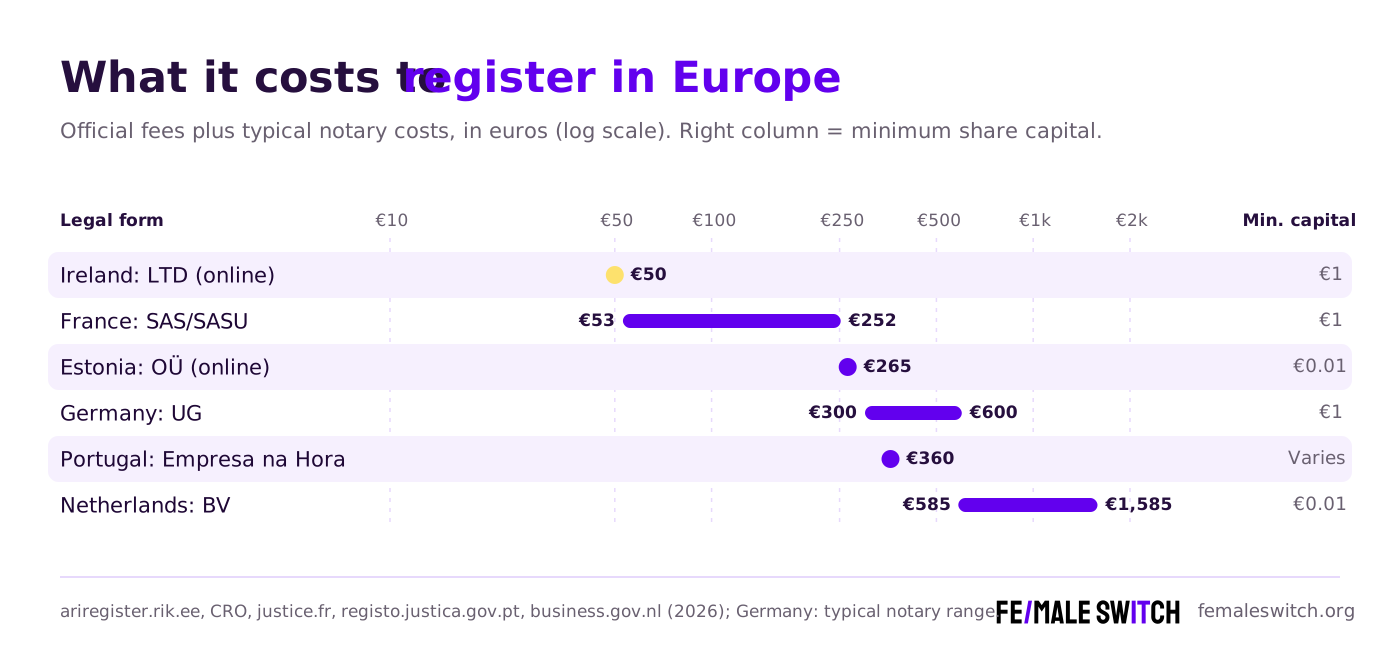
If you want limited liability from day one, the cheapest companies to set up are an Irish LTD (€50 online), a French SASU (from about €53 plus a legal notice) and an Estonian OÜ (€265 online, minimum capital €0.01). A Dutch BV needs a notary, typically €500 to €1,500 according to business.gov.nl. For sole traders, France's micro-entrepreneur status is free and its 2026 ceilings are set on service-public.gouv.fr. If you sell to customers in other EU countries, check the EU SME VAT scheme for businesses under €100,000 EU-wide.
On payments, Stripe charges 1.5% plus €0.25 for standard European cards; a merchant-of-record service such as Paddle costs more (5% plus 50 cents) but handles VAT for you.
Weeks 11–12: sell, measure and decide
Week 11: find the channel that works
Try two channels at most, for example direct outreach and one community or marketplace. Track how many people you contacted, how many replied and how many paid.
Done when: Conversion numbers for 2 channels. Cost: €0–100.
Week 12: decide with numbers
Count paying customers, repeat purchases and the hours you spent. Use the day-90 checklist below to decide whether to go on, change the offer or try the next problem on your list.
Done when: A written go, pivot or stop decision. Cost: €0.
How to pay for the first 90 days without investors
Your budget for the plan is mostly your time. For the money part, in this order:
- Customers: pre-sales, deposits and founding-customer deals.
- Your own savings: decide the maximum you'll spend before you start, and stick to it.
- Grants and competitions: many regions fund early founders; see grants for female entrepreneurs in Europe and the free grant finder at grant-grants.com.
- Microloans: EU-backed microfinance providers lend small amounts, often up to €50,000, to micro-enterprises that banks turn down.
Before you take any external money, compare the options in revenue-based financing versus equity, and read how to start a startup without funding for more ways to keep costs near zero.
Day 90: go, pivot or stop?
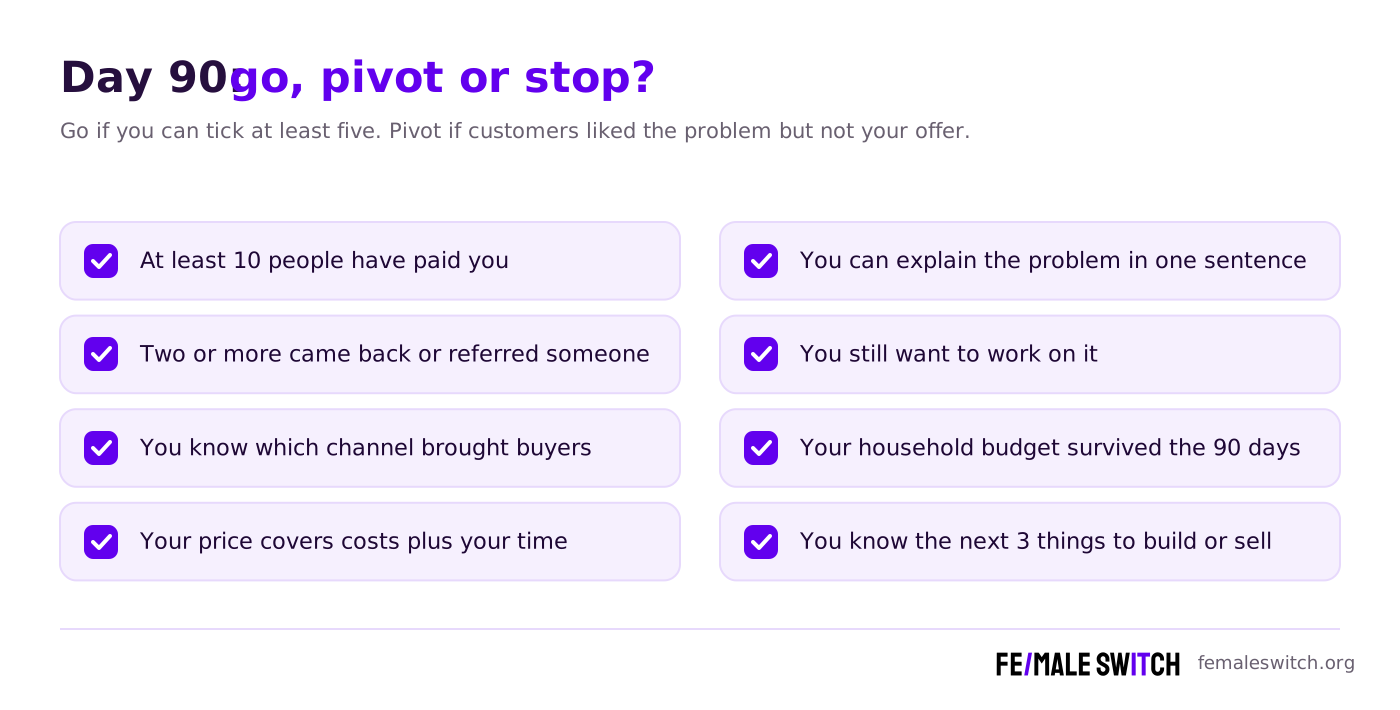
If you can tick five or more, keep going and plan the next 90 days around your best channel. If people loved the problem but didn't buy, change the offer or the price and run weeks 5–12 again. If nobody cared about the problem, go back to your list from week 1. You've lost three months of evenings, not your savings, and you've learned more than most courses teach.
Thinking about going full-time? Our realistic side-hustle-to-startup timeline for women shows when the numbers usually allow it.
Mistakes I see first-time founders make
- Registering a company in week one. It costs money and creates admin before you know anyone will pay.
- Building for months before selling. If you can't pre-sell it, you probably can't sell it.
- Asking friends whether they like the idea. Ask strangers to pay instead.
- Pricing too low. Low prices attract the wrong customers and leave nothing for growth.
- Doing it all alone. A co-founder, a mentor or a founder community makes the 90 days far easier; read solo founder versus co-founder.
Run your 90 days with an AI co-founder
Fe/male Switch is a startup game where you build a real business in weekly quests, with an AI co-founder and a community of women founders who are doing the same.
👉 Start your first startup in the game
Conclusion: start small, start this week
How to start a startup comes down to a few honest weeks: one problem, twenty conversations, an offer someone pays for, and a decision based on numbers rather than hope. You don't need a big budget or permission to begin, only a calendar and the discipline to follow it. Pick your start date, block eight hours in your week, and begin with the list of 20 problems tonight.
Want to know what the journey feels like after day 90? Read what starting a startup is really like, with data on hours, money and odds.
FAQ: how to start a startup
How do I start a startup with no experience?
Start with a problem you understand from your job, family or community, talk to 20 people who have it, and pre-sell a simple offer. Experience in the problem matters more than business experience, and you'll learn the rest by doing.
How long does it take to start a startup?
You can test an idea and get your first paying customers in about 90 days at 8–10 hours a week. Building a business that replaces a salary usually takes one to three years.
How much money do I need to start a startup?
Often less than €500 for a service or simple digital product before you register. In Germany, 38% of founders started with €1,000 or less in 2025, and the median part-time start needed €2,000.
Should I register a company before I have customers?
Usually not. Test and pre-sell first, then register as a sole trader or micro-entrepreneur. Form a limited company when revenue, contracts or liability risk justify it.
What is the cheapest country in Europe to register a company?
Among common options, an Irish LTD costs €50 online, a French SASU starts at about €53 plus a legal notice, and an Estonian OÜ costs €265 online with €0.01 of capital. A French micro-entrepreneur registration is free.
Can I start a startup while working full-time?
Yes, and most founders do: 70% of German founders started part-time in 2025. Check your employment contract for non-compete and intellectual property clauses first, and work on your own time and equipment.
What should I do after the first 90 days?
If at least ten people paid and some came back, plan the next 90 days around the channel that worked. If not, change the offer or test the next problem on your list.
Do I need a co-founder to start a startup?
No. More than a third of new startups now have a single founder. A co-founder helps if they bring skills you lack, but a mentor and a founder community can fill many gaps.
