
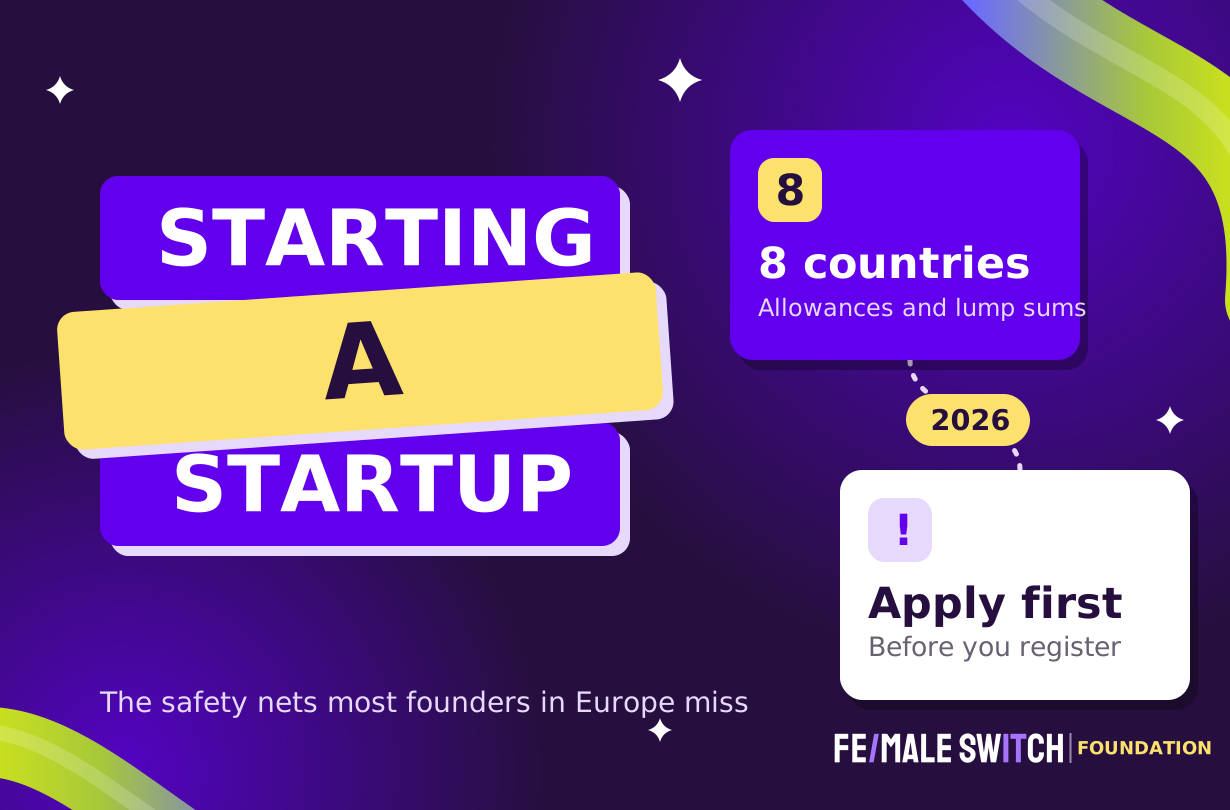
TL;DR: what should you check before starting a startup in Europe?
Your safety net. Several EU countries pay founders to start: France lets you keep part of your unemployment benefit or take 60% of it as capital, Germany adds €300 a month to unemployment pay, Spain and Italy pay benefits as a lump sum, Ireland keeps your welfare payment in year one, and the Netherlands lends you a living allowance. Almost all of them must be approved before you resign or register. Meanwhile 15 million self-employed Europeans have no unemployment cover and their pensions are a third lower, so plan health, maternity and pension cover too.
👉 Test your business idea risk-free in the Fe/male Switch startup game
When people talk about starting a startup, they talk about ideas, customers and funding. Hardly anyone mentions what happens to your income, health cover, maternity rights and pension the day you stop being an employee. As a founder who has built companies in several European countries, I've seen first-time founders leave real money on the table simply by doing things in the wrong order: resigning before asking about a startup allowance, or registering a business a week too early.
This guide covers the safety nets for founders in eight countries, from official sources checked in October 2026. For the other side of the story, the hours, pay and odds of starting, read our sister guide on what starting a startup is really like.
Being brave about your idea doesn't mean being careless about your income. Check the safety nets first, then jump.
Why starting a startup leaves a gap in your protection
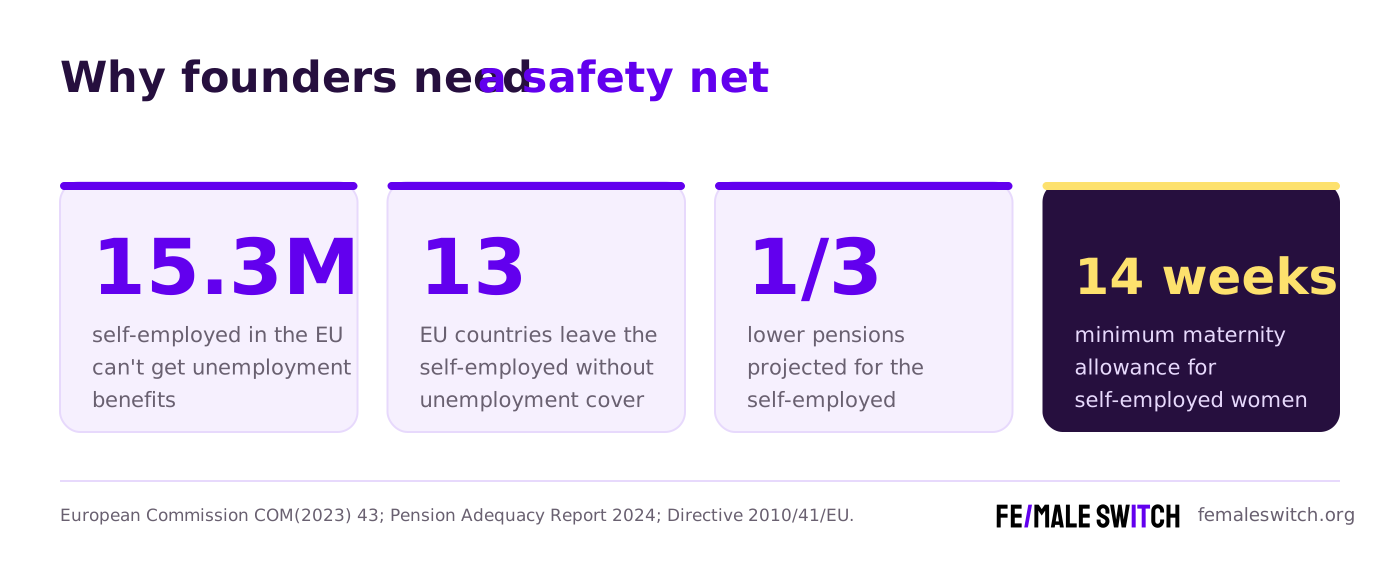
Employees are covered by default. Founders usually aren't. The European Commission found that in 19 member states the self-employed lack cover in at least one area of social protection, with unemployment the biggest gap: at least 15.3 million self-employed people have no access to unemployment benefits. The Commission's 2024 pension adequacy report adds that projected pensions for the self-employed are about a third lower than for employees with similar careers.
The good news: if you're currently employed or on benefits, many countries have schemes designed to help you start a business, and some let you keep part of your protection while you test.
The golden rule: ask before you start
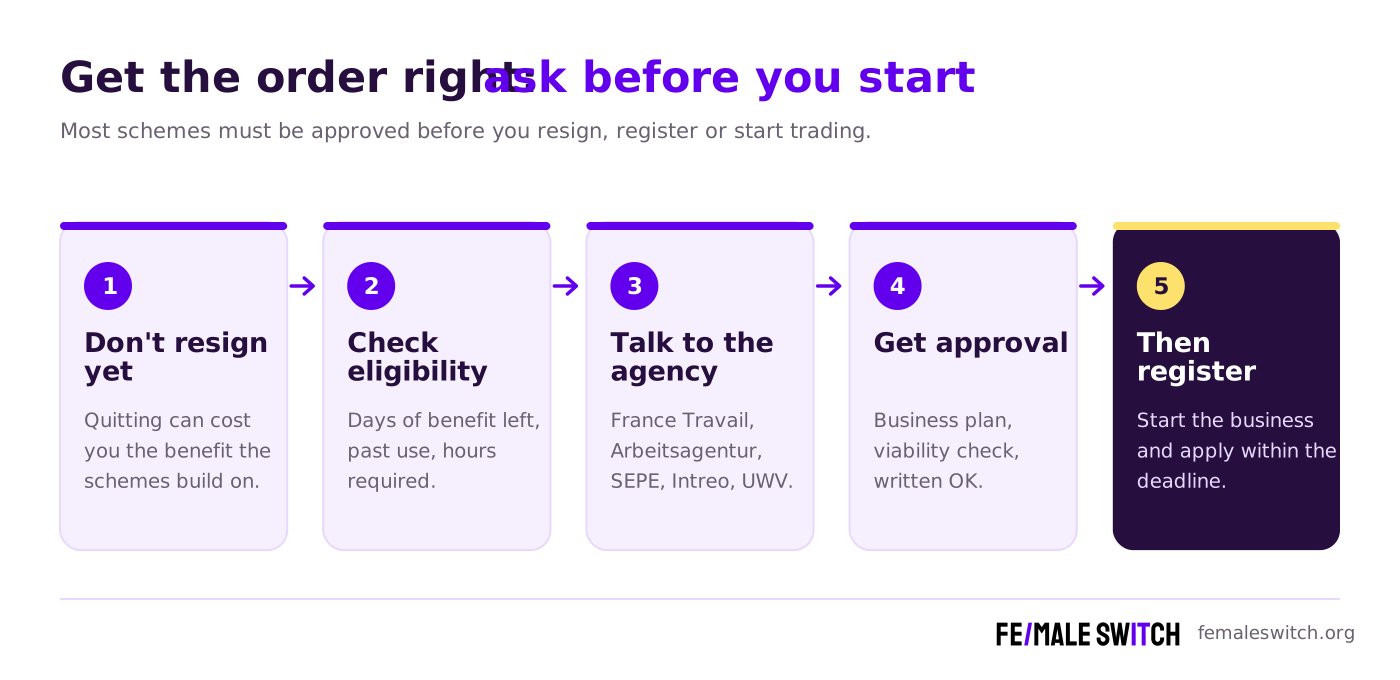
Nearly every scheme below depends on two things: being entitled to a benefit when you start, and getting approval before you register or begin trading. Resigning from a job often removes or delays unemployment benefit, which in turn removes your access to the startup schemes built on it. If you're thinking of leaving a job to start, talk to your public employment service first, and ask what happens if your contract ends by mutual agreement instead.
Startup allowances and safety nets by country
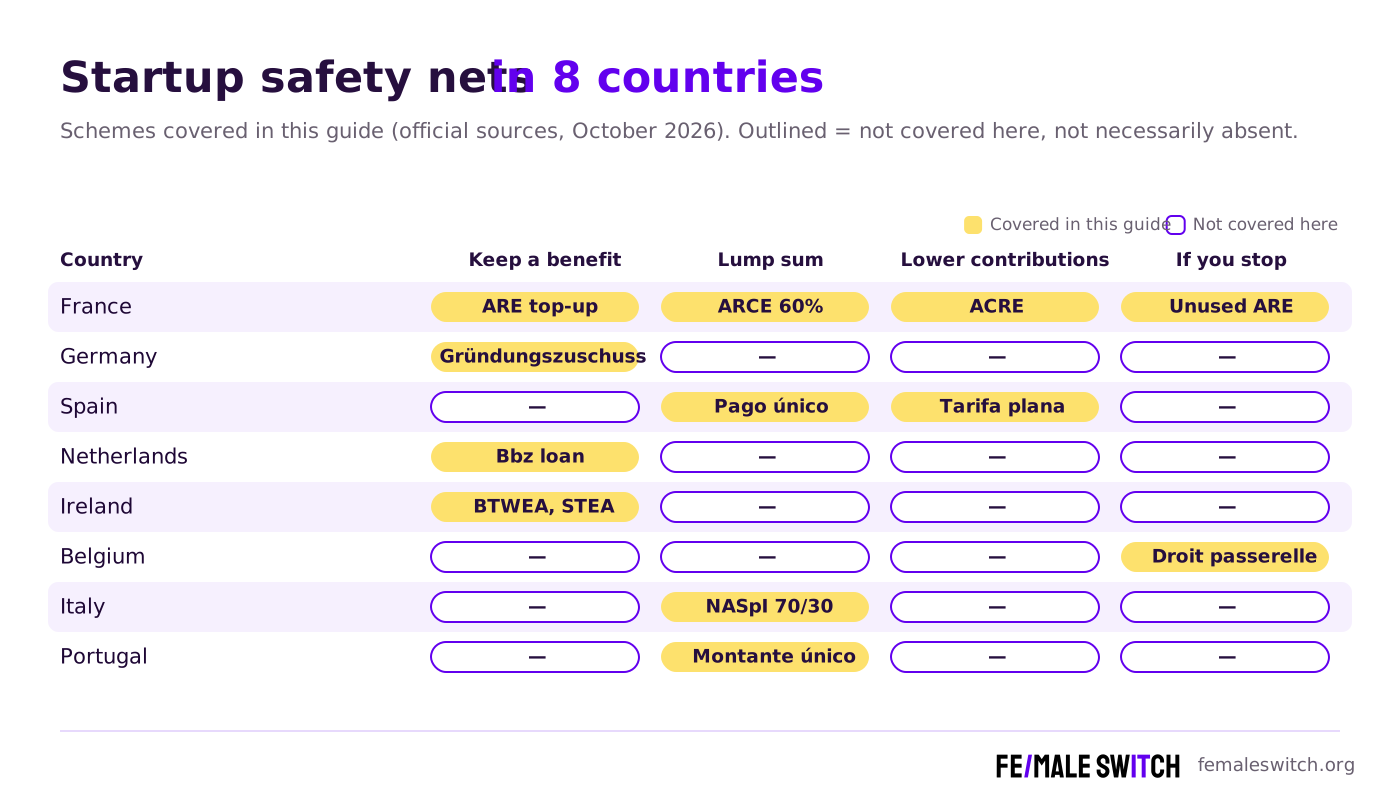
Sources: service-public.gouv.fr, France Travail, Arbeitsagentur, Seguridad Social, SEPE, Rijksoverheid, gov.ie, INASTI, INPS, Segurança Social (checked October 2026). Amounts change every year; confirm with the agency before you rely on them.
France: ACRE, ARE and ARCE
ACRE reduces your social contributions in the first year, but since 2026 it is no longer automatic: you must apply to Urssaf within 60 days of starting, according to service-public.gouv.fr. For micro-entrepreneurs who start from 1 July 2026, the reduction drops from 50% to 25%. If you receive unemployment benefit (ARE), you can either keep a monthly top-up while your business grows, or take ARCE: 60% of your remaining rights as capital, half at the start and half six months later. ARCE suits founders who need cash upfront; keeping ARE suits those who want a steady income while testing.
Germany: Gründungszuschuss and Einstiegsgeld
The Gründungszuschuss pays your unemployment benefit plus €300 a month for six months, then €300 a month for nine more if you're working full-time on the business. You need at least 150 days of unemployment benefit left, a viability statement and approval before you start, and it is discretionary. People on basic income support can ask the Jobcenter for Einstiegsgeld instead.
Spain: tarifa plana and pago único
New autónomos pay a reduced flat social security fee for their first 12 months, extendable for 12 more if income stays below the minimum wage. If you're on contributory unemployment benefit, the pago único can pay up to 100% of what's left as a lump sum or towards your fees, but you must apply before registering as autónomo.
Netherlands: Bbz for starters
If you start from social assistance or another benefit, the Bbz scheme can give you a preparation year on benefits, a living allowance as an interest-free loan for up to three years, and a start-up loan. A compulsory disability insurance for the self-employed has been proposed, but it is not law and would start in 2030 at the earliest.
Ireland: Back to Work Enterprise Allowance
The Back to Work Enterprise Allowance lets you keep all of your welfare payment in your first year of business and 75% in the second, tax-free, if you've been on a qualifying payment for at least nine months. The Short-Term Enterprise Allowance pays Jobseeker's Benefit for up to nine months with no qualifying period. Both need approval before you start.
Belgium, Italy and Portugal
Belgium's droit passerelle is one of the few schemes for founders whose business stops: about €1,700 a month for up to 12 months. Italy now pays NASpI in advance for self-employment in two parts, 70% upfront and 30% later, and you lose the second part if you take a salaried job. Portugal can pay your remaining unemployment benefit as a lump sum for a viable full-time project approved by IEFP.
Maternity cover for self-employed women
EU law gives self-employed women, and spouses or partners who help in their business, the right to a maternity allowance for at least 14 weeks under Directive 2010/41/EU. Countries can make this cover compulsory or voluntary, which means some founders are covered only if they opt in and pay. Check your country's rules before you register, not when you're pregnant. Our article on maternity leave and startup founding looks at what the research says about timing.
Health, pension and income protection
- Health cover: in most EU countries you stay in the public system as self-employed, but contributions and waiting periods differ. Find out what you'll pay before your first invoice.
- Pension: self-employed pensions are projected to be a third lower than employees'. Even a small automatic monthly payment into a pension plan helps.
- Income protection: few countries cover the self-employed for long-term illness. A private disability or income-protection policy is worth pricing once you earn steadily.
- Taxes: set aside part of every payment; our guide to tax essentials for founders in Europe explains the basics.
For budgeting all of this, see financial management for non-finance founders.
Starting a startup across borders
If you live in one EU country and work in another, you're generally covered where you work. If you work temporarily abroad as a self-employed person, you can keep your home country's cover for up to 24 months with a PD A1 certificate. If you work in several countries, your country of residence applies if at least 25% of your activity happens there, according to Your Europe.
Your safety-net checklist before starting a startup
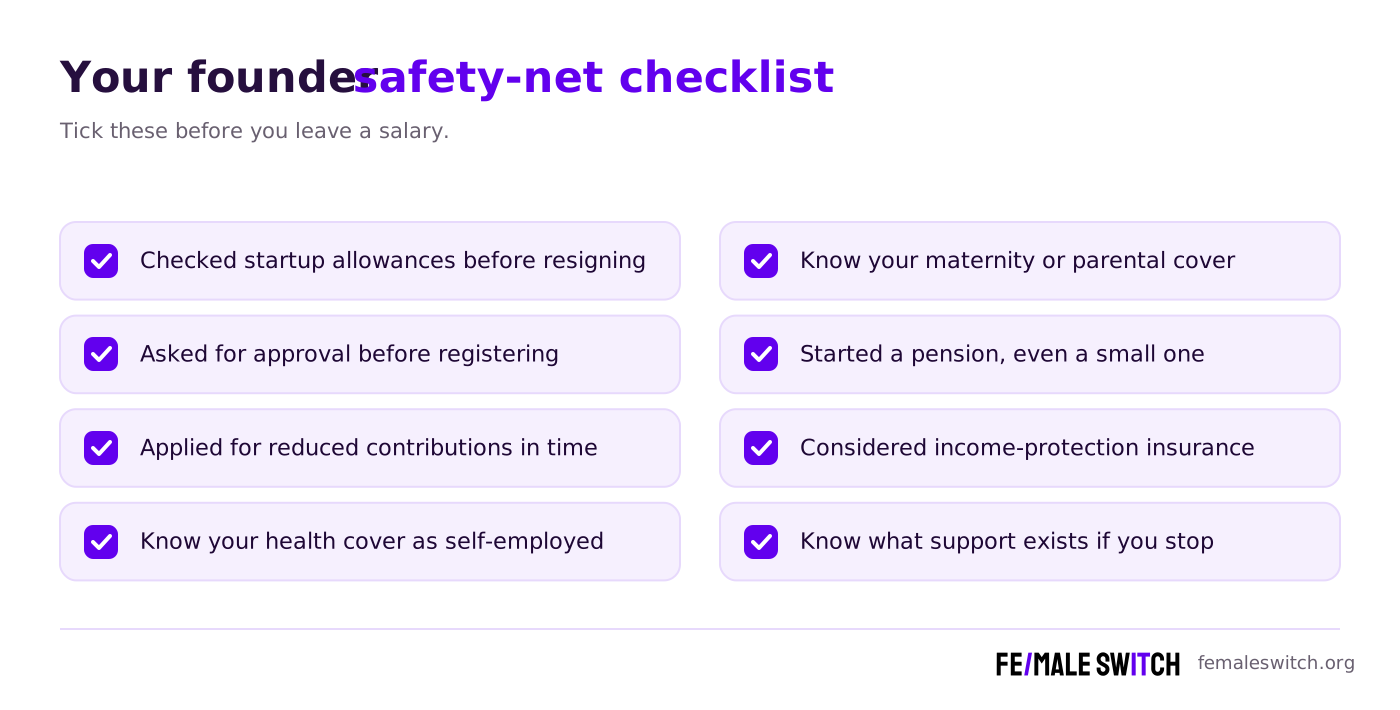
Once your safety net is in place, follow our 90-day plan to start a startup next to your job, and read the realistic side-hustle-to-full-time timeline before you decide when to leave. Grants can add to your runway too: search them with the free finder at grant-grants.com.
Practise before you leave your job
In the Fe/male Switch startup game you build a business in weekly quests with an AI co-founder, alongside women founders across Europe, so you can test your idea while your safety net is still intact.
👉 Start your first startup in the game
Conclusion: protect yourself, then start
Starting a startup doesn't have to mean giving up every protection you had as an employee. In many European countries you can keep part of your benefit, take it as capital or pay lower contributions while you build, as long as you ask before you start. Spend an afternoon with your employment agency and your tax office before you resign. It may be the most profitable afternoon of your first year. And look after yourself on the way; our guide to burnout prevention for founders can help.
FAQ: starting a startup and your safety net
Can I get unemployment benefit while starting a startup?
In several EU countries, yes. France lets you keep a monthly ARE top-up, Germany adds €300 a month to unemployment pay through the Gründungszuschuss, and Ireland's Back to Work Enterprise Allowance keeps your welfare payment in year one. Each scheme has conditions and usually needs approval before you start.
Should I quit my job to start a startup?
Check first. Resigning often removes or delays your right to unemployment benefit, which many startup schemes depend on. Ask your public employment service what applies to you before you hand in your notice.
What is ACRE in France?
A reduction of social contributions for new business founders in their first year. Since 2026 you must apply to Urssaf within 60 days of starting, and for micro-entrepreneurs starting from 1 July 2026 the reduction is 25%.
What is the Gründungszuschuss?
A German startup grant for people on unemployment benefit: your benefit plus €300 a month for six months, then €300 a month for nine more months. You need at least 150 days of benefit left and approval before you start.
Can I take my unemployment benefit as a lump sum to start a business?
In some countries: Spain's pago único (up to 100%), France's ARCE (60% of remaining rights), Italy's NASpI anticipata (70% upfront, 30% later) and Portugal's montante único. Apply before you register.
Do self-employed women get maternity pay in the EU?
EU Directive 2010/41/EU requires countries to make a maternity allowance of at least 14 weeks available to self-employed women, but it can be voluntary, so you may need to opt in and pay contributions.
What happens if my startup fails?
In most countries, little. Belgium's droit passerelle pays about €1,700 a month for up to 12 months, and in France founders who took ARCE can get the remaining 40% of their rights after a waiting period. Elsewhere, savings and a gradual exit from your job are your main protection.
Do I need a pension as a founder?
Yes. Projected pensions for the self-employed in the EU are about a third lower than for employees. Even small automatic contributions to a private or voluntary public plan help.
