
TL;DR: Pitch deck examples from women-led startups are hard to find, so I collected 10 real decks that founders or their investors made public, from Canva's seed deck to pre-seed decks from Berlin, Zurich and London. Each gets a slide-level breakdown: the round it raised, one move to copy and one thing to skip in 2026. I also pulled the research on why investors question women differently: founders who answered risk questions with growth answers raised $7.9 million on average against $563,000. Rehearse your own answers in the free investor question prep tool below.
Pitch deck examples are the first thing women in our Fe/male Switch community ask me for, and the lists online answer with the same Airbnb and Uber decks from 2008. As a bootstrapping founder myself, I wanted decks built by women, ideally in Europe, and the story of what happened to each company afterwards.
A pitch deck is the short slide presentation a founder shows investors to raise money, from a pre-seed round (the first outside money, around launch) to a Series A (the first large venture round, once revenue grows). I read nine of these decks slide by slide; for Canva, whose early slides are not public in full, I rely on Melanie Perkins's own account. Every number comes from a deck or a page I opened in October 2026.
How does the investor question prep tool work?
Tick the questions you expect, then type your startup's name, one growth number and your big goal. The tool labels each question prevention (risks, losses, safety) or promotion (growth, gains, vision) and writes an answer frame that covers the risk in one sentence and moves to growth with your facts, plus a practice script and a copy button.
Say the answers out loud, timed, then ask a friend to fire the prevention questions at you in random order.
Why do investors question women founders differently?
Here is why the Q&A matters as much as the slides. Dana Kanze, Laura Huang, Mark Conley and E. Tory Higgins studied the question rounds at TechCrunch Disrupt New York: 140 venture capitalists (VCs, who invest fund money in startups for equity), 40% of them women, questioning 189 founders, 12% of them women. They published it in Harvard Business Review in June 2017 and the Academy of Management Journal in 2018.
- 67% of the questions to men were promotion questions about gains and growth. 66% of the questions to women were prevention questions about safety and losses. Male and female VCs both did it.
- Founders who got mostly prevention questions raised $2.3 million on average through 2017, about seven times less than the $16.8 million for founders asked mostly promotion questions. Each extra prevention question meant $3.8 million less.
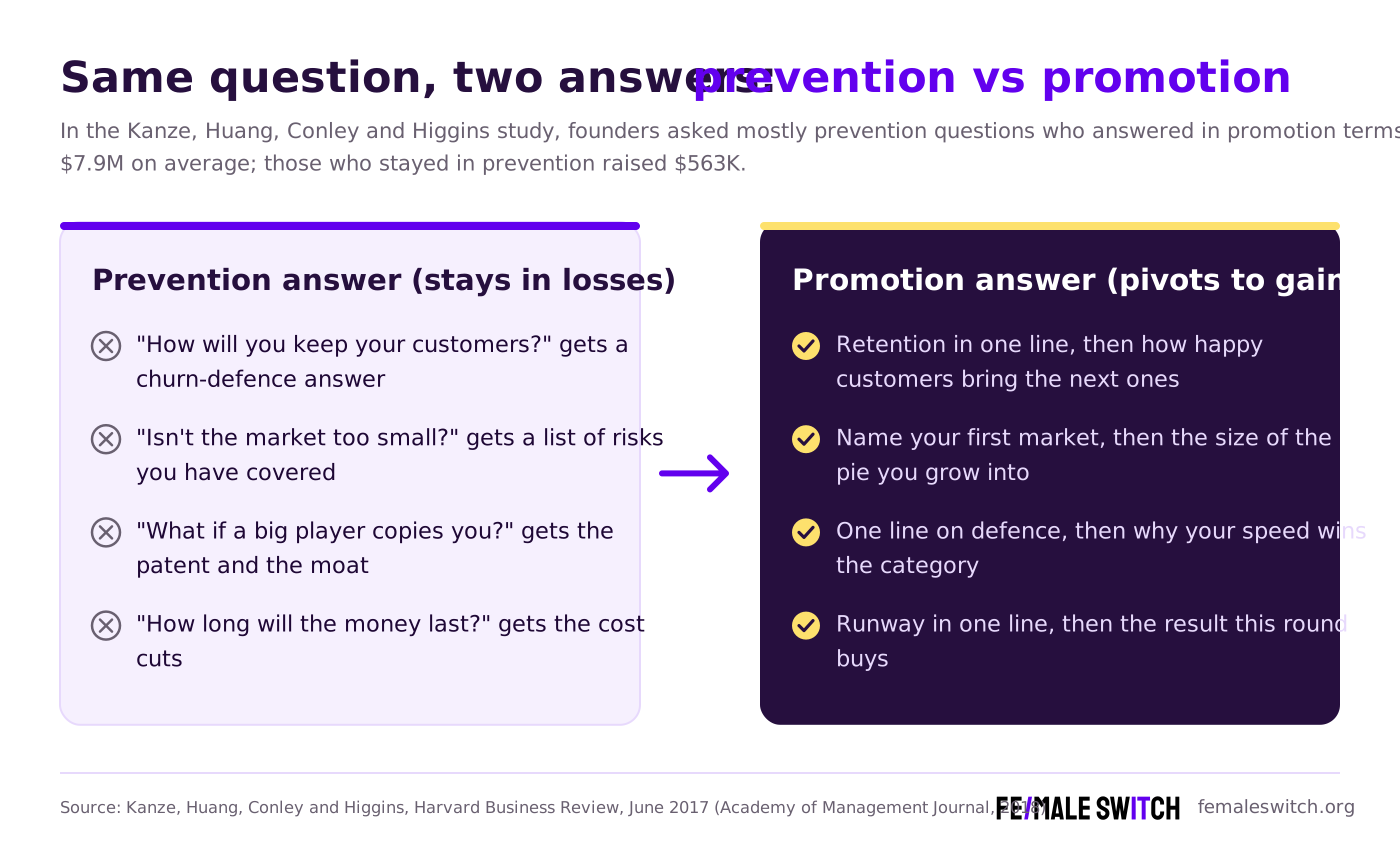
- 85% of founders answered in the register of the question, so a risk question got a risk answer.
- Founders who got prevention questions and gave promotion answers raised $7.9 million on average, against $563,000 for those who stayed defensive. In a follow-up experiment, 194 angel investors gave 1.6 times more to the startups that switched.
The money gap is still there. Dealroom's tracker, updated on 12 October 2026, shows startups with at least one woman founder took 11.0% of European venture capital in 2026, up from 8.7% in 2016, with $9.0 billion raised in 2025. Our report on women-founded startups' share of European VC shows how pre-seed money dropped, and the gender gap in startup funding tracks the longer trend. For the meeting itself, read pitching to investors as a woman.
Which pitch deck examples from women-led startups can you open today?
Sources: the decks on Pitch.com, Melanie Perkins in SmartCompany (2018), the Alexander Jarvis deck archive, tech.eu, FemTech Insider, FrenchWeb, Delimiter, Insight Partners.
Which pre-seed decks show how to frame the problem?
At pre-seed the problem and founder slides carry the deck, because there is little revenue to show. Our guide to pre-seed funding expectations for female founders sets the bar for this stage.
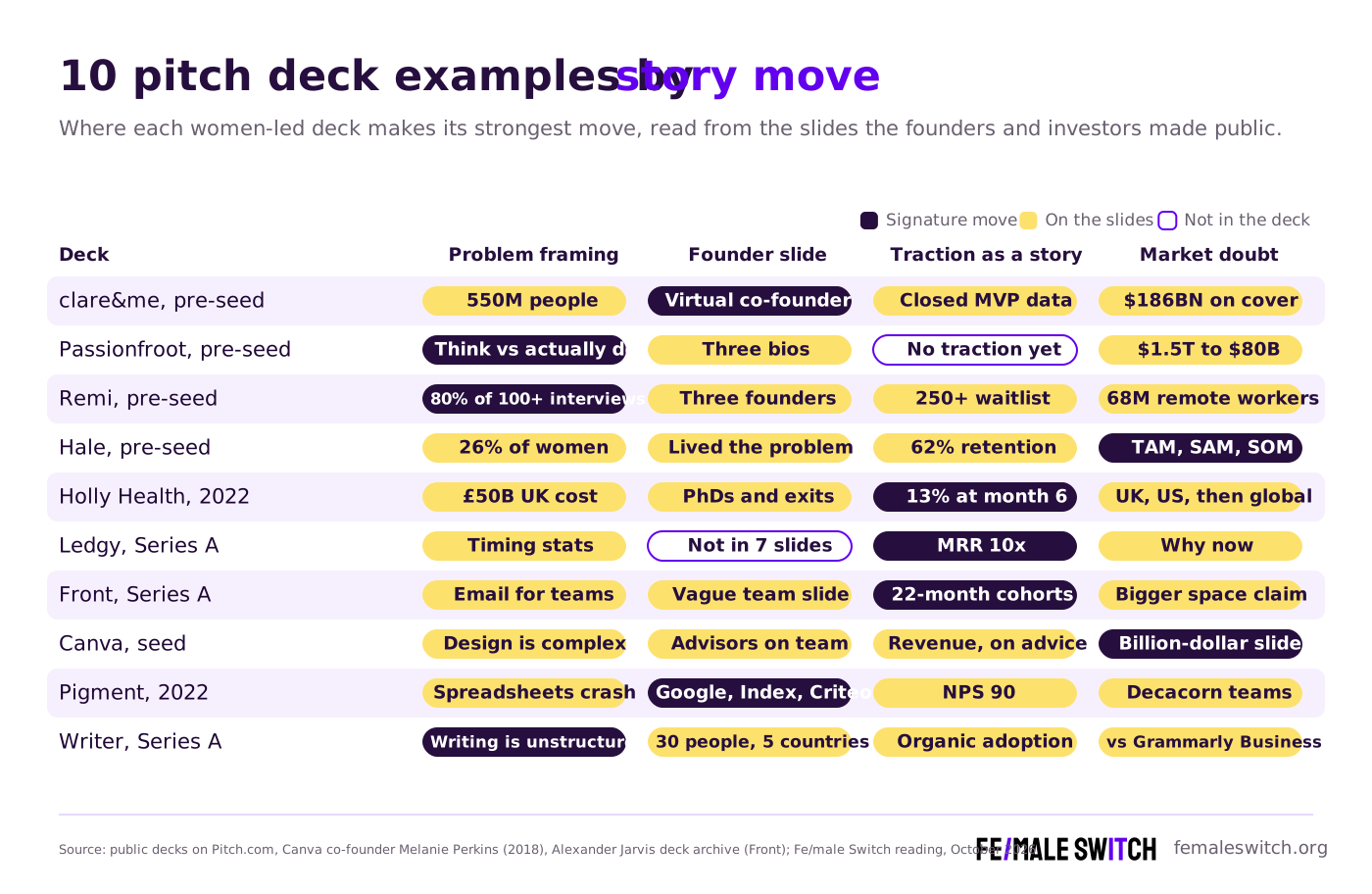
1. clare&me, 2021 pre-seed deck: a founder slide with a virtual co-founder
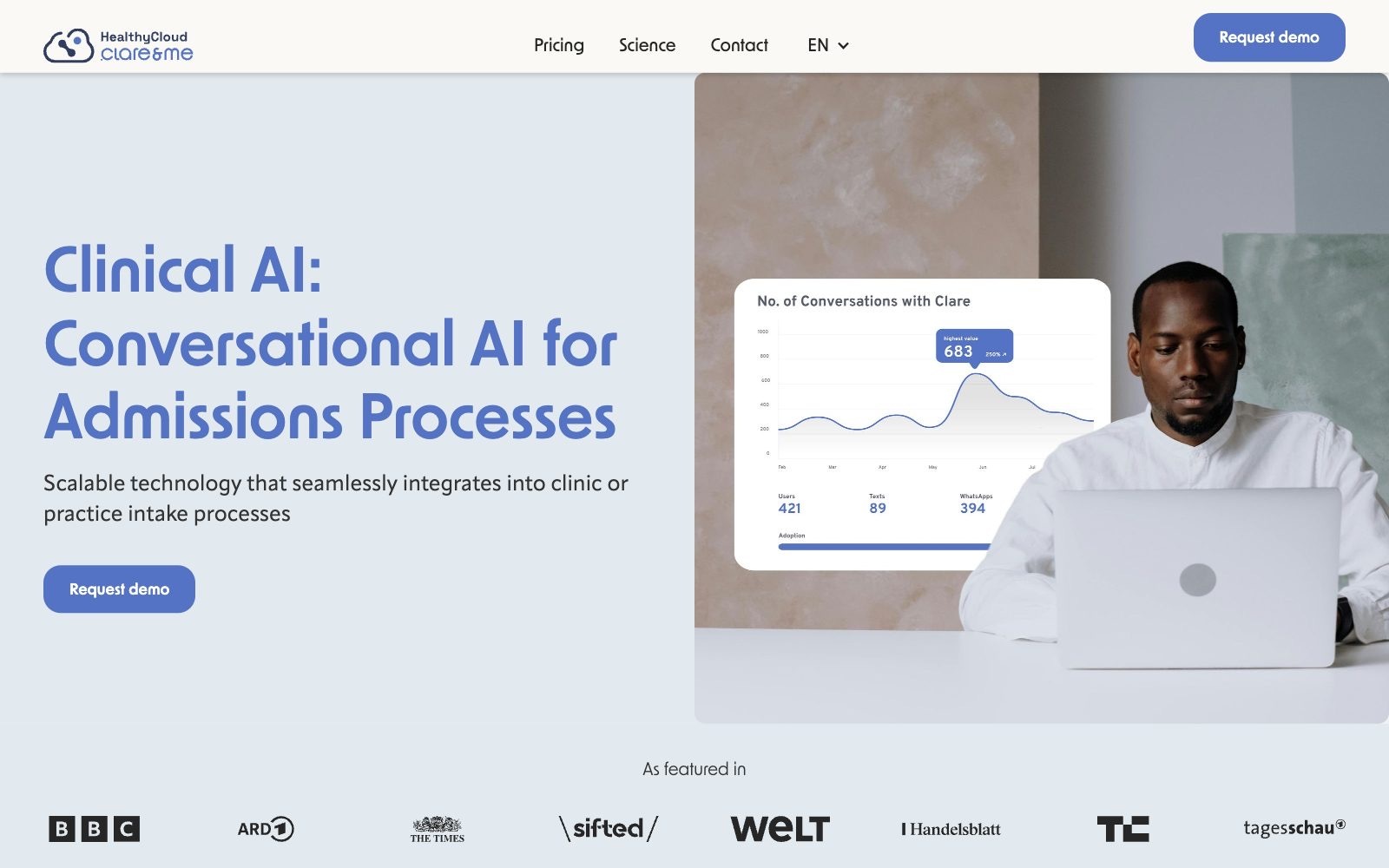
clare&me pitched a mental health coach that phones you, with 550 million people living with anxiety or depression symptoms on slide 2. The best slide comes last: the team slide reads "Two female founders, one virtual founder", with Clare, the voice coach, next to Celina and Emilia as "CBT & Voice". The pricing slide planned "D2C first, B2B & insurances will be sales channels later" (D2C means direct to consumers). Today clare&me presents itself as conversational APIs for behavioural health, and in August 2024 it raised €3.7 million, again led by YZR.
- Round and year: €1 million pre-seed led by YZR with Antler and angels, Berlin, 2021, per starting-up.de and Pitch.
- What to copy: a team slide that shows in one sentence why the product belongs on it.
- What to skip today: a consumer price table before anyone has paid. clare&me later turned toward clinics and partners.
2. Passionfroot, 2021 pre-seed deck: what people think creators do

Passionfroot's 10 slides open with "Building the solo stack for the independent businesses of tomorrow" and the trend that 50 million people became creators in 10 years. Slide 3 is the move I steal for every workshop: "What people think creators do" next to "What they actually do", with creators juggling 10+ tools and admin. The market slide stacks $1.5 trillion, $104 billion and $80 billion, and CEO Jennifer Phan leads the team slide. There is no traction slide at all.
- Round and year: €3 million pre-seed, 2021, per Pitch. In July 2026 Passionfroot raised a $15 million Series A led by Insight Partners after growing revenue 13 times in a year, TechCrunch reports.
- What to copy: the belief-against-reality slide, a picture investors repeat to their partners.
- What to skip today: zero proof. Passionfroot later moved from a creator storefront to a B2B creator marketplace; in 2026, bring at least ten customer conversations.
3. Remi, 2021 pre-seed deck: quote the customer, then count them
Remi built a culture platform for remote teams, and its 15-slide deck is a lesson in validation before code. Slide 3 is one quote in big type: "When working remotely, it's difficult to build and maintain social connection with my team." Under it: 80% of the people we spoke to said so, across 100+ interviews in late 2020. Slide 12 turns interest into numbers: 250+ waitlist signups within 2 weeks and 10 teams committed to a 4 to 6 week test. Co-founder Valerie Krämer's bio says Remi was acquired; I could not confirm the buyer.
- Round and year: €1.2 million pre-seed led by btov Partners, June 2021, per tech.eu.
- What to copy: the customer's own words on the problem slide, then how many people said them.
- What to skip today: borrowed consultancy statistics on turnover. Your own interview data carries more weight.
4. Hale, 2023 pre-seed deck: answering "is the market big enough?"
Hale built digital therapy for women with chronic pelvic pain, and Gaia Salizzoni's February 2023 deck has the cleanest market slide here. It uses TAM, SAM and SOM (the total market, the part you can serve, the share you can win first): €45 billion worldwide, €4 billion in Europe, €878 million in Italy and the DACH region. Traction showed 62% 30-day retention against a 44% benchmark and €0 on paid marketing. In September 2026 Hale announced its closure: "we were building in a category the market is only now beginning to fund." The company is gone; its free resources stay online.
- Round and year: €350,000 pre-seed led by Vento (Exor Ventures' Italian arm), July 2023, per FemTech Insider.
- What to copy: a market slide that starts big and ends with the first market you can win.
- What to skip today: equity as the only plan in a category investors do not fund yet. Our non-dilutive funding guide lists other money.
Which decks turn traction into a story?
Traction is proof that people use and pay. Told well, it shows what changed after customers arrived. If the acronyms feel heavy, read our guide to SaaS metrics without a technical background.
5. Holly Health, 2022 deck: retention on the traction slide
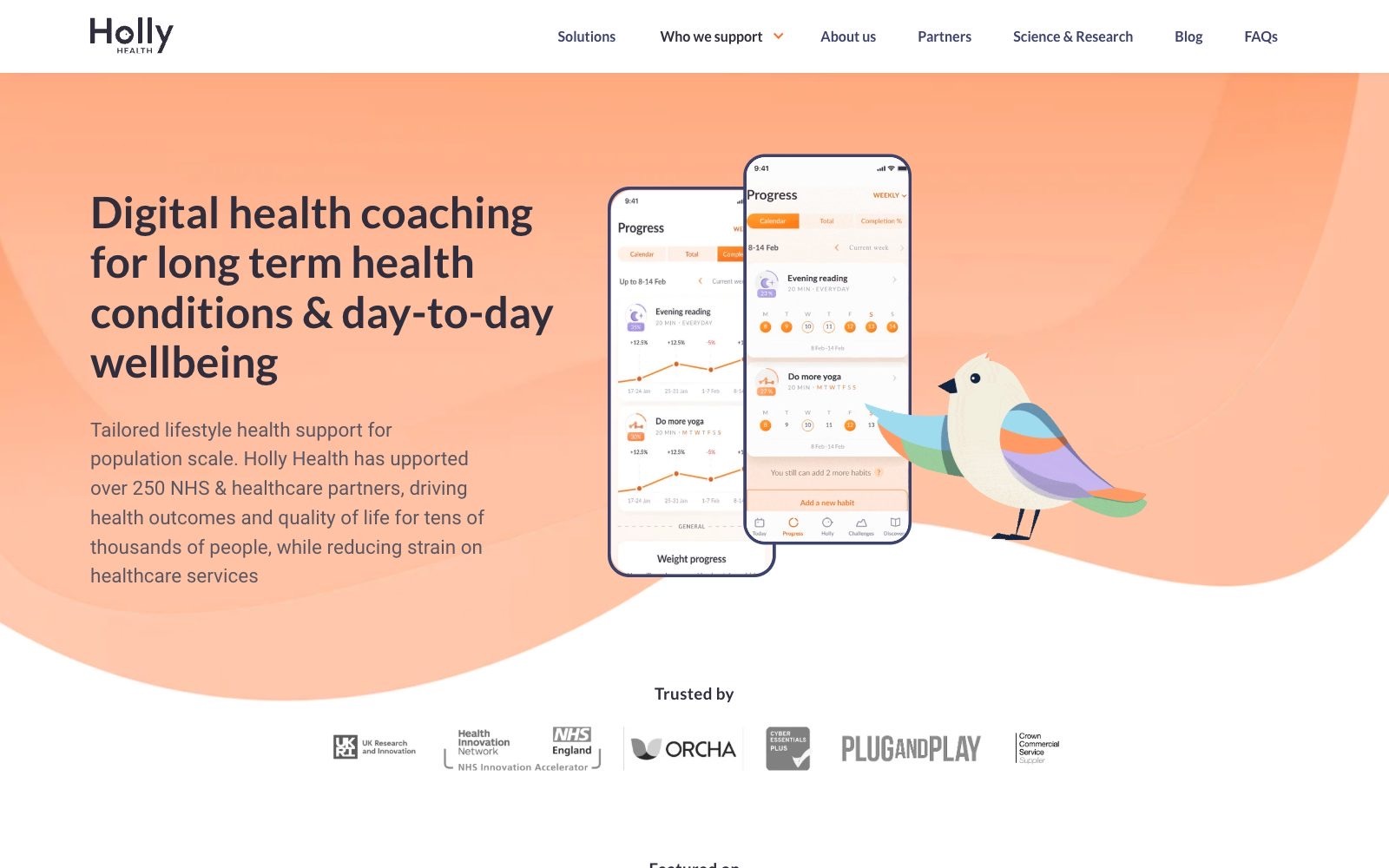
Grace Gimson and Dr Claire Wu run Holly Health, a London health coaching app. After a problem slide on £50 billion of yearly chronic disease costs in the UK, their 2022 deck shows the best early traction slide on this list: 12,000 downloads, 2,000 monthly active users, a DAU/MAU of 32% (daily users divided by monthly users) and 13% retention at month 6. The ask reads "Raising £1.2 million", next to a non-dilutive government grant of more than £440,000 and angels including Memrise founder Ed Cooke. Today Holly Health lists over 250 NHS and healthcare partners.
- Round and year: the deck asks for £1.2 million in 2022; I found no public announcement of the close.
- What to copy: grant money on the ask slide, next to the equity. Our guide to grants for women entrepreneurs in Europe shows where to look.
- What to skip today: an ARR (annual recurring revenue) target jumping from £300,000 to £14 million in three years.
6. Ledgy, 2021 Series A deck: open with the mission, prove it with MRR
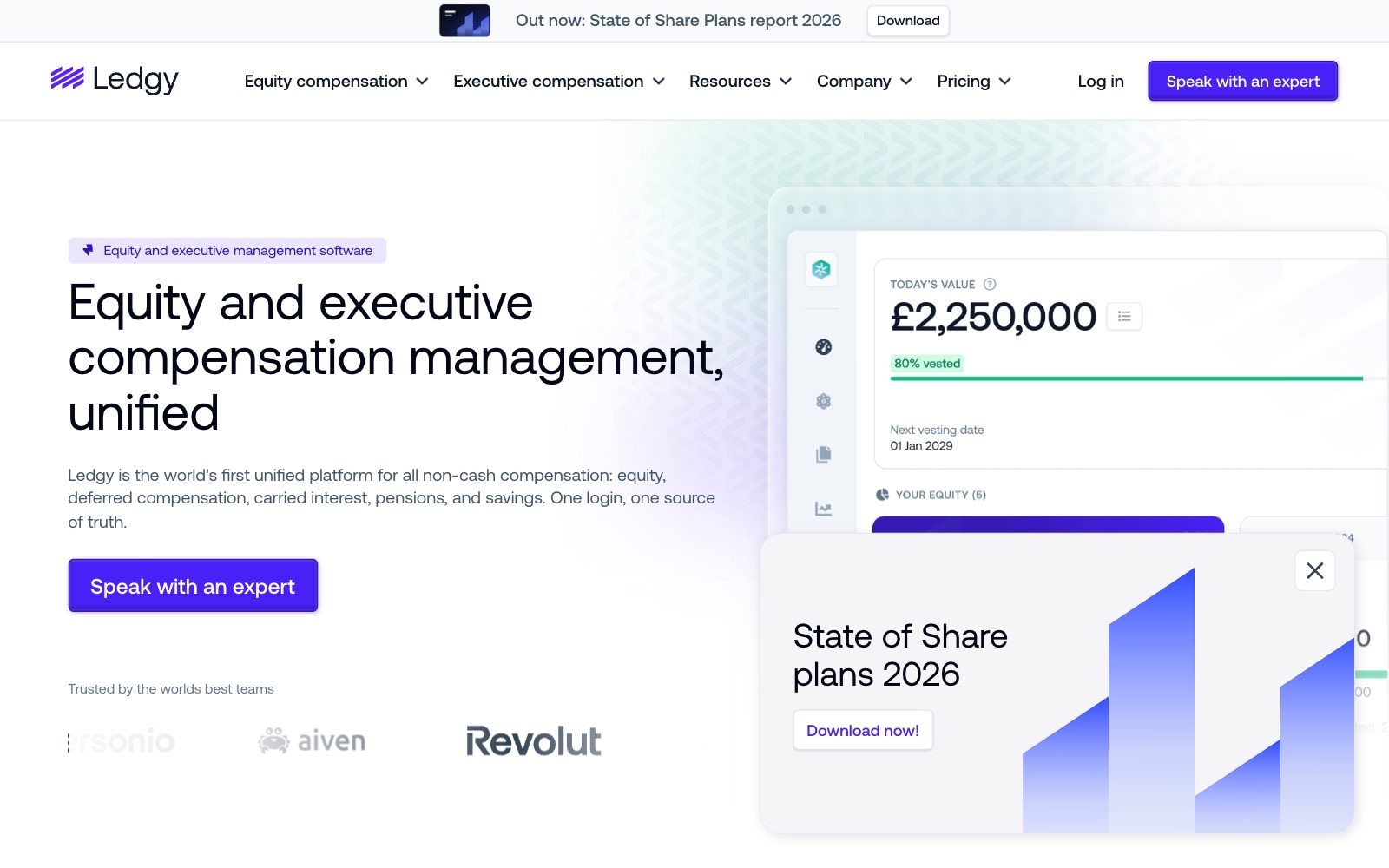
Ledgy, the Zurich equity platform, raised a $10 million Series A led by Sequoia in September 2021, and seven slides of that deck are public in Pitch's collection. CEO and co-founder Yoko Spirig told Pitch: "We were very clear about starting with our mission up front." The mission slide says Ledgy "democratizes ownership to help companies fulfill their mission as a team". The proof follows: "Our MRR grew 10x over the past year" (MRR is monthly recurring revenue), at +20% a month in early 2021. Spirig left in March 2026; Ledgy says it serves 1,000+ companies and is profitable.
- Round and year: $10 million Series A led by Sequoia Capital, September 2021, per Pitch and Ledgy.
- What to copy: one growth number as the slide title, readable in two seconds.
- What to skip today: "the timing is perfect" slides built from other people's percentages. Show why now with your own sales.
7. Front, 2016 Series A deck: show cohorts and admit the problems
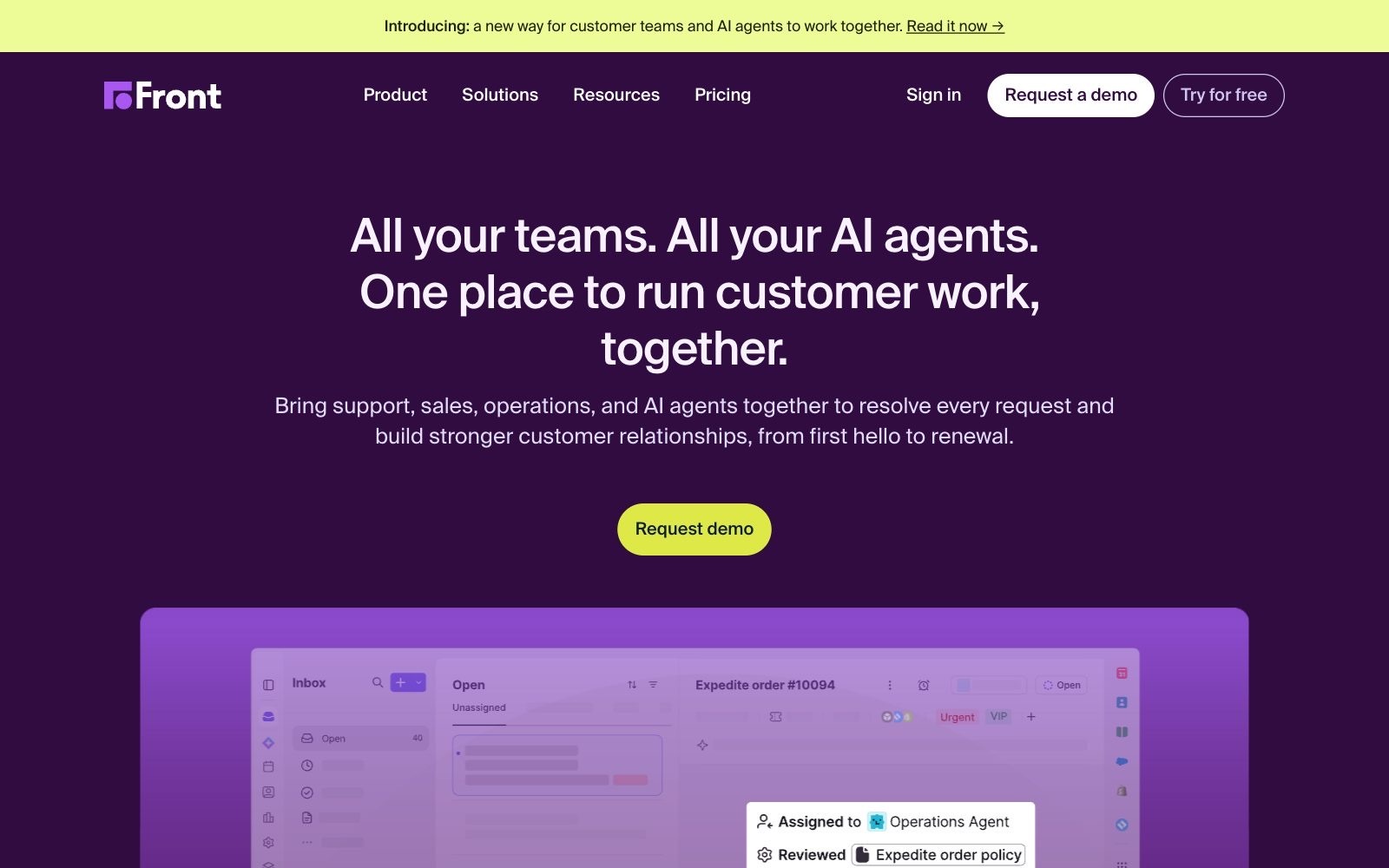
Front, the shared inbox Mathilde Collin and Laurent Perrin started in Paris, raised a $10 million Series A in 2016 from Social Capital's Mamoon Hamid, Slack co-founder Stewart Butterfield and Eoghan McCabe, FrenchWeb reported. Collin published the 21-slide deck to help other founders. Its strongest move is a cohort chart with 22 months of data, with churn (customers who leave) split by type and honest notes on what hurt the numbers. AngelBacked lists 5.4x MRR growth and under 3% churn. In January 2018 Front raised $66 million led by Sequoia in five days.
- Round and year: $10 million Series A, 2016, per FrenchWeb and the Alexander Jarvis archive.
- What to copy: a cohort slide that shows each month's customers spending more over time.
- What to skip today: a team slide that says "passion and experience". Name what each founder built.
Which decks answer the "is the market big enough" doubt?
Market size is the prevention question women hear most, and the research says to answer with the pie you can grow. Here are three ways to do it.
8. Canva, 2012 and 2013 seed decks: a slide for every hard question
Melanie Perkins published Canva's early decks in 2018 and called the first one "pretty terrible". She had been told to add an "exit" slide, and she sent investor Bill Tai an NDA twice. The fix was a method: every hard investor question became a new slide, and the team would "put the hardest questions they asked right at the front of the deck." When investors "couldn't imagine there would be a 'billion dollar opportunity'", that got a slide too. In March 2013, still unlaunched, Canva announced a $3 million seed round from Matrix Partners, InterWest Partners, 500 Startups, angels and Commercialisation Australia. By 2025 it reached about $4 billion in ARR and 265 million monthly users, TechCrunch reported.
- Round and year: $3 million seed, March 2013, per Delimiter.
- What to copy: a log of every investor question, answered at the front of the next version.
- What to skip today: NDAs and "strictly confidential" stamps.
9. Pigment, 2022 company deck: one founder line does the selling
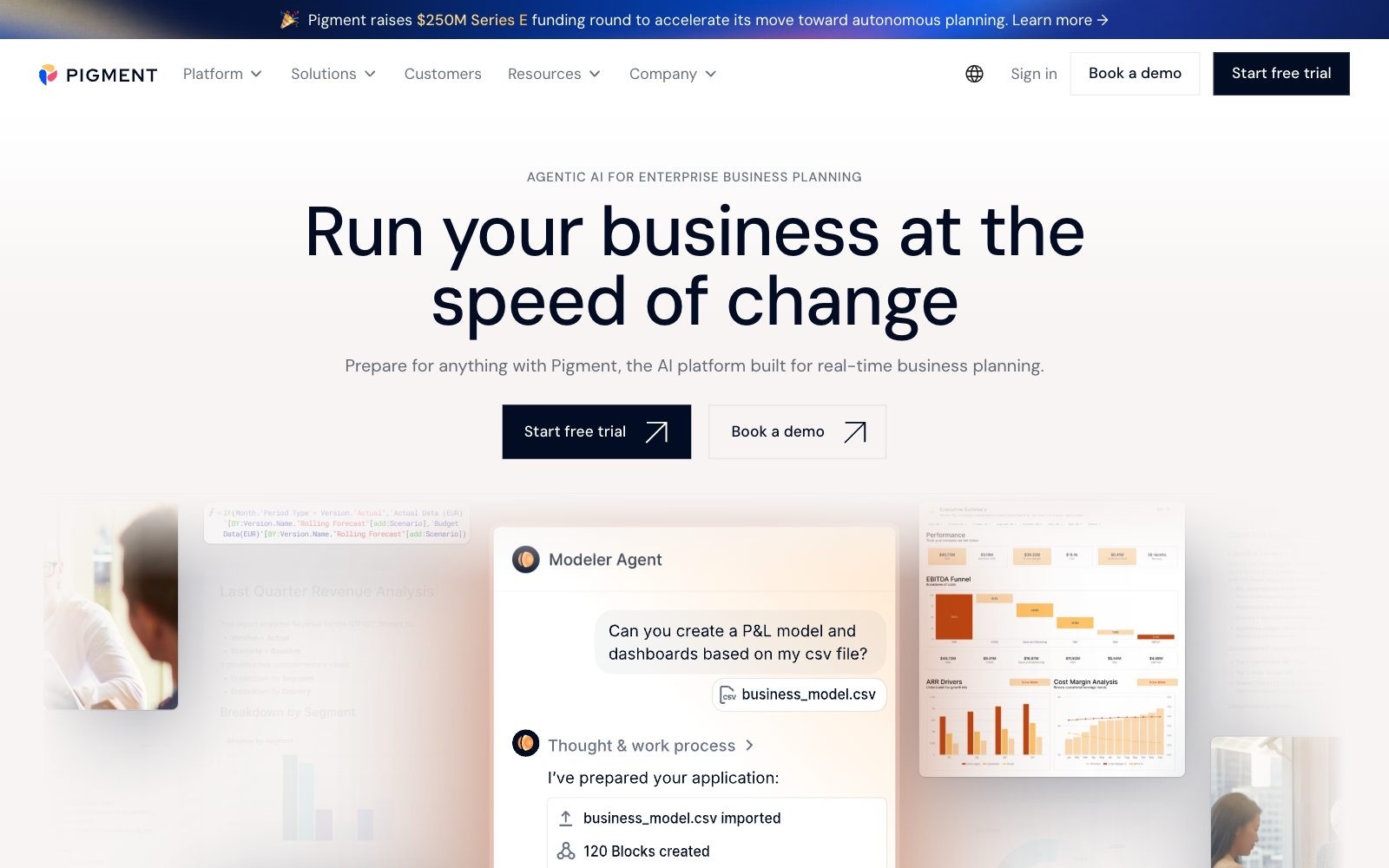
Pigment, the Paris planning platform co-founded by Eléonore Crespo, shared its March 2022 company deck, which has no ask. Slide 3 holds the founder line I quote in workshops: "Founded in 2019 by Eleonore, former Google & Investor at Index Ventures, and Romain, co-founder/ CTO at Criteo". One sentence says one founder knows how VCs think and the other helped build a listed company. The same slide lists €3 million (2019), €21 million (2020) and €65 million (2021) raised, and a later slide shows an NPS of 90. In October 2026 Pigment raised a $250 million Series E at a $2.3 billion valuation, TNW reports.
- Round and year: no ask in this deck; it lists €65 million raised in 2021.
- What to copy: a founder line of 25 words or fewer, one proof per founder.
- What to skip today: comparing yourself with famous companies' valuations. Investors want your numbers.
10. Writer, 2021 Series A deck: name the incumbent you replace
Writer, led by co-founder and CEO May Habib, used this 16-slide deck to raise a $21 million Series A led by Insight Partners in November 2021. Slide 2 is a problem line worth copying in structure: "Writing is the last unstructured major business process." Slide 14, "Writer vs Grammarly Business", answers the "isn't this solved?" doubt by naming the incumbent, and the team slide reads "30 people, 5 countries, 1 vision". In November 2024 Writer raised $200 million at a $1.9 billion valuation.
- Round and year: $21 million Series A led by Insight Partners, November 2021, per Insight Partners.
- What to copy: a problem line that calls one part of a paid process "the last" unsolved one.
- What to skip today: product screenshots spread over five slides. Two are enough.
How do you turn a prevention question into a promotion answer?
Let's break it down into five steps:
- Write down every question from your last five investor meetings, as Canva did.
- Label each one prevention (risk, loss, defence) or promotion (growth, gain, vision). The tool above does this for 16 common questions.
- Answer the risk in one sentence with a fact: churn, runway, patent, first customers.
- Pivot to growth in the next sentence with one number and one goal for the next 18 months.
- Rehearse out loud until the switch feels natural, then test it on a mentor.
Copy these frames and fill in the brackets:
One-line problem template: [Customer] spends [time or money] on [task] because [current tool] was never built for [their situation].
What should your own deck outline look like?
Take the strongest move from each deck and you get a 10-slide outline for a pre-seed or seed round:
Slide outline to copy:
- 1. Cover: what you do and for whom, in one line (Ledgy)
- 2. Problem: the customer's words and how many said them (Remi)
- 3. Belief against reality: what people think the job is and what it is (Passionfroot)
- 4. Solution: one product screen, one sentence
- 5. Traction: one growth number as the title, retention underneath (Ledgy, Holly Health)
- 6. Business model: price per customer and how it grows
- 7. Market: from the first market you win to the full pie (Hale)
- 8. Competition: name the incumbent (Writer)
- 9. Team: one proof per founder (Pigment, clare&me)
- 10. Ask: equity, grants and what the round buys (Holly Health)
For design help, see pitch deck agencies in Europe; our pre-seed pitch deck insights go slide by slide. To send the deck, start with angel investors who back women and our numbers on venture capital and female founders. Before a bigger round, check the signs of Series A readiness.
Practise the pitch before investors hear it. In the Fe/male Switch startup game at femaleswitch.com you build a startup step by step, write your pitch and answer investor-style questions, and mistakes cost game points instead of a real term sheet (the signed offer that sets the terms of an investment).
What do these 10 decks teach a bootstrapping founder?
None of these founders had a perfect first deck, and Melanie Perkins says hers was terrible. What they share is a habit: every doubt became a slide, and every slide became a short story with one number in it. The Berlin pre-seed decks raised on interviews and a sharp problem, the Series A decks on retention and cohorts.
For women founders the extra lesson sits in the Q&A. You will hear more questions about losses than the man who pitched before you, so answer with one sentence on the risk, then the growth story. Before your next meeting, validate your business idea without spending money, shape your founder story with storytelling for female founders and, if you want to keep control longer, read how to bootstrap your startup as a female founder. Then rehearse with women who have been in the room, in one of our communities for female entrepreneurs.
FAQ: pitch deck examples
Where can I find real pitch deck examples from women founders?
Pitch.com keeps a public collection of 99 presentations from female and nonbinary founders, and Melanie Perkins published Canva's early decks in 2018.
How many slides should a startup pitch deck have?
The full decks here run from 10 to 23 slides. Passionfroot raised €3 million at pre-seed with 10.
What are the best pitch decks to study for a pre-seed round?
Remi, Passionfroot and clare&me, which raised between €1 million and €3 million in Berlin before they had much revenue.
Do investors ask women founders different questions?
Yes. In the Kanze study, 66% of questions to women were about risks and losses, while 67% of questions to men were about growth and gains.
How should I answer a prevention question from an investor?
Answer the risk in one sentence, then pivot to growth. Founders who did this raised $7.9 million on average against $563,000.
What should a traction slide show at pre-seed?
Interviews, waitlist signups and committed test customers, like Remi's 100+ interviews and 250+ signups in two weeks.
How do I show the market is big enough?
Use TAM, SAM and SOM and end with the first market you can win, as Hale went from €45 billion to €878 million.
What share of European venture capital goes to women-led startups?
Startups with at least one woman founder took 11.0% of European VC in 2026, according to Dealroom.
