
TL;DR: How big is the UK minimum wage increase for 2027?
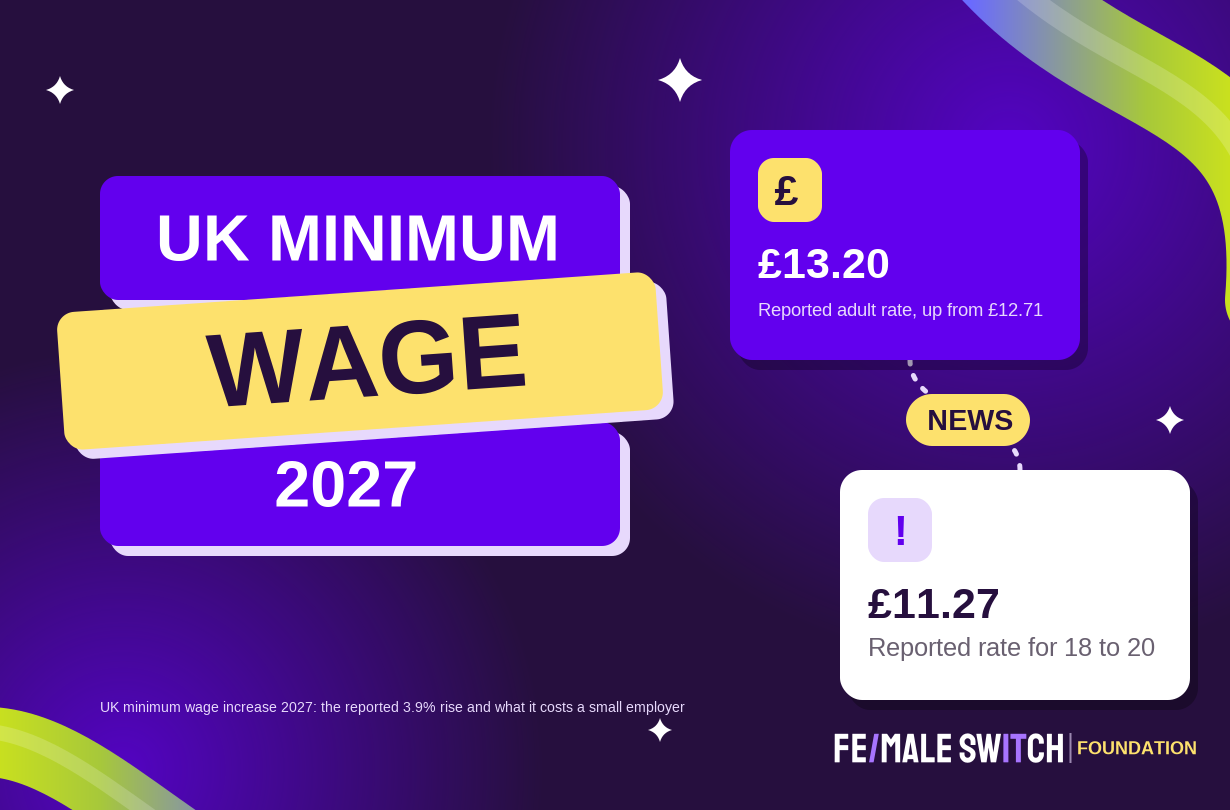
The UK minimum wage increase for 2027 is 3.9%, confirmed in the Budget on Wednesday 28 October 2026: from 1 April 2027 the National Living Wage for workers aged 21 and over goes from £12.71 to £13.21 an hour, the rate for 18 to 20 year olds from £10.85 to £11.27, and the rate for 16 and 17 year olds and eligible apprentices from £8.00 to £8.31. For a small employer, the rise adds about £1,121 a year per full-time adult worker, employer National Insurance included. Put the new rates into your plan now and update payroll before 1 April 2027.
Updated 28 Oct 2026, 22:45 CET. The Budget confirmed the 2027 rates. The adult rate is £13.21, one penny above the £13.20 The Times reported, and all cost figures below now use the confirmed rates.
Searches for John Healey's minimum wage announcement jumped by 600% in the UK on Monday, according to Google Trends, before he had said a word. The figures first came from a Times report on 26 October, and Chancellor John Healey confirmed them in the Budget two days later. Here is everything else the Autumn Budget 2026 changes for small businesses.
As a bootstrapping founder, I read wage news with a calculator open. Below: what is confirmed, what is only reported, the cost per worker with the maths shown, and the steps to take before 1 April 2027. If you're about to hire your first employee, this is the number to plan around.
What is the UK minimum wage increase for 2027?
The Budget 2026 document raises every minimum wage rate by 3.9% on 1 April 2027 and says the government accepted the Low Pay Commission's recommendations in full. Here is how the new rates compare with the rates in force today:
Sources: HM Treasury, Budget 2026, 28 Oct 2026; GOV.UK minimum wage rates page, which now lists the April 2027 rates.
The Treasury expects the rise to benefit around 2.3 million workers, a number it calls provisional until the impact assessment comes out in early 2027. Its own example: a full-time worker on the National Living Wage gains £910 a year before tax. The Low Pay Commission is the independent body that advises the government on these rates each year.
What is confirmed and what is only reported?
Confirmed means an official GOV.UK page says it. Reported means only the media say it.
- Confirmed: today's rates apply from 1 April 2026, according to the GOV.UK minimum wage rates page, which also says rates change on 1 April every year.
- Confirmed: the government asked the Low Pay Commission on 16 March 2026 for rates "to come into effect on 1 April 2027", with advice due by the end of October.
- Confirmed (Budget, 28 Oct 2026): the 3.9% rise, £13.21, £11.27 and £8.31 from 1 April 2027, the £11.53 accommodation offset, and the acceptance of the commission's recommendations in full.
- Reported: the end of the plan to bring the 18 to 20 rate up to the adult rate. City AM and LBC reported it; the Budget document doesn't mention it.
Correction: before the Budget this article used the reported £13.20 and about £1,099 a year per worker. The confirmed rate is £13.21, so the cost is £1,121.25.
How much does a 3.9% minimum wage rise cost a small employer?
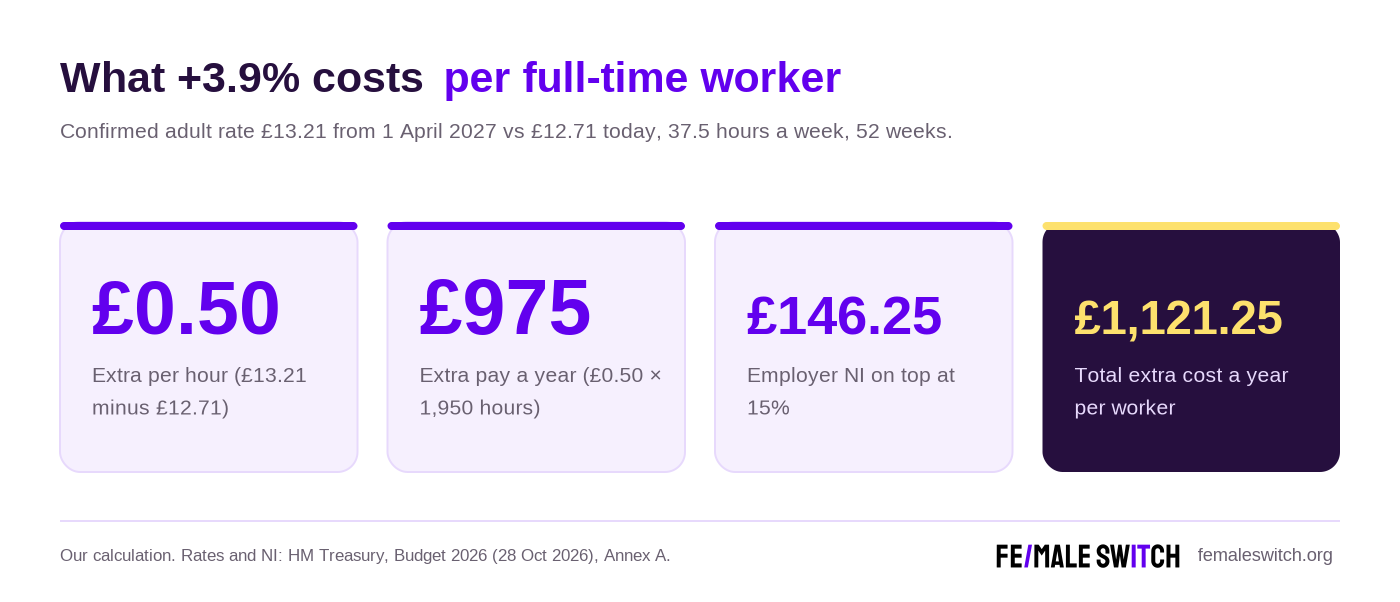
Let's break it down for one full-time adult worker on the National Living Wage, using a clearly stated example of 37.5 hours a week for 52 weeks, which is 1,950 paid hours a year:
- Extra per hour: £13.21 minus £12.71 is £0.50.
- Extra pay per year: £0.50 × 1,950 hours is £975. Annual pay moves from £24,784.50 to £25,759.50.
- Employer National Insurance: the employer rate is 15% above £5,000 a year in 2026 to 2027, according to HMRC's rates and thresholds for employers. The Budget keeps the same rate and threshold for 2027 to 2028. This worker is already above that line, so 15% of £975 adds £146.25.
- Total: about £1,121.25 a year per full-time adult worker.
A part-timer on 20 hours a week works 1,040 hours a year, so the rise adds £520 in pay and £78 in employer NI. The Employment Allowance lets eligible employers cut their NI bill by up to £10,500, and the Budget keeps it at £10,500 for 2027 to 2028, so a micro business with two or three staff pays less NI than this sum. Check that you qualify first.
If you run on thin margins, put this into your cash flow plan today, and rerun your financial projections with £13.21 as the base rate from April 2027.
What changes for workers aged 18 to 20?
The rate for 18 to 20 year olds rises by the same 3.9%, from £10.85 to £11.27, which is £0.42 more per hour, or £819 a year on our 1,950-hour example. Before the Budget, City AM and LBC both reported that this ends Labour's aim of bringing the youth rate up to the adult rate. The 16 March remit still said the government was committed to removing the age bands, and gave the commission full flexibility on the pace.
Employers pay 0% National Insurance for workers under 21 on earnings up to £967 a week (about £50,270 a year), and the Budget keeps that threshold for 2027 to 2028, so the £819 is the full cost. The reports link the slower youth rise to unemployment among 16 to 24 year olds, which City AM puts above 16% for the first time in over a decade. The 16 and 17 year old rate and the rate for eligible apprentices both rise 3.9% to £8.31.
What we know so far
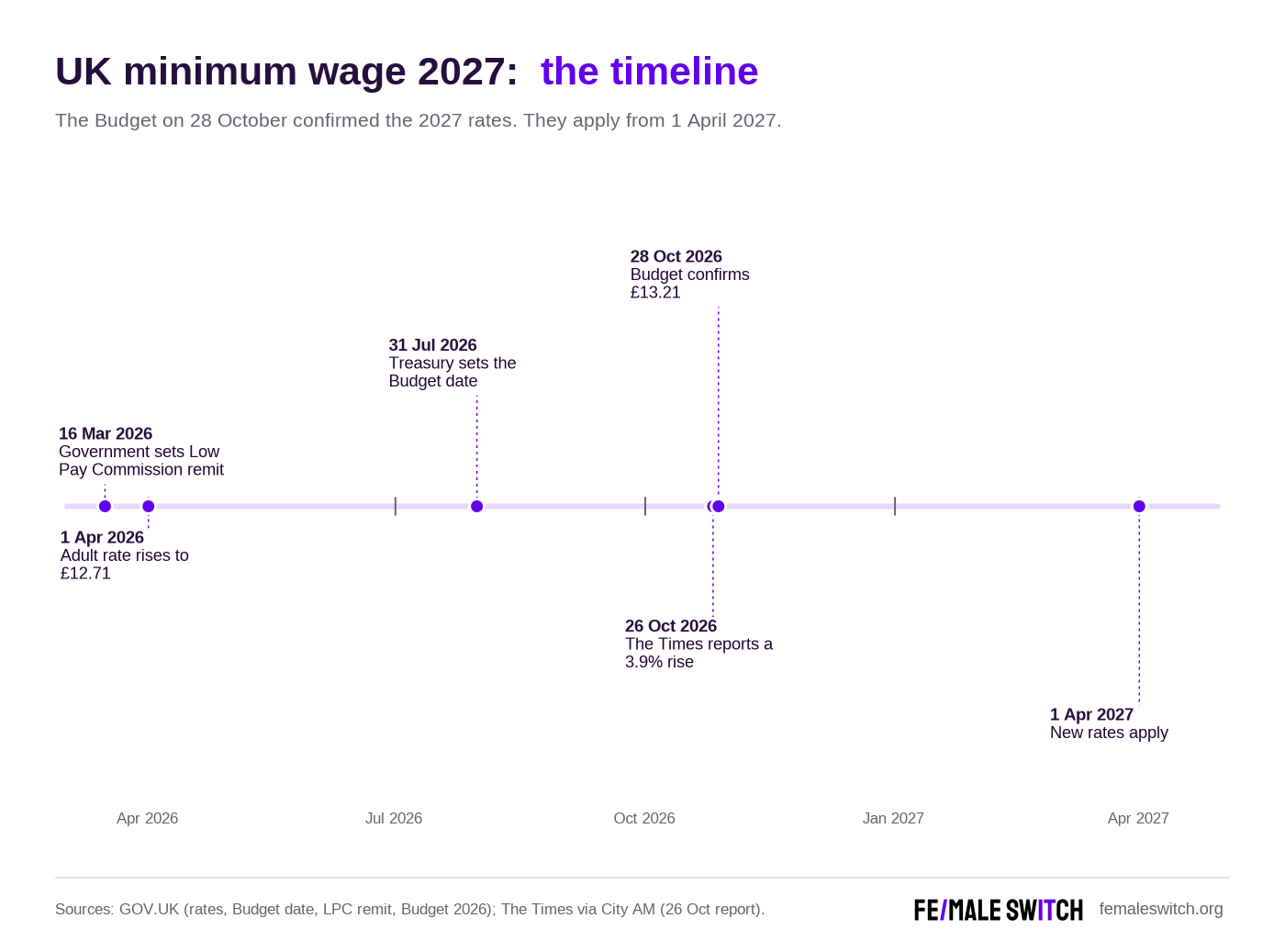
- Update 28 Oct, 22:45 CET: the Budget confirms £13.21, £11.27 and £8.31 from 1 April 2027 and the £11.53 accommodation offset (Confirmed).
- 16 Mar 2026: the government asks the Low Pay Commission for rates that start on 1 April 2027 (Confirmed).
- 1 Apr 2026: the National Living Wage rises to £12.71 and the 18 to 20 rate to £10.85 (Confirmed).
- 31 Jul 2026: the Treasury sets the Budget for 28 October 2026 (Confirmed).
- 26 Oct 2026: The Times reports a 3.9% rise to about £13.20 and £11.27; the Treasury declines to comment (Reported).
- 28 Oct 2026: the Budget confirms a 3.9% rise to £13.21 for workers aged 21 and over (Confirmed).
- 1 Apr 2027: the new rates apply (Confirmed).
Open questions
- How many workers the rise really covers: the 2.3 million figure stays provisional until the impact assessment in early 2027.
- Whether the government drops the plan to bring the 18 to 20 rate up to the adult rate: the Budget document doesn't say.
What this means for you: steps to take before April 2027
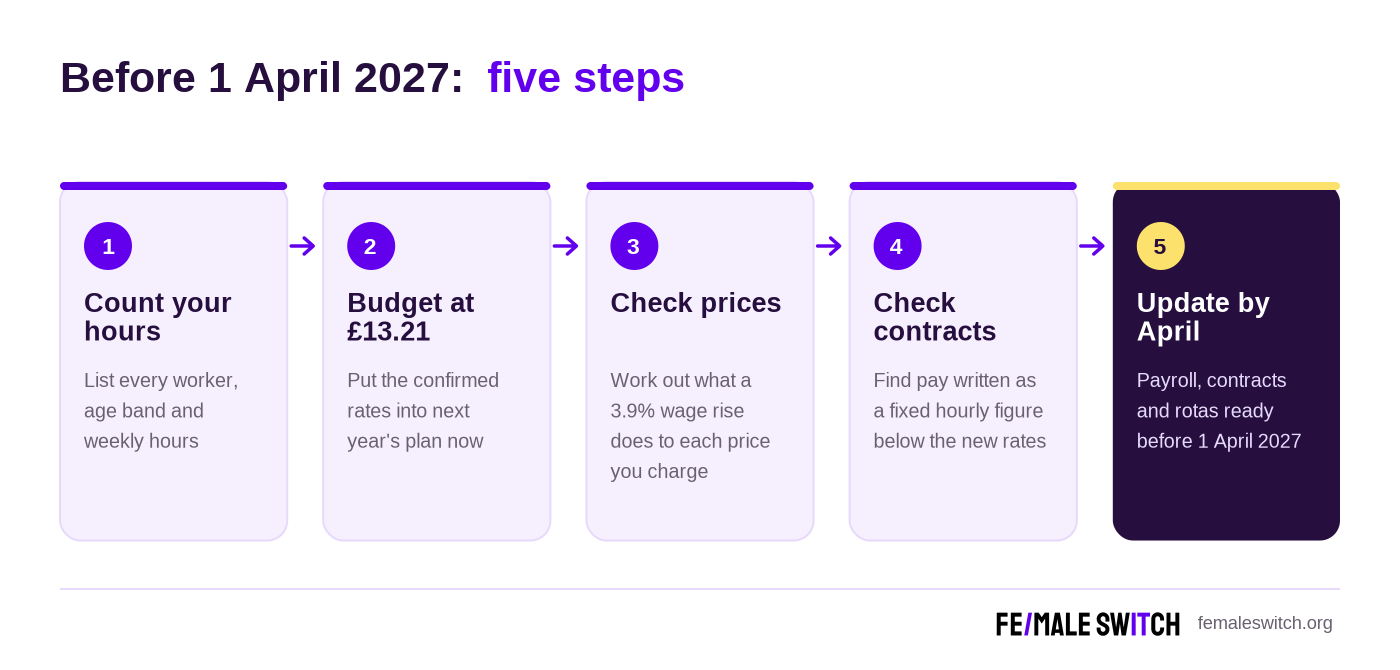
- Count your hours. List every worker, their age band and their weekly hours, so the maths takes minutes.
- Budget at the confirmed rates. Use £13.21, £11.27 and £8.31 in next year's plan now.
- Review your prices. A 3.9% wage rise moves your cost per hour of service. Our guides on pricing services versus products and pricing psychology show how to raise prices without losing your regulars.
- Check contracts and rotas now. Look for pay written as a fixed hourly figure, and rotas built around a wage budget. Our guide to contracts and agreements covers what to look for in employment terms.
- Look at apprentices and young staff separately. Their rates and NI treatment differ, so plan them in their own line.
- Rethink the hiring mix. Some tasks fit a freelancer better than a payroll hire. Read how to work with freelancers and the hiring mistakes to avoid during growth before you decide.
If money management isn't your strong side, start with financial management for non-finance founders. Freelancers in the EU facing their own 2027 budget changes can read our Budget 2027 guide for six EU countries.
Building your first startup on a budget?
The Fe/male Switch startup game takes you from idea to first paying customers in weekly quests, with an AI co-founder and a community of founders. You can test your pricing and costs in the game before real wages are on the line.
👉 Start the game
FAQ: UK minimum wage increase 2027
What will the UK minimum wage be in 2027?
The National Living Wage for workers aged 21 and over rises 3.9% to £13.21 an hour from 1 April 2027, up from £12.71, as confirmed in the Budget on 28 October 2026.
Is the 2027 minimum wage confirmed?
Yes. The Budget on 28 October 2026 confirmed £13.21, one penny above the £13.20 The Times reported two days earlier.
When does the new minimum wage start?
On 1 April 2027, according to the Budget 2026 document.
What is the 2027 minimum wage for 18 to 20 year olds?
£11.27 an hour from 1 April 2027, up 3.9% from £10.85. For 16 and 17 year olds and eligible apprentices it is £8.31.
How much will the minimum wage rise cost my business?
For a full-time adult worker on 37.5 hours a week, £975 more pay a year plus £146.25 employer National Insurance at 15%, so about £1,121 in total.
Do employers pay National Insurance for under-21s?
Yes, at 0% on earnings up to £967 a week (about £50,270 a year) for workers under 21 and apprentices under 25, and the Budget keeps those thresholds for 2027 to 2028.
