
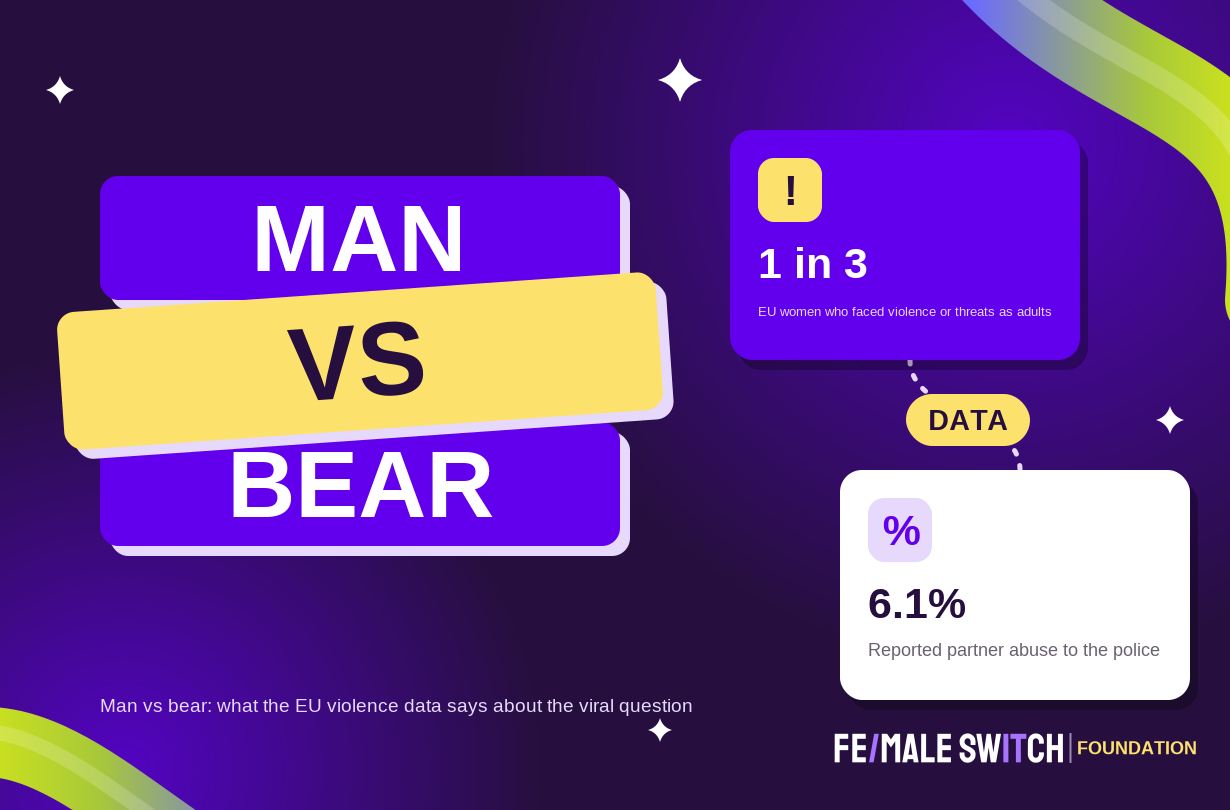
TL;DR: Why do women choose the bear in the man vs bear question?
Man vs bear asks a woman whether she would rather meet a strange man or a bear alone in a forest, and since April 2024 millions of women have picked the bear. The answer sounds absurd until you read the data: 1 in 3 women in the EU has faced physical violence, sexual violence or threats as an adult, and only 6.1% of women abused by a partner told the police. Women answer the question about trust and about what happens afterwards, and the numbers back them up. Below: where the question came from, what EU data shows, how dangerous bears really are, and a safety checklist for women founders.
Man vs bear started as a TikTok question and became one of the biggest gender debates of the decade. On 25 November, the UN International Day for the Elimination of Violence against Women, it is worth asking it again with real numbers on the table. This article is part of our series on how women are treated differently, and it looks at the question the way a founder looks at a market: starting with the data and ending with what to do about it.
Where did the man vs bear question come from?
The question first appeared in a TikTok video by the user @callmebkbk in March 2024. It exploded on 10 April 2024, when the account Screenshot HQ posted a street interview filmed in London. The interviewer asked women: "Would you rather be stuck in a forest with a man or a bear?" Seven of the eight women answered bear.
The clip passed 14 million views in three weeks, according to Know Your Meme, and the question spread to every platform. Women made response videos, men made angry ones, and newsrooms from the US to India ran explainers. Two and a half years later the question still comes back every few months, and searches for "man vs bear" grew by about 29% over the last year.
Why do women choose the bear?
Read a few thousand comments and the same four reasons come back. None of them claims a bear is harmless.
- A bear is predictable. Women know what a bear wants: food, space, safety for its cubs. Back away, make noise, and most encounters end there. A stranger's intentions are unknown.
- Nobody questions a bear attack. No one asks what you were wearing, whether you led the bear on, or why you went into the forest alone. Women who report violence by men face exactly those questions.
- A bear does not come back. A bear does not find you on Instagram, show up at your office, or tell your friends a different story.
- Most women already have a story. When 1 in 3 women has faced violence or threats, the question stops being hypothetical. Women answer it from memory.
That is the part many men miss. The question measures trust, and the answer is a verdict on how safe women feel around men they don't know. Treat it as customer feedback: you can argue with one angry review, and you can't argue with a 7-out-of-8 score.
What does the data say about violence against women in Europe?
The best source is the EU gender-based violence survey, run jointly by Eurostat, the EU Agency for Fundamental Rights (FRA) and the European Institute for Gender Equality (EIGE). It is built on more than 114,000 interviews across all 27 member states, carried out between September 2020 and March 2024. The first results came out on 25 November 2024 and a deeper evidence report followed in March 2026.
Sources: EU gender-based violence survey, first results (November 2024) and evidence report (March 2026), Eurostat, FRA and EIGE.
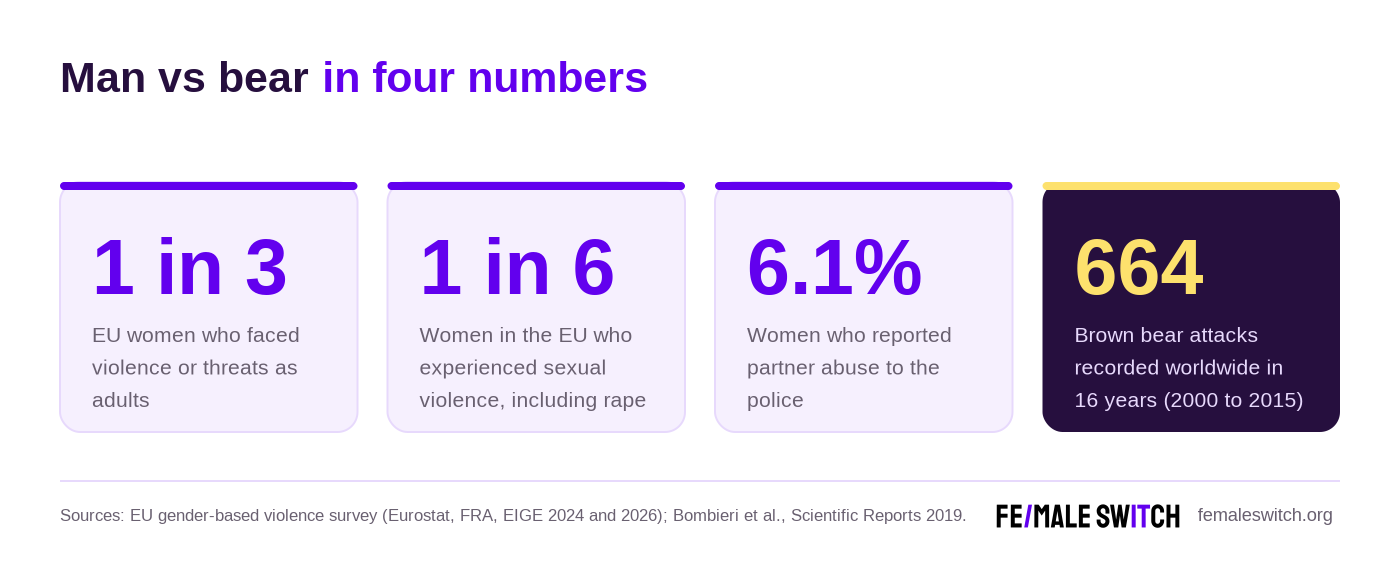
Two numbers in that table explain the bear better than any meme. First, fewer than 1 in 15 women abused by a partner went to the police. Most violence against women stays invisible in crime statistics, which is why surveys like this one matter. Second, 1 in 3 women faced sexual harassment at work, so the "forest" for many women is an office, a client dinner or a conference after-party.
Is a bear really safer than a man?
On pure numbers, the comparison is unfair to bears and unfair to men at the same time. A large study published in Scientific Reports in 2019 (Bombieri and colleagues) counted 664 brown bear attacks worldwide between 2000 and 2015: 183 in North America, 291 in Europe and 190 further east. That is about 41 attacks a year for the whole planet, most of them in places with many bears and few people.
Women meet men every day and almost never meet bears, so per-encounter risk from any single man is tiny. The data that matters points somewhere else entirely:
- About 83,000 women and girls were killed intentionally worldwide in 2024, according to UNODC and UN Women.
- About 50,000 of them (60%) were killed by a partner or a family member, an average of 137 a day.
- For men the picture flips: only about 11% of male homicide victims were killed by someone in their family or a partner.
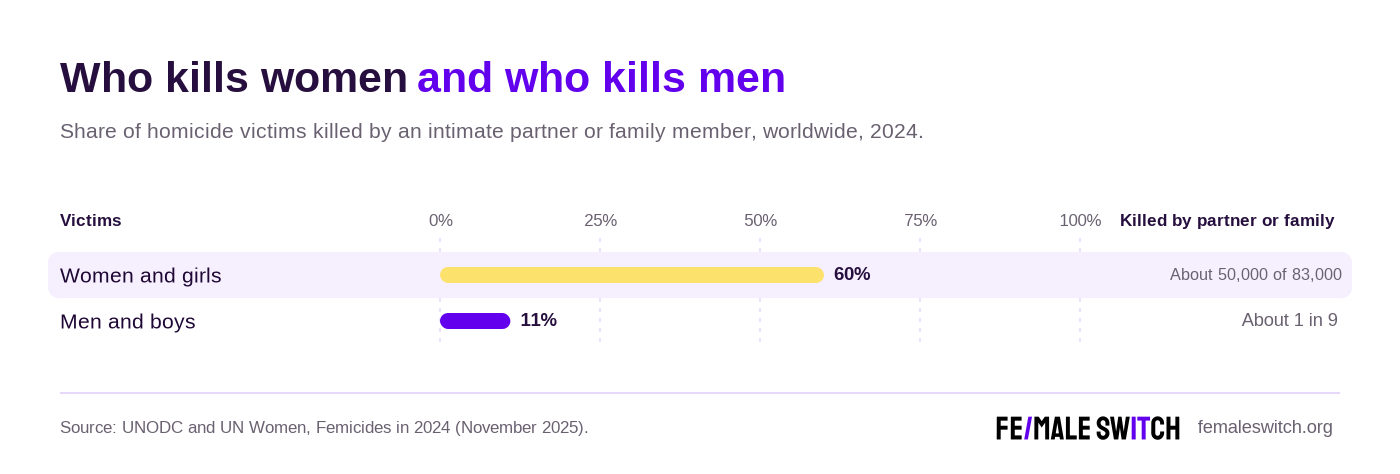
So the honest answer to man vs bear is uncomfortable for everyone. The man in the forest is statistically less dangerous than the man at home. Women who pick the bear are pointing at a real risk with the wrong animal in the picture. We cover the full numbers in our report on femicide in Europe and Italy's new law.
Why did the man vs bear debate make so many men angry?
Plenty of men heard the question as an accusation: "you think I am worse than a bear." The replies followed a pattern. Some listed bear-attack statistics, some answered with #NotAllMen, and a few proved the women's point by sending threats in the comments.
The more useful male response came from men who asked a second question: "What has happened to you that makes the bear look better?" That conversation is where change starts, in families, at work and in startup teams. Our guide to building diverse startup teams shows what that looks like inside a company.
What does man vs bear mean for women founders?
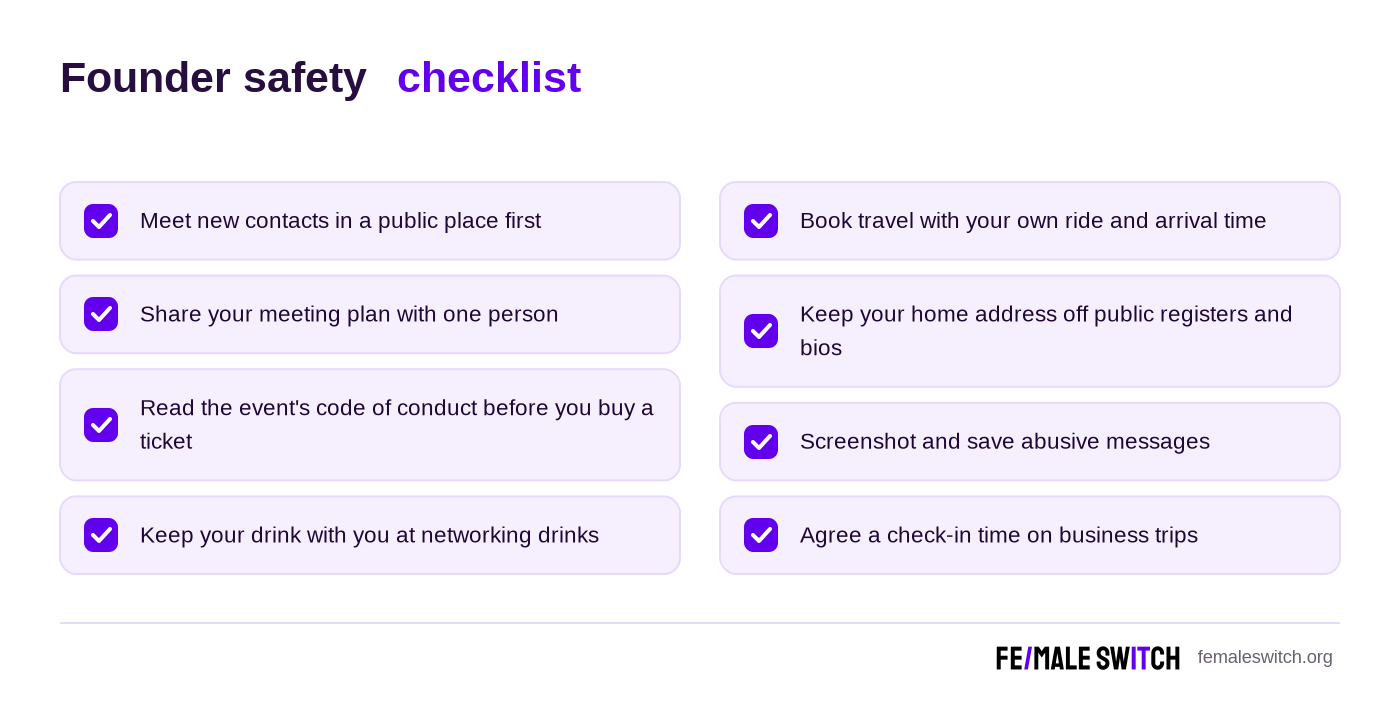
Founders spend a lot of time in the "forest": first meetings with strangers, investor drinks, conferences in new cities, late nights in coworking spaces, and a public profile that anyone can message. Running a company means taking meetings with people you don't know yet. Here is how to do that with your eyes open:
- Meet new contacts in public first. A coffee shop or a coworking lobby works for a first meeting with an investor, client or co-founder candidate. Our guide to finding a co-founder as a woman has more screening tips.
- Pick events with a code of conduct. Good organisers publish one and name a person to contact. Our list of startup events and conferences for women is a safe starting point.
- Use women-only and founder communities. Warm introductions through a community of female entrepreneurs or one of the networking platforms for female founders cut the number of cold meetings with strangers.
- Protect your address. Check whether your company registration, website or pitch deck shows your home address, and use a business address where you can.
- Treat online abuse as a security issue. Screenshot and save abusive messages, lock down personal accounts, and read our cybersecurity guide for entrepreneurs.
- Build your public profile on your terms. Visibility brings customers and investors, and it brings trolls too. Our guide to personal branding for founders covers what to share and what to keep private.
- Have someone in your corner. A mentor who has been there helps you spot red flags in a deal or a person. Start with our guide to finding female mentors.
What can companies and event organisers do?
Women should not have to carry all of this alone. Companies, investors and event organisers can shrink the forest:
- Publish a code of conduct for every event and name a contact person who answers the same day.
- Join a venue safety scheme such as the UK's "Ask for Angela", where a guest asks the bar staff for "Angela" and the staff quietly help her leave.
- Move investor and client meetings out of hotel bars and into offices or daytime venues.
- Write a harassment policy before you hire employee number one. A one-page policy with a clear reporting channel costs a founder an afternoon.
- Back survivors at work. Flexible hours, paid leave and a safe point of contact keep women in their jobs while they get out of a violent home.
These steps cost little, and they tell every woman in the room that someone took her safety seriously before she had to ask.
What is the EU doing about violence against women?
The EU adopted its first law on the subject in May 2024: Directive (EU) 2024/1385 on combating violence against women and domestic violence. Member states must turn it into national law by 14 June 2027. It makes these acts crimes across the EU:
- Female genital mutilation and forced marriage.
- Sharing intimate images without consent, including deepfakes and other manipulated material.
- Cyber stalking, cyber harassment and cyber flashing (sending unwanted sexual images).
- Online incitement to violence or hatred against women.
Rape based on lack of consent did not make it into the final text as an EU-wide crime, after several member states blocked it. Countries are moving on their own: France adopted a consent-based definition of rape in 2025, and Italy made femicide a separate crime the same year. Our overview of EU policy changes that matter for women tracks the rest.
Build your startup inside a safe community
The Fe/male Switch startup game takes you from idea to first paying customers in weekly quests, with an AI co-founder and a community of women founders who answer when you ask. Test your idea, your pitch and your pricing before you walk into a room full of strangers.
👉 Start the game
What to remember about man vs bear
Man vs bear went viral because it compressed a huge, mostly invisible problem into one simple question. The data supports the feeling behind it: one in three women in the EU has faced violence or threats, most of it never reaches the police, and the most dangerous man in a woman's life is far more likely to be someone she knows than a stranger in the woods. For founders, the practical answer is preparation: safer meetings, safer events, a protected online presence, and a community that has your back.
FAQ: man vs bear
What is the man vs bear question?
It asks women whether they would rather be stuck alone in a forest with a man they don't know or with a bear. It went viral on TikTok in April 2024 after a street interview in London where seven of eight women chose the bear.
Why do most women choose the bear?
Women say a bear is predictable, nobody doubts a woman after a bear attack, and a bear does not come back later. Many also answer from personal experience: 1 in 3 women in the EU has faced physical violence, sexual violence or threats as an adult.
Who started the man or bear trend?
The question first appeared in a TikTok by @callmebkbk in March 2024. The video that made it huge was posted by Screenshot HQ on 10 April 2024 and passed 14 million views in three weeks.
Are bears actually more dangerous than men?
Bear attacks are rare: a 2019 study in Scientific Reports counted 664 brown bear attacks worldwide in 16 years. The bigger risk for women comes from men they know: 60% of women and girls killed in 2024 were killed by a partner or family member, according to UNODC and UN Women.
How many women in the EU experience violence?
According to the EU gender-based violence survey by Eurostat, FRA and EIGE, 1 in 3 women faced physical violence, sexual violence or threats as adults, and 1 in 6 experienced sexual violence, including rape.
How many women report violence to the police?
Very few. Only 6.1% of women abused by a partner reported it to the police, and 11.3% of women attacked by a non-partner did, according to the March 2026 evidence report of the EU survey.
What does man vs bear have to do with business?
Founders meet strangers all the time: investors, clients, co-founder candidates and event contacts. Meeting in public places first, choosing events with a code of conduct and protecting your home address and online accounts lower the risk.
What is the EU law on violence against women?
Directive (EU) 2024/1385 makes cyber stalking, cyber flashing, sharing intimate images or deepfakes without consent, female genital mutilation and forced marriage crimes across the EU. Member states must apply it by 14 June 2027. Read more in our overview of EU policy changes for women.
