
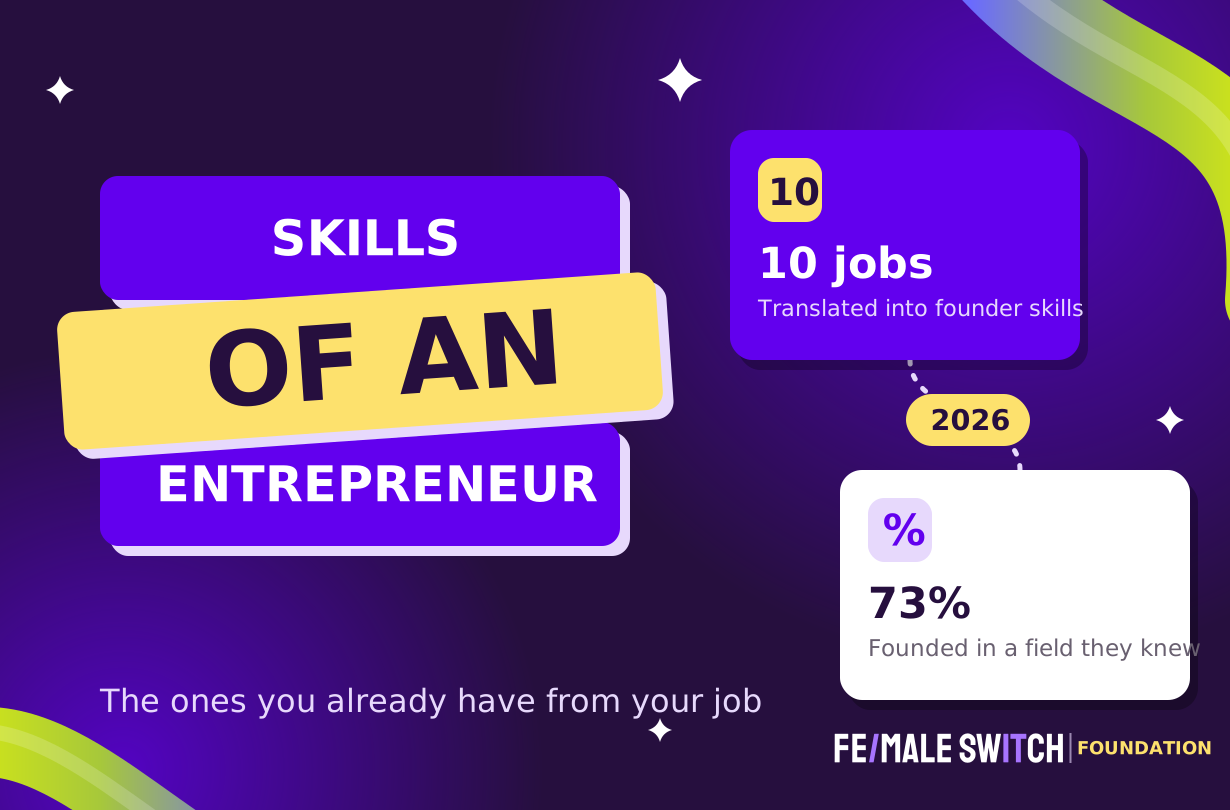
TL;DR: which skills of an entrepreneur do you already have?
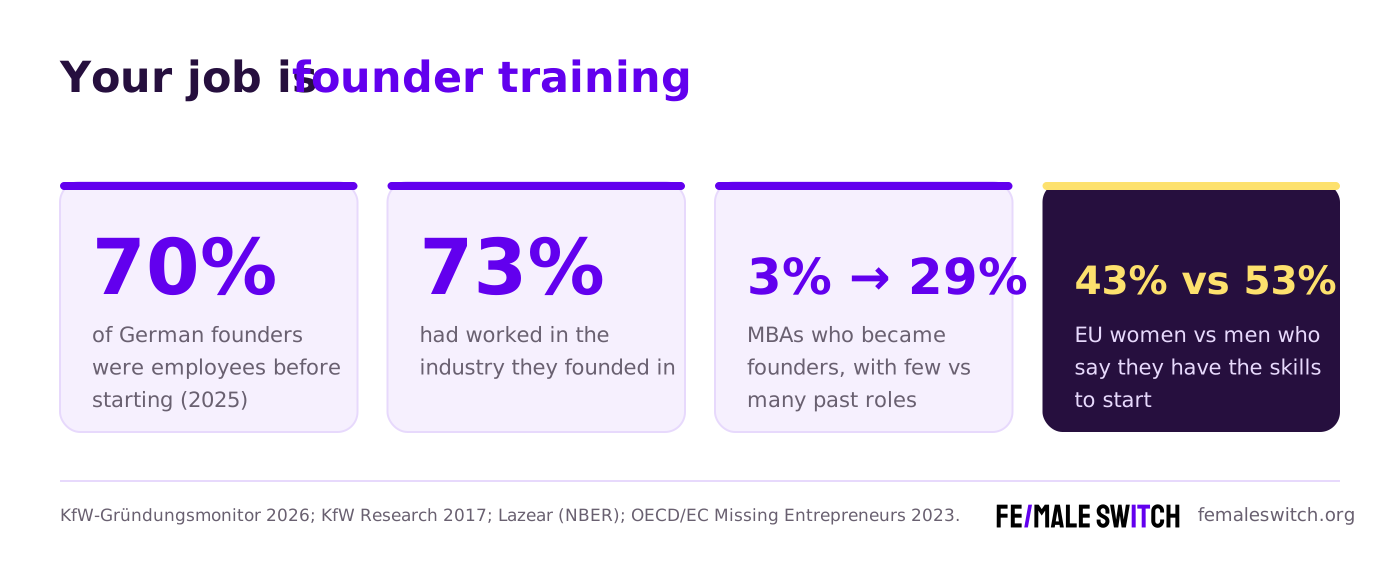
More than you think. Most founders start from a job: 70% of German founders were employees right before starting, and 73% had worked in the industry they founded in. Teachers already plan and persuade, nurses handle uncertainty, admin staff run operations and budgets, salespeople sell. The skills most employees still need to build are selling their own work and managing money. Below is a translator for 10 common jobs, a one-evening skills inventory, and why so many women underrate what they already know.
👉 Practise the missing skills in the Fe/male Switch startup game
When I talk to women who are thinking about starting a business, I hear the same sentence again and again: "I don't have the skills." Then they describe their job: managing thirty children, running a hospital ward at night, keeping an office's suppliers and budgets in order. Those are the skills of an entrepreneur. They just come with a different job title.
This guide translates the work you already do into founder skills, shows the few gaps most employees need to fill, and gives you an exercise to build your own skills list. For the full framework of 15 entrepreneurial skills and a scored self-test, see our sister guide on the skills of an entrepreneur. Updated October 2026.
You don't need a new set of skills to start a business. You need to recognise the ones you already have, and fill one or two gaps.
Why your job already taught you the skills of an entrepreneur
Founders rarely come from nowhere. According to the KfW start-up monitor, 70% of Germany's founders in 2025 were employees right before they started, and about four in ten kept their job while starting. An earlier KfW study found that 73% of founders had worked in the industry they founded in, half of them for more than five years. Only 18% were complete career-changers.
Experience also pays off. Danish register data analysed by Dahl and Reichstein showed that new firms with industry-experienced founders survive longer. And variety helps: Stanford economist Edward Lazear found that MBA graduates who had held many different roles were far more likely to become entrepreneurs, 29% of those with more than 16 roles against 3% of those with fewer than three, according to his study of 5,000 alumni. Every job, project and side role adds to your toolkit. That is why experience-based business ideas for women over 50 are often the safest to start.
The skills translator: 10 jobs and the founder skills they build
Find your job (or the closest one) to see the entrepreneurial skills you probably already have, businesses that use them, and the gap you'll most likely need to fill. The skill names follow the EU's EntreComp framework.
Our editorial assessment of typical strengths; your own experience may differ.
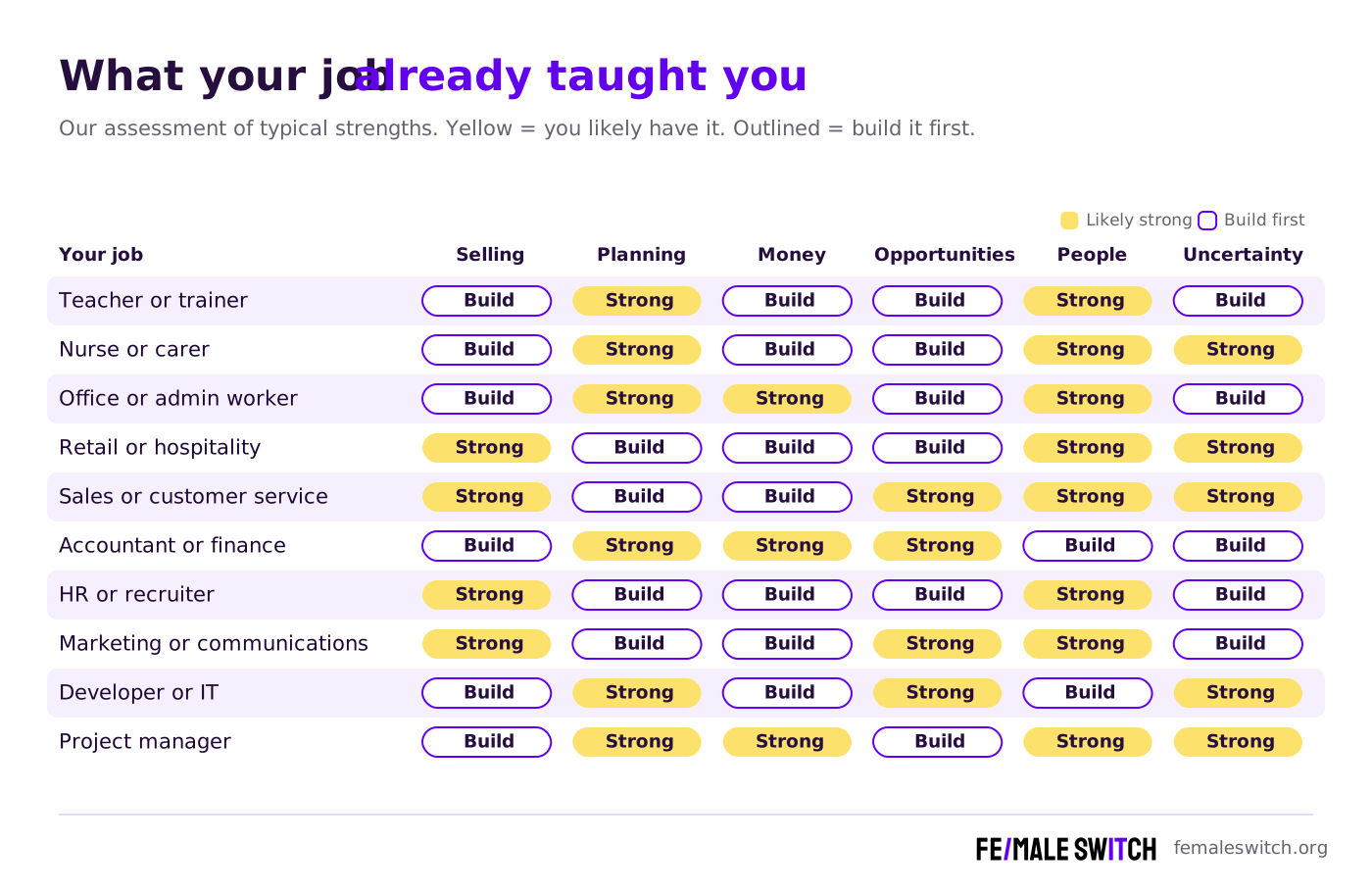
Two patterns stand out. Most jobs build planning and people skills, and many build resilience under pressure. Far fewer build the two skills every founder needs from week one: selling your own work and managing your own money. Employees sell their employer's products and spend their employer's budget; founders do both with their own name and savings on the line.
Skills from jobs women often hold
Women make up 46.6% of the EU's workforce but 73.3% of teaching professionals, 78.1% of health associate professionals such as nurses, 66.1% of clerical support workers and 65.9% of sales workers, according to Eurostat. These jobs are rarely described as entrepreneurial, yet they build exactly what early founders need:
- Teaching builds planning, explaining complex ideas simply and persuading a sceptical audience: the core of selling and pitching.
- Nursing and care build calm decisions under uncertainty, teamwork across shifts and deep knowledge of a market that is growing fast as Europe ages.
- Office and admin work builds operations, supplier management and budgeting, which are the skills that keep small businesses alive.
- Sales and retail build customer insight, persistence after rejection and a feel for what people actually buy.
For more on turning a non-technical background into an advantage, read building confidence without a technical background.
Why women underrate their entrepreneurial skills
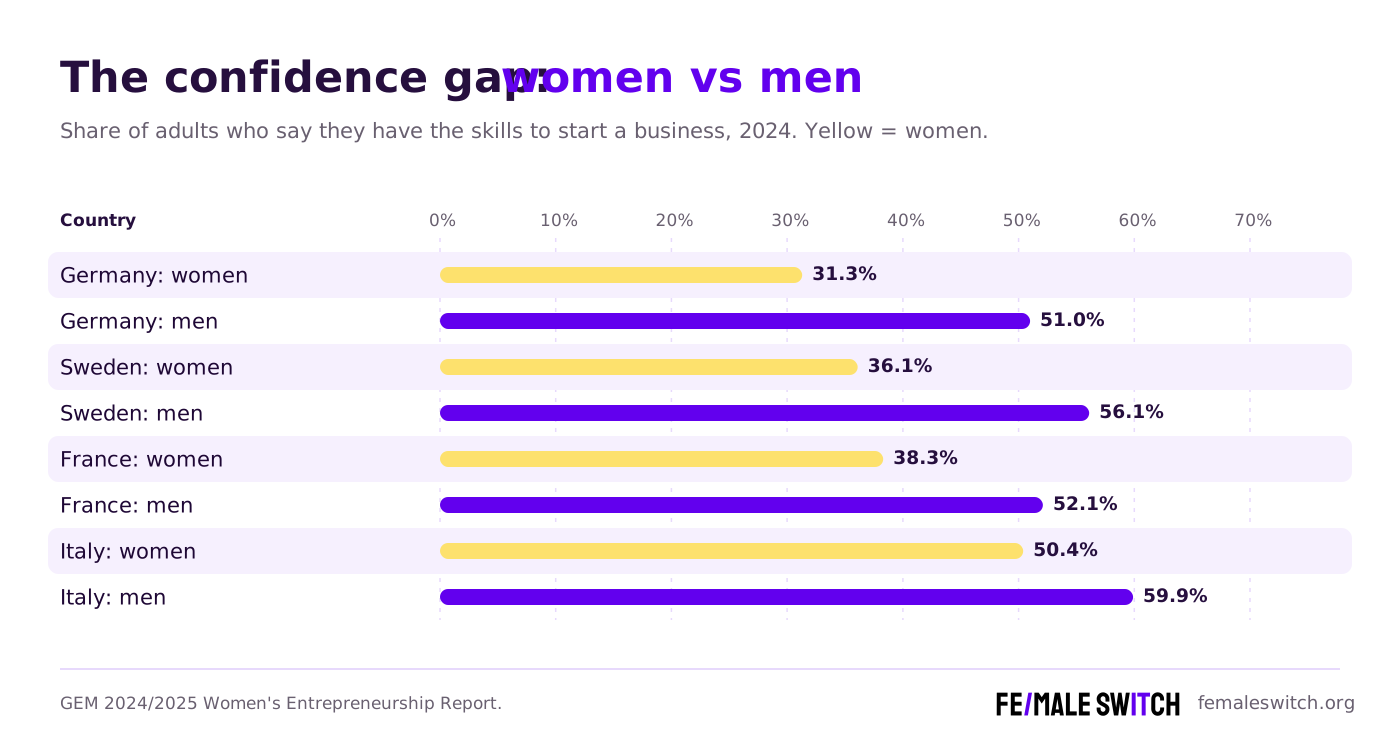
In the EU, 43% of women say they have the skills and knowledge to start a business, against 53% of men, and 50% of women say fear of failure would stop them, against 43% of men, according to the OECD and European Commission's Missing Entrepreneurs 2023 report. The gap is widest in some of Europe's richest countries: in Germany only 31.3% of women say they have the skills, against 51% of men, according to GEM.
This is a gap in confidence, not in ability. The same women manage teams, budgets and crises at work every day. The fix is evidence: write down what you've done, attach a number to it, and test one skill on a real customer, which is what the exercise below does.
Your skills inventory in one evening
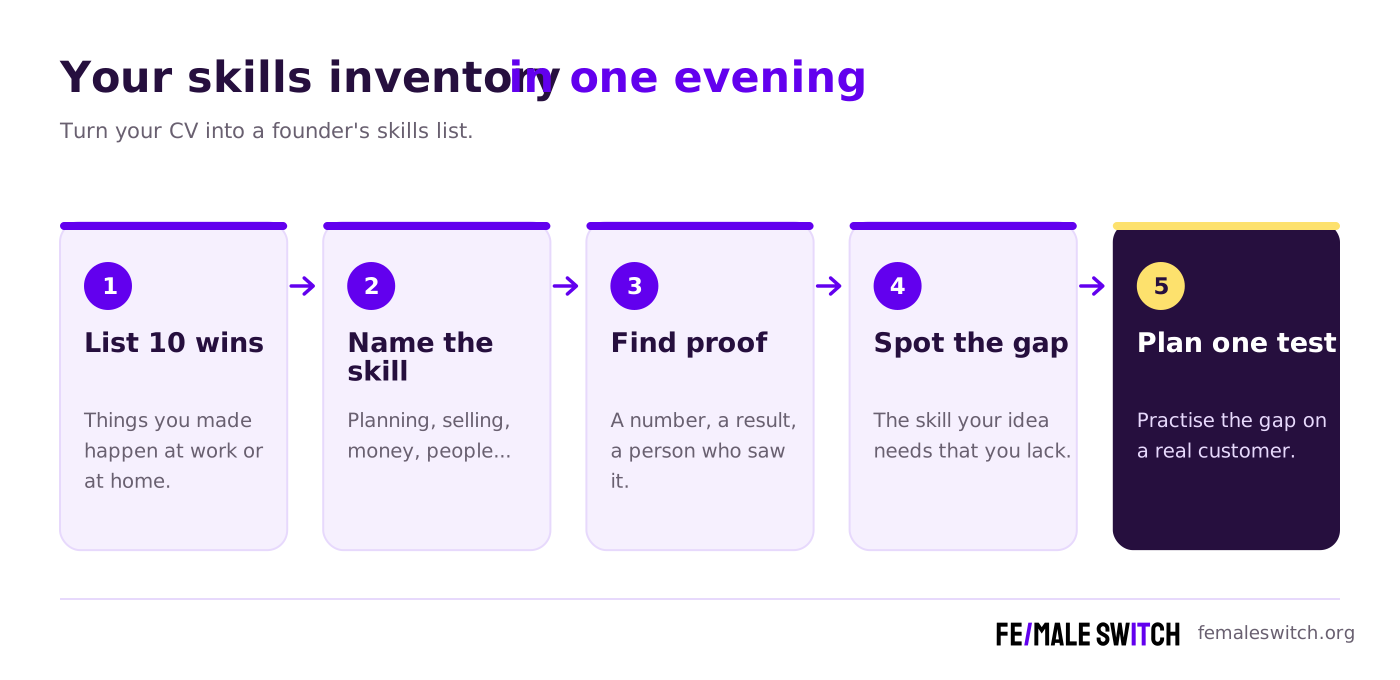
- List 10 wins. Things you made happen at work, in a volunteer role or at home: a project delivered, a conflict solved, a cost cut, an event organised.
- Name the skill behind each. Planning, selling, money, spotting opportunities, working with people, handling uncertainty.
- Find proof. A number ("cut supplier costs by 12%"), a result or a person who saw it. Proof turns a vague feeling into confidence.
- Spot the gap. Compare your list with what your business idea needs. Usually one or two skills are missing, often selling or finance.
- Plan one test. Practise the missing skill on a real customer within two weeks: one sales call, one price quote, one simple cash-flow sheet.
How to fill the gaps without going back to school
The fastest way to build entrepreneurial skills is to use them, with low stakes and quick feedback. Read why learning by doing beats traditional business courses, and try role-playing games for business skills or short skill labs and micro-modules.
- Selling: start with ten conversations with potential customers before you sell anything; see how to build a repeatable sales process.
- Money: build one simple 12-month cash-flow sheet for your idea; our guide to financial management for non-finance founders walks you through it.
- Everything else: the list of essential business skills for first-time founders covers the rest.
Practise selling, pricing and planning safely
In the Fe/male Switch startup game you build a real business in weekly quests with an AI co-founder, so you can practise the skills your job didn't teach you before your own money is at stake.
👉 Start building your skills in the game
Conclusion: you're more ready than you think
The skills of an entrepreneur aren't reserved for people with business degrees. Most founders start from an ordinary job and build on what it taught them: planning, people, resilience and knowledge of a market. Recognise those skills, fill the one or two gaps, and test them with real customers. When you're ready, our 90-day plan for starting a startup shows you what to do week by week, and our guide to founder safety nets in Europe helps you leave your job safely.
FAQ: skills of an entrepreneur
What skills from my job are useful for starting a business?
Planning and project management, working with people, handling pressure, explaining and persuading, budgeting and knowing your industry's customers. Most jobs build several of these; the usual gaps are selling your own work and managing your own money.
Can a teacher become an entrepreneur?
Yes. Teaching builds planning, clear communication and persuasion, which transfer directly to tutoring, online courses, corporate training and learning products. The main skill to add is pricing and selling your own time.
What business can a nurse start?
Home care, health coaching, care consulting and health-related services all build on nursing experience. Nurses usually handle uncertainty and teamwork well; financial planning and marketing are the skills to build first.
Do I need a business degree to be an entrepreneur?
No. Most founders start from an ordinary job, and research shows that industry experience and a variety of roles matter more. You can learn the missing business skills by doing, with real customers.
Which entrepreneurial skills do employees usually lack?
Selling their own work and managing their own money. Employees sell their employer's products and spend their employer's budget; founders need to do both with their own name and savings at stake.
Why do women feel less skilled to start a business?
In the EU, 43% of women say they have the skills to start a business against 53% of men, although women run teams, budgets and crises every day at work. The gap is in confidence, not ability, and it narrows with evidence and practice.
How do I list entrepreneurial skills on my CV or LinkedIn?
Use the founder skill name and a proof point: "Planning: delivered a 9-month project on time and 10% under budget" or "Selling: grew repeat customers by 20%". Numbers turn soft skills into credible ones.
How can I build entrepreneurial skills quickly?
Practise them on low-stakes real tasks: ten customer conversations, one price quote, one cash-flow sheet. Simulations and startup games let you practise before your own money is involved.
