

TL;DR: what are good business ideas for women over 50?
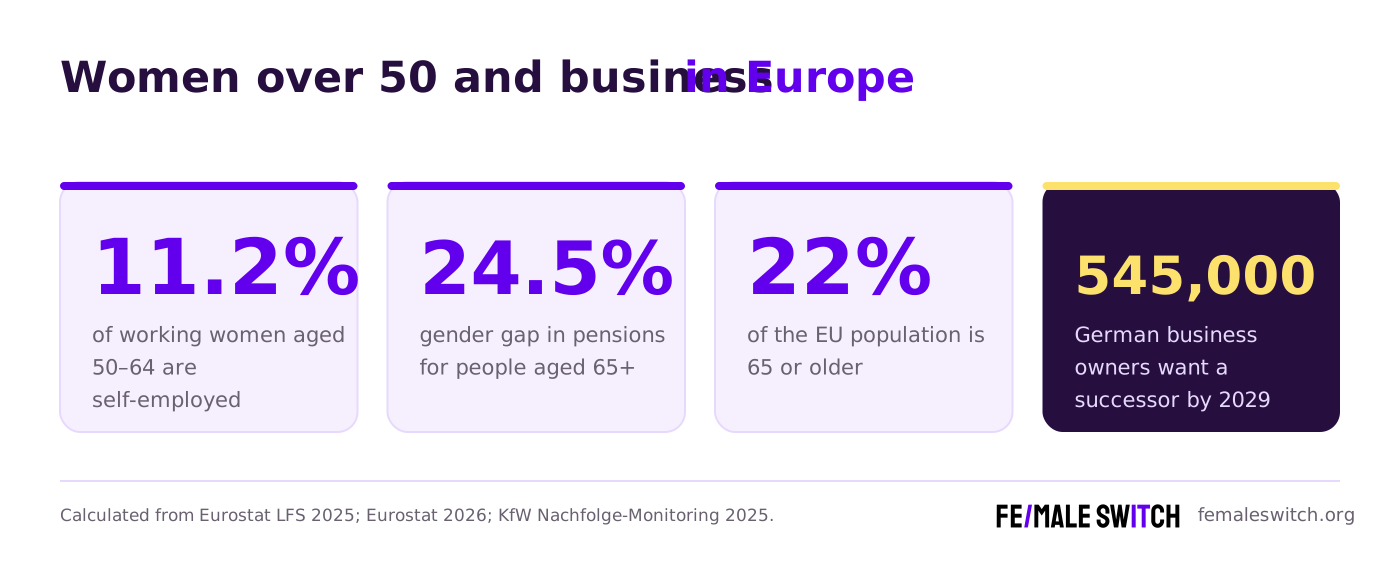
Ideas that turn decades of experience into income without big risks: consulting and fractional roles, coaching, bookkeeping, tutoring and translation, midlife wellbeing coaching, services for an ageing population, crafts and hosting, or buying a business from a retiring owner. In the EU only 11.2% of working women aged 50–64 are self-employed, against 20.5% of men, even though experience is one of the best predictors of business success. With a 24.5% gender pension gap, starting something of your own after 50 can also protect your future income.
👉 Test your idea risk-free in the Fe/male Switch startup game
Many of the women I talk to about starting a business are in their fifties. They have run departments, raised families, cared for parents, and they finally have the time and confidence to build something of their own. What they often lack is a list of ideas that fits their stage of life: ideas that use experience rather than youth, don't need huge savings and leave room for health, family and a pension.
This guide gives 15 such ideas for women over 50 in Europe, with the data on why now is a good time. For business ideas for women at every stage of life, with revenue data by sector, see our sister guide to business ideas for women. For startup ideas that solve women's health problems such as menopause, see our femtech business ideas on mean.ceo.
At 50 you're not starting from zero. You're starting from thirty years of skills, contacts and judgment that a 25-year-old founder would pay for.
Why 50 is a great age to start a business
Older founders do better than most people think. In US data, the average founder of a fast-growing company is 45, and a 50-year-old founder is about 1.8 times as likely to build a top-growth firm as a 30-year-old, according to research by Azoulay and colleagues. In high-income economies, women entrepreneurs also tend to be older than men and start after gaining work experience, according to the GEM Women's Entrepreneurship Report; in Europe, 10.1% of women starting businesses are aged 55–64. Across the EU, 43.8% of self-employed women are now aged 50 to 74; see the 2026 statistics on women entrepreneurs.
Yet older women are the least likely group to run their own business. The OECD and European Commission's Missing Entrepreneurs report finds that men over 50 in the EU are nearly twice as likely to be self-employed as women over 50, and that if older people started businesses at the rate of men aged 30–49, the EU would have 5.5 million more early-stage entrepreneurs.
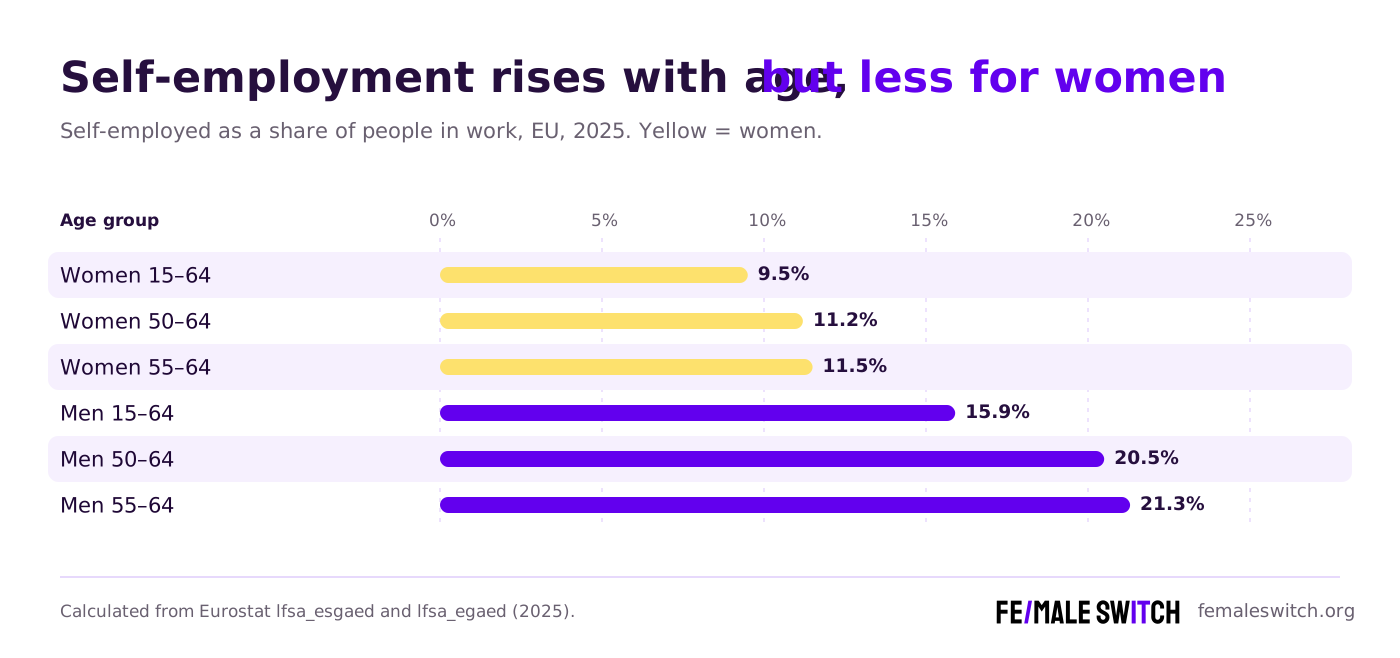
Calculated from Eurostat data, 11.2% of working women aged 50–64 were self-employed in 2025, against 20.5% of men the same age. The gap is an opportunity: the experience is there, the businesses aren't yet. Read more on why women start businesses later than men.
The money case: pensions, the silver economy and retiring owners
- Your pension: women aged 65 and over in the EU receive pensions 24.5% lower than men's on average, according to Eurostat. A business you can run part-time into your sixties and seventies can close part of that gap.
- Your customers: 22% of the EU population is now 65 or older, and a European Commission silver economy study projected that spending by people over 50 would reach €5.7 trillion by 2025. Many of the ideas below serve that market, which you understand from the inside.
- Businesses for sale: in Germany alone, about 545,000 owners want to hand over their company by the end of 2029, and another one in four plan to close for lack of a successor, according to KfW. Across Europe, an estimated 450,000 firms change hands every year.
15 business ideas for women over 50
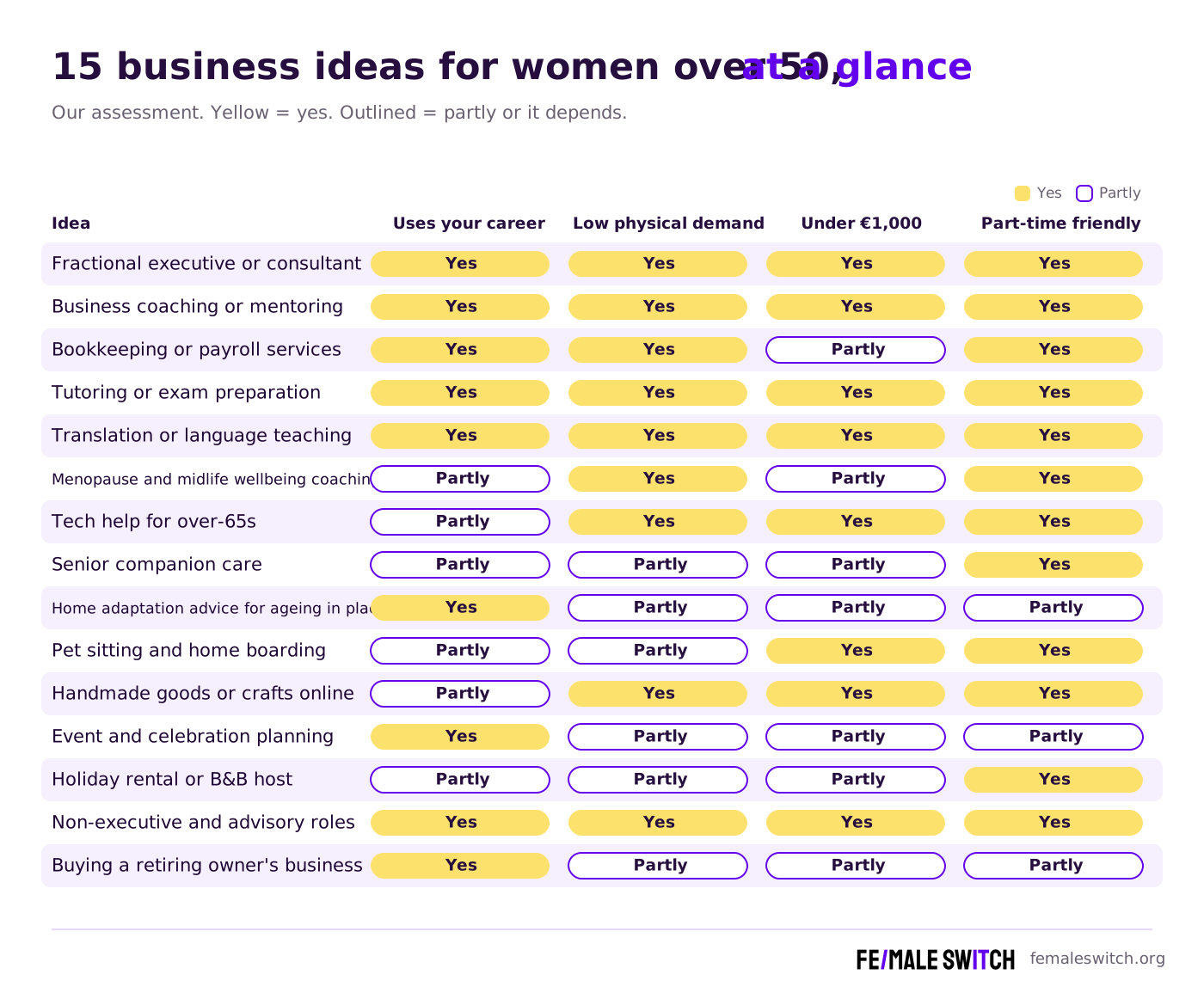
Start costs are our 2026 estimates, excluding a laptop and phone you already own; physical demand is our assessment.
Ideas that sell your professional experience
If you've spent years in management, finance, HR or a specialist field, companies will pay for your judgment by the day or the month. Fractional roles, where you act as a part-time finance, HR or operations lead for several small firms, are increasingly common. Coaching and mentoring suit people who love developing others, and bookkeeping and payroll offer steady monthly fees. Non-executive and advisory roles are another option, especially as large European companies look for experienced women directors.
1. Fractional executive or consultant
A fractional executive works as the part-time finance, operations or HR lead for two to four small companies that can't afford a full-time director. It's the most direct way to sell decades of senior experience, and many small firms prefer someone who has already made the mistakes.
- Start cost: €0–1,000 (physical demand: low).
- Typical prices: Interim managers in Germany charge about €1,300 a day on average, according to the DDIM 2026 market study as reported in the trade press, and the European average is close to €1,000 a day in the INIMA interim survey. Fractional roles are usually sold as a monthly retainer for one or two days a week.
- What you need: No licence. Register as a sole trader or limited company, take out professional indemnity insurance, and have a clear one-page offer.
- First clients: Former employers, suppliers and clients, accountants and investors who see struggling small firms, and interim management agencies.
- First step: Write a one-page offer such as "two days a month as your part-time finance director" and send it to ten people in your network.
2. Business coaching or mentoring
Coaching helps managers, business owners or career changers make decisions and grow. Life and leadership experience are exactly what clients look for, and the work is flexible, online and light on costs.
- Start cost: €0–1,000 (physical demand: low).
- Typical prices: Coaches in Western Europe charged an average of $277 per one-hour session, the highest of any region, in the ICF Global Coaching Study 2023 (2022 data).
- What you need: Coaching isn't regulated, but a credential from a body such as the ICF or EMCC builds trust, especially for company-paid coaching. Budget separately for training.
- First clients: Your LinkedIn network, alumni groups and HR departments that buy coaching for their managers.
- First step: Coach three pilot clients at a reduced price in exchange for detailed testimonials.
3. Bookkeeping or payroll services
Bookkeepers keep small businesses' records, invoices and payroll in order. It suits women with finance or office experience, pays monthly and can be done from home with cloud software.
- Start cost: €200–1,500 (physical demand: low).
- Typical prices: In the UK, bookkeepers typically charge £25–35 an hour, according to the Institute of Certified Bookkeepers as cited by the accounting platform Dext. Many offer fixed monthly packages instead.
- What you need: In the UK you must be supervised for anti-money-laundering purposes by HMRC or a professional body such as the ICB before you trade. In some countries, such as Germany, tax returns and certain accounting tasks are reserved for licensed tax advisers, so check which services you may offer.
- First clients: Sole traders and micro-businesses near you, and local accountants who outsource routine bookkeeping.
- First step: Get the right registration or certification in your country, then offer a fixed monthly package to five sole traders.
4. Non-executive and advisory roles
Non-executive directors and advisers sit on boards to guide strategy, finance and risk. It's paid, part-time work for experienced professionals, and boards are actively looking for women.
- Start cost: €0 (physical demand: low).
- Typical fees: Non-executive directors of UK listed companies earned an average base fee of £80,888 in 2025, according to the Spencer Stuart UK Board Index; fees at smaller, private and charity boards are much lower or unpaid.
- Who gets in: In the same study, 55% of first-time non-executive directors at UK listed companies were women, with an average age of 56. Women now hold 43% of FTSE 350 board seats.
- What you need: No licence. Board training helps, and most people start on a charity, school or startup advisory board.
- First step: Join one charity or startup advisory board this year to build board experience.
Ideas that teach what you know
Tutoring, exam preparation and language teaching can start at almost no cost, online or locally. Midlife and menopause wellbeing coaching is a fast-growing field where lived experience is an advantage, though a recognised certification builds trust. Teaching older people to use phones, banking apps and video calls is a simple, much-needed service.
5. Tutoring or exam preparation
Tutoring and exam preparation turn subject knowledge or a teaching career into flexible income, online or in person, in school terms or all year round.
- Start cost: €0–300 (physical demand: low).
- Typical prices: UK tutors on the Tutorful platform charged an average of £37.45 an hour in 2024.
- What you need: No licence in most countries. In the UK, self-employed tutors have been able to apply for an enhanced DBS check since January 2026, which parents increasingly expect; other countries have similar criminal-record certificates.
- First clients: Parents' groups, schools and libraries, and tutoring platforms while you build word of mouth.
- First step: Offer three trial lessons in your strongest subject and ask happy parents for referrals.
6. Translation or language teaching
Translators and language teachers turn languages learned through life, migration or work into income. Specialist knowledge from a career, such as law, medicine or engineering, lets you charge more than a generalist.
- Start cost: €0–500 (physical demand: low).
- Typical prices: As a benchmark, German courts pay translators €1.95 per started 55 characters for texts supplied in editable form, under the JVEG fee law since June 2025. Market rates vary widely by language pair and specialism.
- What you need: Certified (sworn) translations need official authorisation: in Germany, for example, translators are sworn in by each federal state's courts after proving their qualifications. Ordinary translation and teaching need no licence.
- First clients: Translation agencies, local exporters, law firms and language schools, plus online platforms.
- First step: List your language pairs and the specialist fields your career gives you, and contact five agencies with that profile.
7. Menopause and midlife wellbeing coaching
Midlife and menopause wellbeing coaching supports women with sleep, energy, work and confidence during a stage you may know from the inside. Employers increasingly want workplace menopause support for their staff.
- Start cost: €500–2,000 (physical demand: low).
- Typical prices: There are no reliable price surveys yet; most coaches sell programmes of several sessions or paid workshops for employers.
- What you need: There's no recognised coaching credential: courses labelled "accredited" are usually accredited by continuing-education bodies, not medical ones. Medical advice is for healthcare professionals, so keep to wellbeing and lifestyle support and refer clients to their doctor for treatment questions.
- First clients: HR teams writing menopause policies, women's networks, gyms and community groups.
- First step: Run a free lunchtime workshop for one local employer and turn it into a paid programme.
8. Tech help for over-65s
Teaching older people to use smartphones, online banking, video calls and public services is simple, needed and rewarding, and older clients often prefer a teacher close to their own age.
- Start cost: €0–500 (physical demand: low).
- Why demand is high: In the EU in 2023, only 25% of women and 34% of men aged 65–74 had at least basic digital skills, according to Eurostat. In the UK, 46% of over-65s can't complete all eight basic internet tasks, according to Age UK.
- Typical prices: There's no reliable price survey; most helpers charge an hourly rate for home visits or a fee per person for group classes.
- What you need: No licence. Patience, a criminal-record certificate for home visits, and liability insurance.
- First step: Offer a group class at a library or community centre, then sell one-to-one visits to participants and their adult children.
Ideas that serve an ageing Europe
Companion care and help with daily life are in high demand as Europe ages. If you have a background in property, design, occupational therapy or care, advising families on adapting homes so their parents can stay independent is a valuable niche.
9. Senior companion care
Senior companions provide company, outings, shopping and help around the house so older people can stay independent. Many women over 50 bring caring experience from their own families.
- Start cost: €300–2,000 (physical demand: medium).
- Typical prices: As a benchmark, the UK Homecare Association's minimum price for regulated homecare in England is £32.14 an hour for 2025-26, rising to £34.42 for 2026-27.
- What you need: In England, registration with the Care Quality Commission is needed only for personal care such as washing and dressing; companionship and cleaning alone aren't regulated. In Germany, everyday support services need recognition from the state authority, and clients can then use their care insurance's relief amount of up to €131 a month to pay you.
- First clients: GPs, pharmacies, churches, community centres and adult children who live far from their parents.
- First step: Define exactly what you do and don't do (for example, no personal care) and print a simple leaflet for local pharmacies.
10. Home adaptation advice for ageing in place
Home adaptation advisers help families make a home safe for an older or disabled person: grab rails, stair lifts, walk-in showers, lighting. You assess the home, plan the changes and manage trusted tradespeople.
- Start cost: €1,000–5,000 (physical demand: medium).
- Who pays: In England, councils can pay up to £30,000 through the Disabled Facilities Grant (£36,000 in Wales). In Germany, the KfW 455-B grant for age-appropriate conversions closed to new applications on 31 July 2026 after its 2026 funds ran out, but the KfW 159 loan of up to €50,000 is still available.
- What you need: A background in occupational therapy, design, building or care helps; partner with qualified trades for the work itself.
- First clients: Families, occupational therapists, care agencies and local councils.
- First step: Build a structured home-safety assessment and price it as a fixed-fee report.
Ideas from your home, hobbies and assets
Pet sitting, handmade goods, event planning and hosting guests turn hobbies, a spare room or an empty nest into income. They're flexible, but check local rules for food, short-term rentals and animal care before you start.
11. Pet sitting and home boarding
Pet sitting and home boarding suit animal lovers with a home and time during the day, and pair well with a part-time pension or other income.
- Start cost: €100–600 (physical demand: medium).
- Typical prices: In UK cities, dog boarding on the Rover platform typically costs about £27–30 a night.
- What you need: In England, boarding dogs in your home as a business needs a council licence, with an inspection, even for a few dogs. Check local rules elsewhere, and take out pet-care insurance.
- First clients: Neighbours, vets, dog walkers and pet-care platforms.
- First step: Check the licence rules with your council, then offer a first stay to two neighbours.
12. Handmade goods or crafts online
If you've practised a craft for years, such as knitting, ceramics, jewellery or sewing, you can sell your work online and at markets, and teach it in workshops.
- Start cost: €100–1,000 (physical demand: low).
- Platform fees: Etsy charges $0.20 per listing and a 6.5% transaction fee, plus payment processing (for example 4% plus €0.30 per order in Germany) and, in some countries, an extra regulatory fee.
- What you need: Product safety rules apply to some items, such as toys, cosmetics and candles; check them before you sell.
- First clients: Online marketplaces, local craft fairs and workshops, which often earn more per hour than products.
- First step: Price one product to cover materials, fees and your time, and test it at one market and one online shop.
13. Event and celebration planning
Event and celebration planners organise weddings, anniversaries, retirement parties and company events, using organising skills and a contact book that take decades to build.
- Start cost: €300–2,000 (physical demand: medium).
- Typical prices: UK couples spend an average of £1,543 on a wedding planner, according to Bridebook, and planners often charge 10–15% of the wedding budget; the average UK wedding costs £20,604.
- What you need: No licence. Contracts, deposits and liability insurance.
- First clients: Venues, florists and photographers who refer clients, and companies in your network.
- First step: Plan one event at cost for a friend or a local business to build a portfolio and reviews.
14. Holiday rental or B&B host
If your children have left home or you own a second property, hosting guests can bring steady income and company.
- Start cost: Varies (physical demand: medium).
- New EU rules: Since 20 May 2026, the EU short-term rental regulation requires platforms to display and check registration numbers where countries or cities require them, and to share booking data with the authorities.
- Local limits: Cities can restrict rentals heavily: since 1 April 2026, Amsterdam allows holiday rental for only 15 nights a year in its Centrum and De Pijp districts.
- What you need: A registration number where required, tourist tax registration, insurance and fire-safety basics.
- First step: Check your city's registration rules and night limits before you spend anything on furnishing.
Buy instead of start
Buying a small business from a retiring owner gives you customers, staff and revenue from day one. It needs more money, but sellers often accept part of the price over several years, and your management experience is exactly what they're looking for in a successor.
15. Buying a retiring owner's business
Buying a small business from an owner who is retiring gives you customers, staff and revenue from day one, and management experience is what sellers look for in a successor.
- Start cost: €10,000+ (physical demand: varies).
- Typical prices: In the US, small businesses sold for a median of about $350,000 at around 2.7 times annual cash flow in 2026, according to BizBuySell; in Germany, owners looking for a successor hope for about €499,000 on average, according to KfW. European multiples vary by sector and country.
- What you need: Savings for a deposit, a bank loan or a seller loan, and careful due diligence: three years of accounts, customer contracts and staff.
- Where to look: Your accountant, bank and chamber of commerce, and national succession exchanges such as nexxt-change in Germany.
- First step: Tell five advisers in your region which type of business you'd like to buy and what you can invest.
How to start a business after 50 without risking your savings
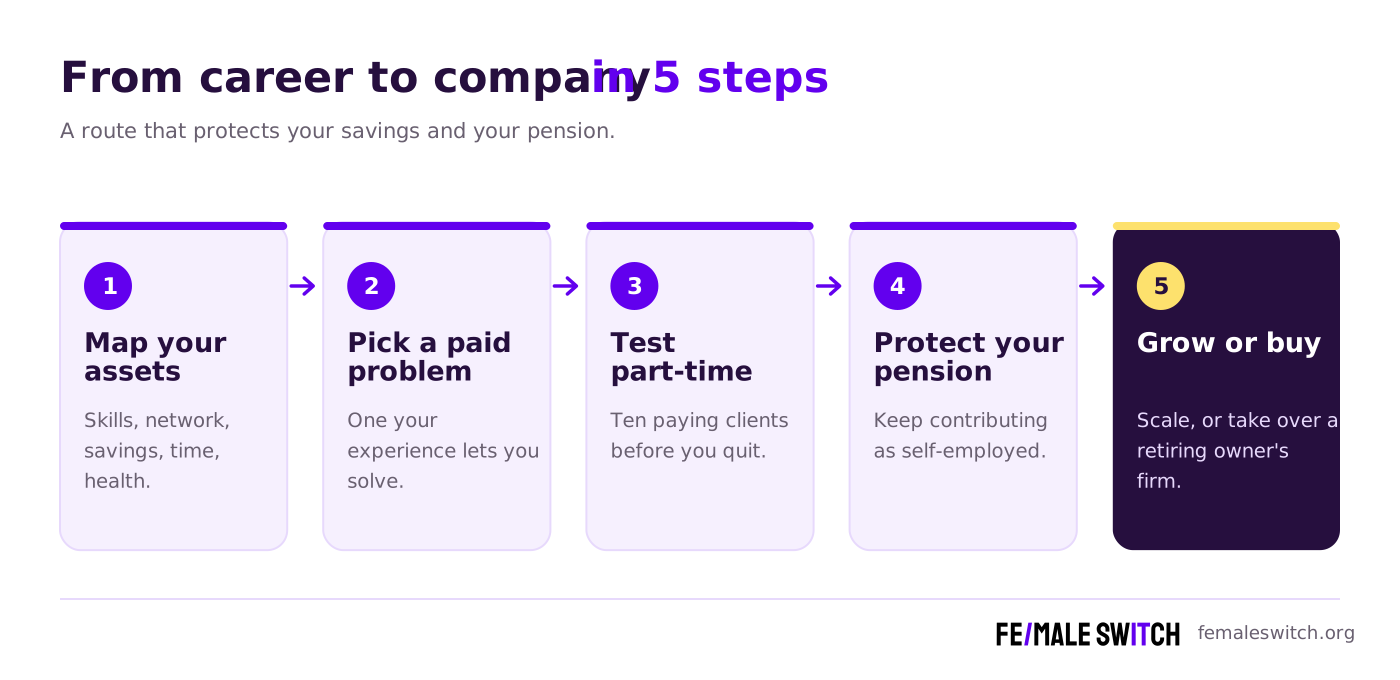
- Map your assets. Write down your skills, contacts, savings, available hours and health. Our guide to the skills of an entrepreneur you already have from your job helps.
- Pick a problem people pay for that your experience lets you solve better than a younger competitor.
- Test it part-time. Win ten paying clients before you leave a job or spend serious money; our 90-day plan to start a startup shows how.
- Protect your pension and safety net. Keep paying into a pension as self-employed and check what you lose by leaving a job; see founder safety nets in Europe.
- Grow, or buy. Once it works, decide whether to grow, partner up or take over a retiring owner's business.
For money basics, read financial management for non-finance founders, and find someone who has done it before through female mentors.
Learn by doing, at your own pace
The Fe/male Switch startup game lets you test a business idea in weekly quests with an AI co-founder and a community of women founders of all ages, before you put your savings on the line.
👉 Start your business in the game
Conclusion: your experience is your startup capital
Women over 50 bring what most young founders lack: deep knowledge of an industry, a network, credibility with customers and the calm that comes from having solved hard problems before. The best business ideas for women over 50 put that experience to work, start small and protect your future income. Pick the idea that fits your skills and energy, test it with ten paying customers, and let it grow at the pace you choose. For ideas that also do good, see great business ideas that do good and make money.
FAQ: business ideas for women over 50
What is the best business for a woman over 50 to start?
One that uses your professional experience and needs little money: consulting or a fractional role, coaching, bookkeeping, tutoring or translation. If you prefer hands-on work, senior companion care, pet sitting and event planning are flexible options.
Is it too late to start a business at 50?
No. The average founder of a fast-growing US company is 45, and 50-year-old founders are more likely than 30-year-olds to build a top-growth company. In Europe, about one in ten women starting a business is aged 55–64.
What business can a retired woman start?
Low-risk, flexible ideas such as tutoring, language teaching, crafts, pet sitting, hosting guests, tech help for older people or advisory roles. Check how extra income affects your pension and taxes in your country.
How much money do I need to start a business at 50?
Many experience-based businesses cost under €1,000 to start, such as consulting, coaching, tutoring and translation. Buying an existing business costs more, often €10,000 or more, though sellers may accept staged payments.
Can I start a business while receiving a pension?
In most European countries you can, but rules on combining pension and earned income differ. Ask your pension provider before you start, and register the business properly.
How many women over 50 run their own business in Europe?
About 11% of working women aged 50–64 in the EU are self-employed, compared with about 21% of men the same age, calculated from Eurostat data for 2025.
Is buying a business a good idea after 50?
It can be. Many owners are retiring without a successor, so there are businesses for sale with customers and staff in place. Check three years of accounts and agree a handover period with the seller.
What online business can a woman over 50 start?
Online consulting, coaching, tutoring, language teaching, translation, bookkeeping, and selling handmade goods or digital courses based on your expertise.
