
TL;DR: what are good small business ideas from home for parents?
Businesses you can run in short, interrupted slots and that don't need clients in your home: virtual assistance, bookkeeping, writing, social media, translation, design, digital products, online courses and tutoring, coaching, and reselling children's clothes. Home baking, childminding and pet boarding also work from home but come with registration rules. Below, each of the 15 ideas has its typical prices, the rules to check and a first step, plus why childcare costs make home businesses so attractive in some countries.
👉 Build your home business step by step in the Fe/male Switch startup game
Running a business from home with young children isn't the calm picture on social media. It's emails during nap time, client calls timed around nursery pick-up, and a lot of work after bedtime. Done well, though, it can give you income, independence and the time with your children that a commute would take away.
This guide is for parents, mostly mothers, who want small business ideas from home that genuinely fit family life. For a wider list of home businesses with the legal checks for each, see our sister guide to small business ideas from home.
The best home business for a parent isn't the most profitable one on paper. It's the one you can still run in a week when everyone has a cold.
Why parents look for small business ideas from home
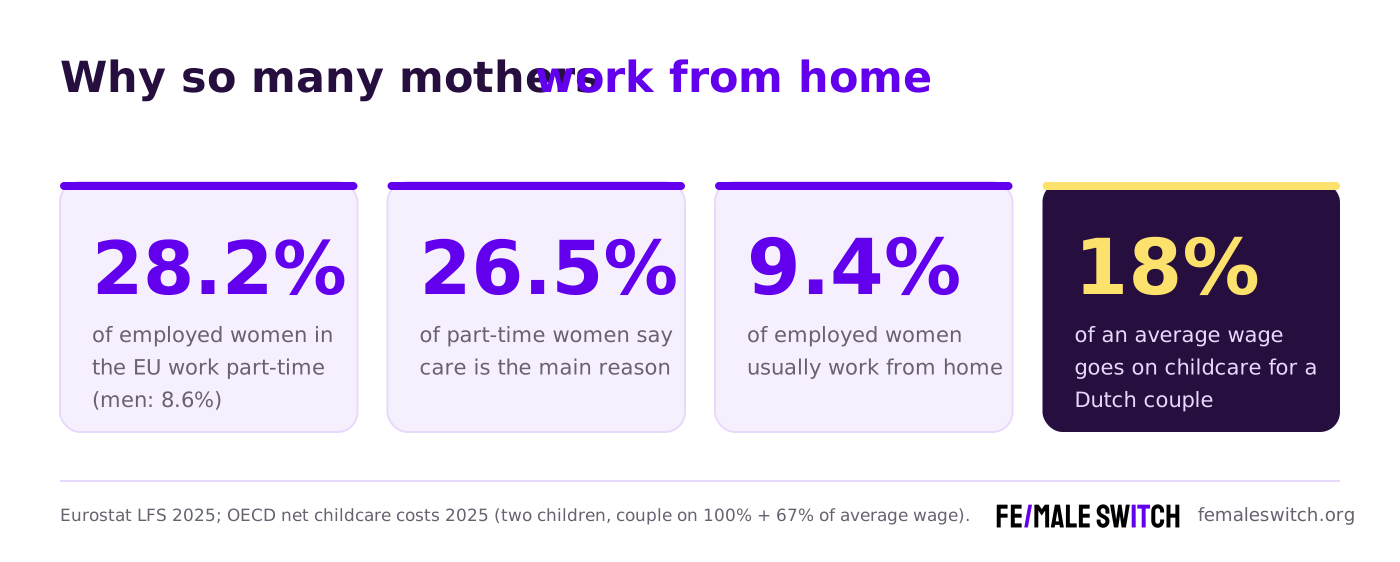
Care still shapes women's working lives in Europe. In 2025, 28.2% of employed women in the EU worked part-time, against 8.6% of men, and 26.5% of those women named caring for children or adults as the main reason, against 6.6% of men, according to Eurostat. Only 9.4% of employed women usually work from home, according to Eurostat's home-working data.
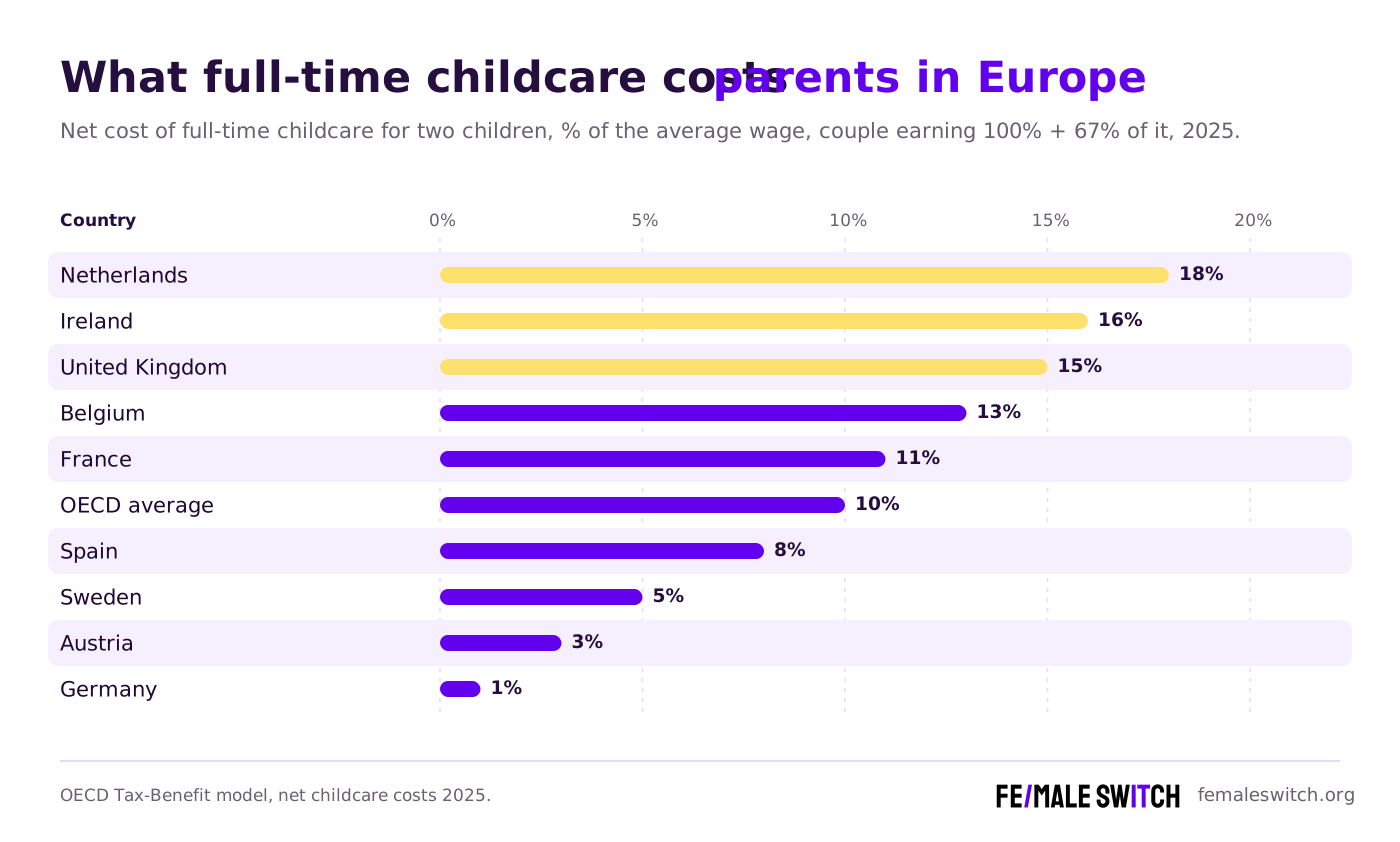
Childcare costs explain part of it. For a couple on average and two-thirds of average earnings, full-time childcare for two young children costs 18% of an average wage in the Netherlands and 15–16% in the UK and Ireland, but only 1% in Germany, according to the OECD. Where childcare is expensive, a business you can run at home in part-time hours is often the only way to keep earning.
15 small business ideas from home for parents
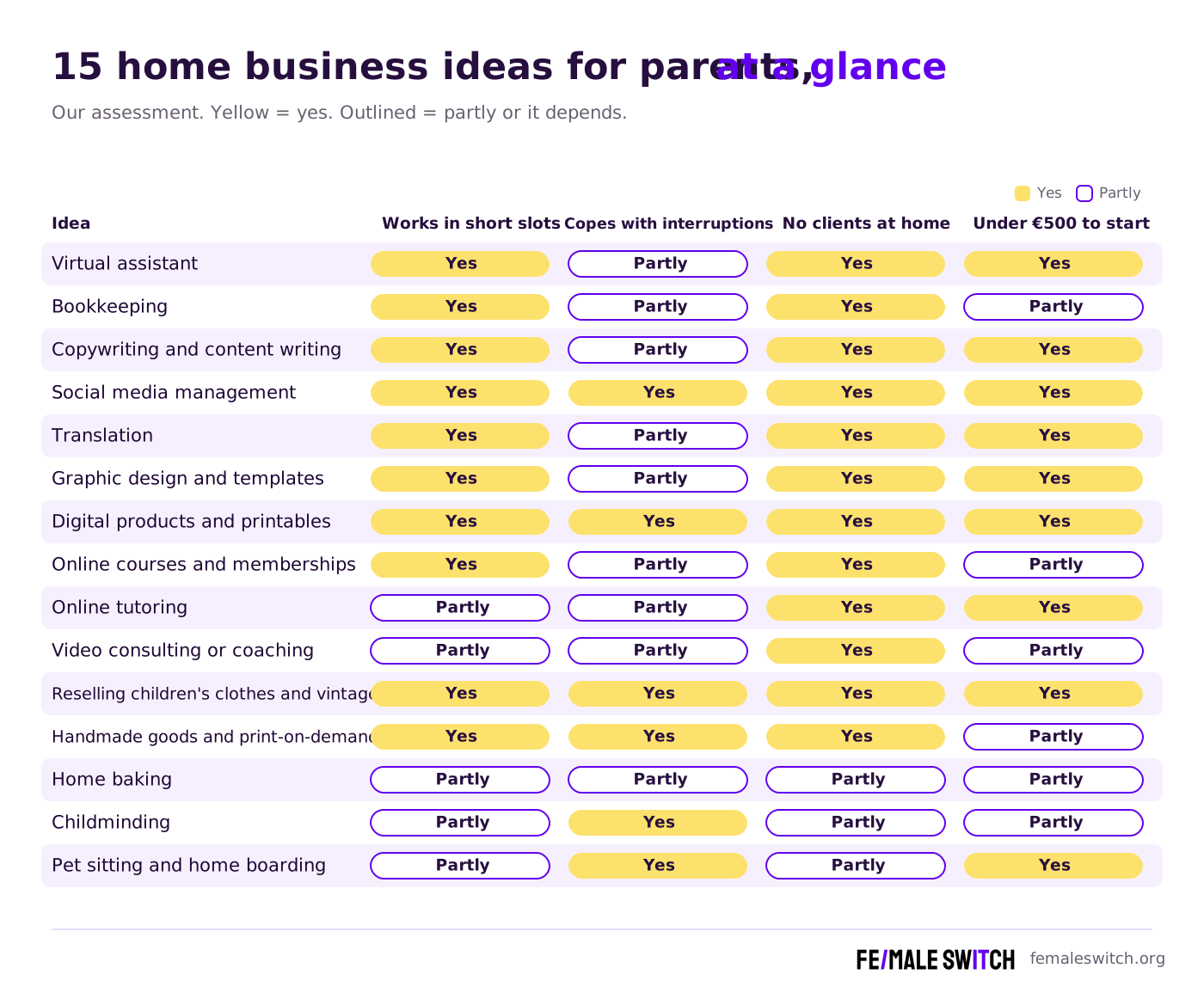
Start costs are our 2026 estimates, excluding a laptop and phone you already own.
Ideas you can do in nap times and evenings
These service businesses run on deadlines rather than fixed hours, so you can work in short slots, early mornings or after bedtime.
1. Virtual assistant
Virtual assistants handle email, scheduling, bookings, research and admin for busy founders and small firms. Most tasks can be done whenever you have an hour, which makes it one of the most parent-friendly businesses there is.
- Start cost: €0–200.
- Typical prices: UK virtual assistants charged an average of £32.35 an hour in 2024, according to the Society of Virtual Assistants, and specialists charge £50 or more.
- Fits family life because: Most work is asynchronous: clients care that tasks are done by a deadline, not when.
- What you need: A laptop, a reliable connection and clear service terms. Agree response times in writing so a sick child doesn't become a client crisis.
- First step: Offer a 10-hour starter package to three founders or coaches you know.
2. Bookkeeping
Bookkeepers keep invoices, receipts and payroll in order for sole traders and small firms. Work comes in monthly cycles that you can plan around school terms and holidays.
- Start cost: €200–1,500.
- Typical prices: UK bookkeepers typically charge £25–35 an hour, according to the Institute of Certified Bookkeepers as cited by Dext; many sell fixed monthly packages.
- Fits family life because: Deadlines are predictable and the work can be done in focused evening blocks.
- What you need: In the UK you must register for anti-money-laundering supervision with HMRC or a professional body before you trade; in some countries tax returns are reserved for licensed advisers.
- First step: Get certified or supervised, then offer a fixed monthly package to five sole traders.
3. Copywriting and content writing
Copywriters and content writers produce website text, blogs, newsletters and product descriptions. If you can write clearly about a field you know, it's a high-value skill you can sell in short focused sessions.
- Start cost: €0–300.
- Typical prices: UK freelance copywriters charge a median day rate of £440, according to the ProCopywriters Survey 2026.
- Fits family life because: You can work during nap times and evenings, as long as you protect a few uninterrupted hours for drafting.
- What you need: A portfolio of three to five samples in one niche, even if you write them for practice.
- First step: Pick a niche from your previous job and pitch ten businesses in it.
4. Social media management
Social media managers plan, write and schedule posts for small businesses. Scheduling tools let you prepare a month of content in a few sessions, then check in for a few minutes a day.
- Start cost: €0–400.
- Typical prices: Freelance social media managers in the UK booked through the YunoJuno platform average about £326 a day.
- Fits family life because: Content is batched in advance and most daily tasks take minutes, even with a toddler around.
- What you need: A scheduling tool, basic design skills and examples of accounts you've grown.
- First step: Manage one local business's account for a month at a low price in exchange for results you can show.
5. Translation
Translators turn documents, websites and marketing material from one language into another. If you grew up with two languages or moved countries, it's a skill you already have.
- Start cost: €0–500.
- Typical prices: As a benchmark, German courts pay €1.95 per started 55 characters for texts supplied in editable form under the JVEG fee law; market rates vary widely by language pair and specialism.
- Fits family life because: Projects come with deadlines rather than fixed hours.
- What you need: Certified translations need official authorisation in many countries; ordinary translation doesn't.
- First step: Register with three translation agencies in your language pair and specialist field.
6. Graphic design and templates
Graphic designers create logos, social media visuals, presentations and templates. Template-based design for small businesses and Canva-style brand kits are popular with clients on small budgets.
- Start cost: €0–500.
- Typical prices: As an indication only, UK freelance graphic designers booked through YunoJuno average about £348 a day; small-business work is often priced per project.
- Fits family life because: Design work splits naturally into short tasks and revision rounds.
- What you need: Design software, a small portfolio and a clear revision policy.
- First step: Create a fixed-price "brand starter kit" and offer it to three new businesses.
Ideas that keep earning while you parent
Products you make once and sell many times smooth out the weeks when family life takes over.
7. Digital products and printables
Digital products such as printable planners, templates, worksheets and guides are made once and sold many times. Parents often know exactly which planners and activity sheets other parents need.
- Start cost: €0–300.
- Platform fees: On Etsy you pay $0.20 per listing and a 6.5% transaction fee, plus payment processing (for example 4% plus €0.30 per order in Germany).
- Fits family life because: After the first version, sales need little time, so income doesn't stop when the children are ill.
- What you need: A design tool and a shop; check copyright on any fonts and images you use.
- First step: Make one product that solves a problem you had this year and list it in two places.
8. Online courses and memberships
Online courses and paid memberships package your expertise, from sleep routines to Excel or bookkeeping, into recorded lessons and a community.
- Start cost: €300–2,000.
- Typical prices: There's no reliable price survey; most creators start with a low-priced pilot cohort and raise prices once they have results.
- Fits family life because: Lessons are recorded in advance, and you choose when to hold live sessions.
- What you need: A course platform, a microphone and an audience, or a plan to build one first.
- First step: Pre-sell a live four-week pilot before you record anything.
Ideas with fixed sessions you schedule
These need set times, so they work best inside nursery or school hours, or when a partner can take over.
9. Online tutoring
Online tutors teach school subjects, languages or music by video. Demand peaks after school, so it suits parents whose partner or family can take over in the late afternoon.
- Start cost: €0–300.
- Typical prices: UK tutors on Tutorful charged an average of £37.45 an hour in 2024.
- Fits family life because: Sessions are short and booked in advance; you control how many you take.
- What you need: A quiet corner and a headset. In the UK, self-employed tutors can apply for an enhanced DBS check, which parents increasingly expect.
- First step: Offer three trial lessons in your strongest subject.
10. Video consulting or coaching
Consulting and coaching by video let you sell professional expertise from home, in sessions you schedule around nursery or school hours.
- Start cost: €0–1,000.
- Typical prices: Coaches in Western Europe averaged $277 per hour-long session in the ICF Global Coaching Study 2023; consulting is usually priced by project or day.
- Fits family life because: You set the calendar; sessions can sit inside childcare hours.
- What you need: No licence for most consulting and coaching; professional indemnity insurance is wise.
- First step: Offer three discounted sessions to people in your former industry.
Ideas built around family life
These grow from things parents already know: children's clothes, toys, crafts and small batches.
11. Reselling children's clothes and vintage
Reselling children's clothes, toys and vintage pieces fits naturally into parenting: you already know what's good quality and what other parents want, and children outgrow things constantly.
- Start cost: €50–450.
- Tax reporting: Platforms in the EU report sellers who make 30 or more sales or €2,000 or more in a year under the DAC7 rules; the UK uses the same thresholds (about £1,700). Being reported doesn't mean tax is due, but trading regularly for profit usually does.
- Fits family life because: Sourcing, photographing and posting can happen in any spare ten minutes.
- What you need: Good light, a phone and a system for storage and shipping.
- First step: Sell 20 items from your own home to learn what moves, then start sourcing.
12. Handmade goods and print-on-demand
Handmade goods and print-on-demand let you sell designs or crafts online. With print-on-demand, a supplier prints and ships each order, so you hold no stock.
- Start cost: €100–1,000.
- Platform fees: Etsy charges $0.20 per listing and 6.5% per sale, plus payment processing and, in some countries, a regulatory fee.
- Fits family life because: You can work in batches and pause during busy weeks.
- What you need: Product safety rules apply to items such as toys, cosmetics and candles; check them first.
- First step: Price one product to cover materials, fees and your time, and test it at one market and one online shop.
Home-based ideas with rules to follow
These bring customers, food or animals into your home, so registration, inspections and insurance matter.
13. Home baking
Home bakers sell celebration cakes, bread or baked goods from their own kitchen. It suits parents who love baking and can plan batch days.
- Start cost: €200–1,000.
- Rules: In the UK, you must register a home food business with your council at least 28 days before trading; registration is free and an officer may inspect your kitchen. Across the EU, every food business must register with the competent authority.
- Typical prices: Set prices from local competitors and your real costs, including your time.
- Fits family life because: Batch days can be planned; deliveries and collections need fixed slots.
- First step: Register, then take ten pre-orders for one product.
14. Childminding
Childminders look after other people's children in their own home, alongside their own. It brings in income while you're with your children, but it's a regulated profession with real responsibilities.
- Start cost: €1,000–3,000.
- Typical prices: In England, 25 hours a week with a childminder for a child under two cost £155.28 a week on average in 2026, according to the Coram Childcare Survey; in Baden-Württemberg, the recommended public payment from 2026 is €8.20 per child per hour for under-threes.
- Rules in England: You must register with Ofsted (£35 a year) and may care for at most six children under eight at a time, including your own, with no more than three young children.
- Rules in Germany: You need a care permit from the youth office if you care for children outside their home for more than 15 hours a week, for pay, for more than three months; it usually covers up to five children at a time.
- First step: Contact your local childminding agency or youth office about training and registration.
15. Pet sitting and home boarding
Pet sitters and home boarders look after other people's dogs and cats, often while working from home anyway. Children usually love it, but make sure the animals are child-friendly.
- Start cost: €100–600.
- Typical prices: In UK cities, dog boarding booked through Rover typically costs about £27–30 a night.
- Rules: In England, boarding dogs at home as a business needs a council licence and an inspection, even for a few dogs.
- Fits family life because: You choose when you're available, and the work happens at home.
- First step: Check licence rules and insurance, then offer a first stay to two neighbours.
Sources for the rules above: UK food business registration, Ofsted registration fees, the German § 43 SGB VIII care permit and the Coram Childcare Survey 2026.
Rules for running a business from home
Most home businesses need nothing special, but check four things before you start:
- Your landlord or mortgage lender. In the UK, gov.uk notes you may need their permission, and the council's if the business brings many customers or deliveries.
- Your insurance. Standard home insurance often doesn't cover stock, equipment or visiting clients.
- Licences and registration for food, childcare and animal boarding, as described in each idea above.
- Tax registration. Register as self-employed once you trade regularly; our guide to tax essentials for founders in Europe covers the basics.
How to build a home business around young children
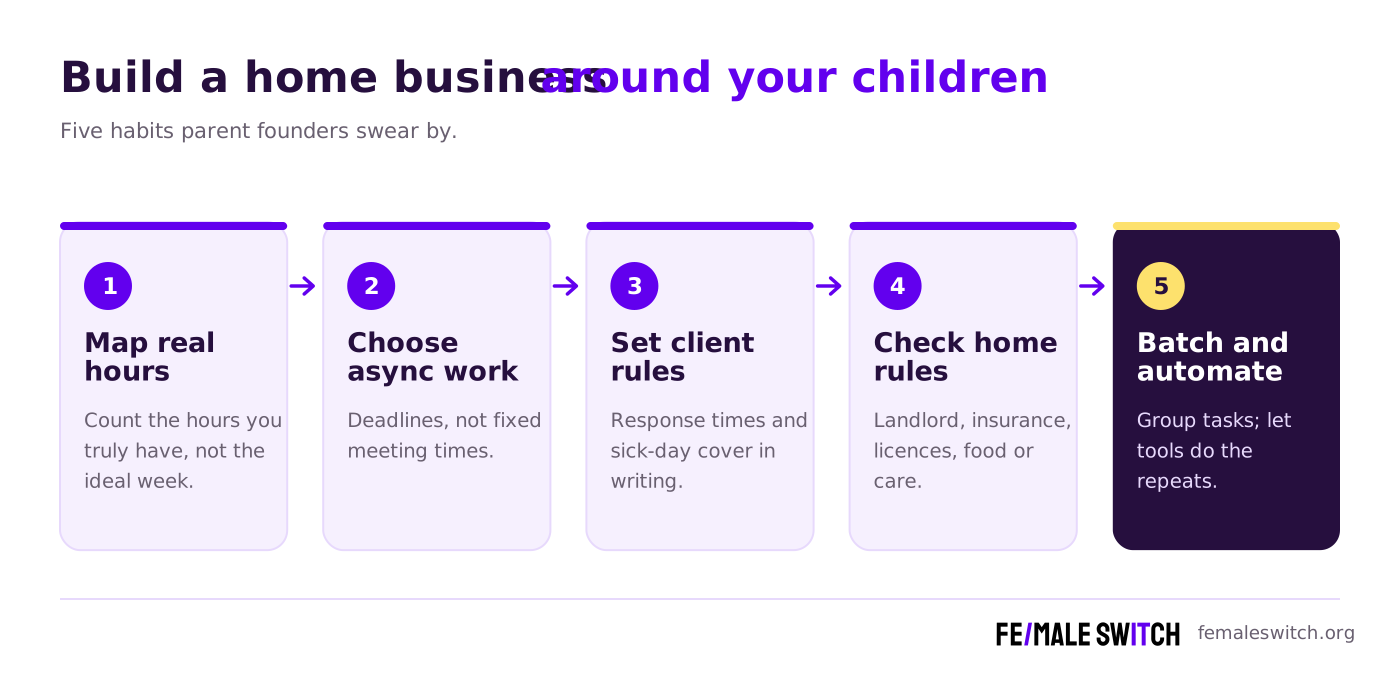
- Map your real hours. Count the hours you actually had last week, not the ones you hope for. Ten reliable hours beat thirty imaginary ones.
- Choose asynchronous work. Prefer clients and products that need results by a deadline, not you at a fixed time.
- Set client rules in writing. Response times, working days and what happens when a child is ill.
- Check the home rules above before you spend money.
- Batch and automate. Group similar tasks, use templates and scheduling tools, and say no to work that needs constant availability.
For more on combining both worlds, read how to balance family responsibilities while starting a business, work-life integration for women building startups and time management for solo entrepreneurs. When you're ready to test an idea properly, follow our 90-day plan to start a startup.
Learn by doing, in the time you have
The Fe/male Switch startup game breaks starting a business into weekly quests you can do in short sessions, with an AI co-founder and a community of founders, many of them parents.
👉 Start your home business in the game
Conclusion: pick the business that survives a sick week
The best small business ideas from home for parents share three things: you can do them in short, interrupted slots, they don't depend on you being available at fixed times, and they cost little to start. Start with one idea from this list that uses a skill you already have, test it with a few paying clients, and grow it as your children grow. For later stages of life, see our business ideas for women over 50.
FAQ: small business ideas from home for parents
What is the best home business for a mum with young children?
One you can run in short, interrupted slots without clients at home: virtual assistance, bookkeeping, copywriting, social media management, translation, design or digital products. Pick the one that uses a skill you already have.
How can a stay-at-home mum make money from home?
Start with a service you can sell straight away, such as virtual assistance, tutoring or writing, then add products like printables or courses that keep selling while you're busy with family life.
Do I need permission to run a business from home?
Usually not for office-type work, but in the UK you may need your landlord's or mortgage lender's permission, and the council's if customers or deliveries come to your home. Food, childcare and animal boarding businesses need registration or a licence.
Can I sell baked goods from home?
Yes, if you register your food business. In the UK you must register with your council at least 28 days before trading; registration is free and an officer may inspect your kitchen. EU countries also require food businesses to register.
Can I be a childminder and look after my own children too?
Yes. In England you can care for up to six children under eight at a time, including your own, with no more than three young children, after registering with Ofsted. In Germany you need a care permit if you look after other children for pay more than 15 hours a week for over three months.
Do I pay tax on selling second-hand clothes online?
Selling your own unwanted items usually isn't taxed, but regular reselling for profit is trading. Platforms report sellers with 30 or more sales or €2,000 or more a year to tax authorities in the EU and UK.
How many hours a week do I need for a home business?
Many parents start with 8–10 reliable hours a week. Choose work that runs on deadlines rather than fixed hours, and grow as childcare or school gives you more time.
What home business can I start with no money?
Virtual assistance, copywriting, social media management, translation, tutoring and reselling items you already own can start for close to €0 with a laptop and phone you already have.
