
TL;DR: how do you choose a business that fits your personality?
Match the daily work to how you like to spend your energy. Quiet planners thrive in bookkeeping, virtual assistance and translation; connectors in events, social media and coaching; makers in cakes, crafts and photography; carers in companion care, childminding and pet care; fixers in IT support, repairs and website care; outdoor types in dog walking, gardening and outdoor training. Research shows personality explains only a small part of business success, and introverts can do as well as extroverts, but fit strongly predicts how satisfied you'll be. Below: six profiles, 18 suggestions and the real prices for each.
👉 Test a business that fits you in the Fe/male Switch startup game
Most business suggestions start with money: what you can invest, what pays best. But what makes people stick with a business through the hard first year is often simpler: whether they enjoy the daily work. A born organiser who takes on a sales-heavy business, or a people person who ends up alone with spreadsheets, burns out fast.
This guide suggests businesses by personality. If you'd rather start from your budget, time, place and skills, use the five-question finder in our sister guide to business suggestions.
There's no single entrepreneurial personality. There's a business that fits yours, and finding it is half the work.
Does personality matter in business?
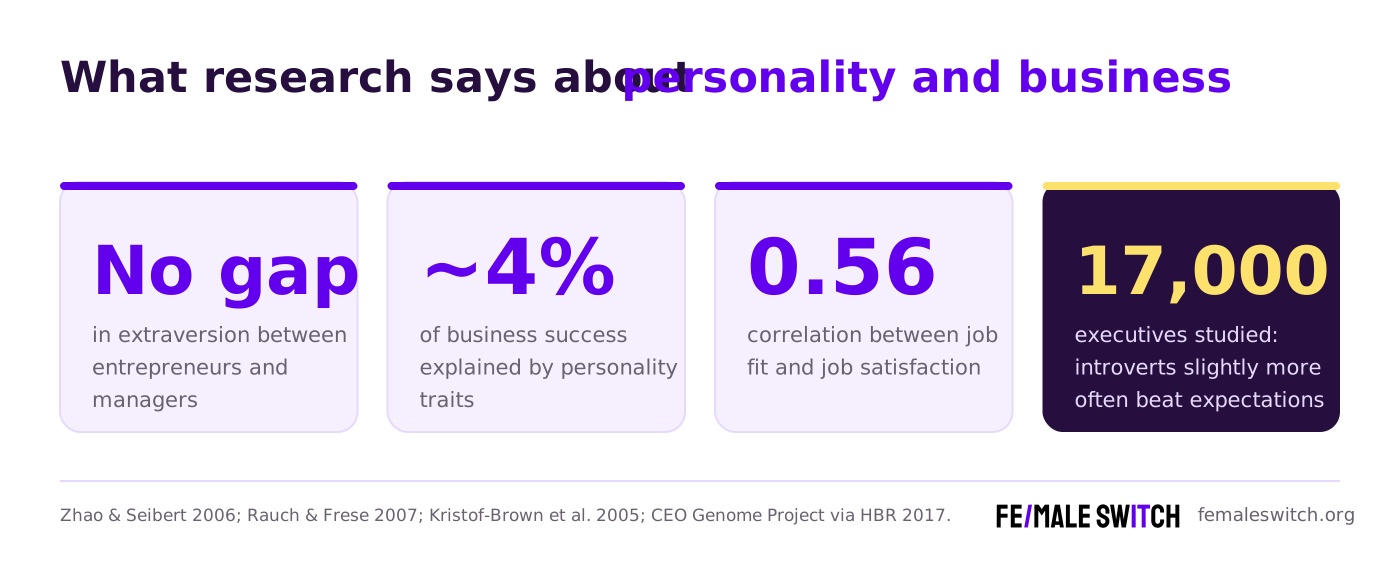
Yes, but less than people think, and not in the way they expect. A meta-analysis by Zhao and Seibert found that entrepreneurs score higher than managers on conscientiousness and openness to experience and lower on anxiety, but there was no difference in extraversion. Each difference was small. A later study by the same authors found that four of the five big personality traits are linked to both the intention to start a business and its performance; agreeableness was linked to neither.
A review of the research for the US National Bureau of Economic Research by Kerr, Kerr and Xu concludes that entrepreneurs are "a very heterogeneous bunch". Need for achievement and a sense of control over your life have the strongest support; attitudes to risk are the most disputed. Overall, personality explains only around 4–6% of differences in business success, according to a meta-analysis by Rauch and Frese, and traits that match the tasks of the business matter more than general traits.
Good news for introverts: in the CEO Genome Project's study of about 17,000 executives, introverts were slightly more likely than extroverts to beat their boards' expectations, according to Harvard Business Review. And fit matters for how you'll feel: across 172 studies, fit between people and their jobs correlated strongly with job satisfaction (0.56) and with staying in the job, according to a meta-analysis by Kristof-Brown and colleagues.
Which business personality are you?
Most people recognise themselves in two profiles. Read both, and pick the suggestion that also fits your budget and time.
Business suggestions for the quiet planner
You like order, focus and working alone; detail energises you and constant meetings drain you.
Bookkeeping
- Why it fits: Clear rules, monthly routines and few but loyal clients.
- Typical price: UK bookkeepers typically charge £25–35 an hour (Institute of Certified Bookkeepers, via Dext).
- What you need: In the UK, anti-money-laundering supervision before you trade.
- First step: Offer a fixed monthly package to five sole traders.
Virtual assistant
- Why it fits: Organising other people's work, mostly by email and shared tools.
- Typical price: UK virtual assistants averaged £32.35 an hour in 2024 (Society of Virtual Assistants).
- What you need: A laptop, clear terms and data-protection basics.
- First step: Offer a 10-hour monthly retainer to three founders.
Translation
- Why it fits: Deep, focused work with text and deadlines.
- Typical price: As a benchmark, German courts pay €1.95 per 55 characters for editable texts (JVEG).
- What you need: Certified translations need official authorisation; ordinary translation doesn't.
- First step: Register with three agencies in your language pair.
Quiet planners often underrate their skills; see the skills of an entrepreneur you already have from your job.
Business suggestions for the connector
You get energy from people, enjoy persuading and remember everyone's name.
Event and wedding planning
- Why it fits: Coordinating people, suppliers and big days.
- Typical price: UK couples spend an average of £1,543 on a wedding planner (Bridebook).
- What you need: Contracts, deposits and liability insurance.
- First step: Plan one event at cost for a portfolio and reviews.
Price source: Bridebook.
Social media management
- Why it fits: Conversation, trends and community, for businesses too busy to post.
- Typical price: UK freelance social media managers average about £326 a day on YunoJuno (indicative).
- What you need: A scheduling tool and examples of accounts you've grown.
- First step: Run one local business's account for a month at a low price.
Coaching
- Why it fits: One-to-one conversations that help people decide and grow.
- Typical price: Western European coaches averaged $277 per session in the ICF Global Coaching Study 2023.
- What you need: No licence; a recognised credential helps.
- First step: Coach three pilot clients for testimonials.
Business suggestions for the maker
You think with your hands, love making things and lose track of time when you create.
Celebration cakes
- Why it fits: Creative baking with a clear deadline and a happy customer.
- Typical price: UK couples spend about £360 on a wedding cake on average (Bridebook).
- What you need: Food business registration and allergen labelling.
- First step: Take three paid orders from your network.
Handmade goods online
- Why it fits: Making products and selling them to people who love them.
- Typical price: Etsy charges $0.20 per listing and 6.5% per sale, plus payment processing.
- What you need: Product safety rules for toys, cosmetics and candles.
- First step: Price one product to cover materials, fees and time.
Photography
- Why it fits: Seeing and capturing moments, from weddings to products.
- Typical price: UK couples spend an average of £1,484 on a wedding photographer (Bridebook 2026).
- What you need: Equipment and liability insurance, a contract and a portfolio.
- First step: Offer three discounted shoots for a portfolio.
More ways to earn from making things are in our business ideas from your hobby.
Business suggestions for the carer
You notice how people feel, enjoy helping and are patient with others.
Senior companion care
- Why it fits: Company and practical help for older people living alone.
- Typical price: The UK Homecare Association's minimum price for regulated homecare in England is £32.14 an hour (2025-26).
- What you need: Companionship isn't regulated in England; personal care needs CQC registration.
- First step: Offer weekly visits to three families via local pharmacies.
Childminding
- Why it fits: Caring for children in your home, alongside your own.
- Typical price: In England, 25 hours a week with a childminder cost £155.28 on average in 2026 (Coram).
- What you need: Ofsted registration (£35 a year) in England; a care permit in Germany.
- First step: Contact your local childminding agency about registration.
Pet sitting and home boarding
- Why it fits: Looking after animals as if they were your own.
- Typical price: Dog boarding in UK cities costs about £27–30 a night on Rover.
- What you need: A council licence for home dog boarding in England.
- First step: Check the licence rules and host two neighbours' dogs.
Care, childminding and pet care also fit around family life; see our small business ideas from home for parents.
Business suggestions for the fixer
You like solving problems, understanding how things work and seeing a clear result.
IT support for small offices
- Why it fits: Diagnosing and fixing technology for people who just want it to work.
- Typical price: UK providers charge about £45–95 per user per month (provider data, 2026).
- What you need: Professional indemnity and cyber insurance.
- First step: Offer a free IT health check to three small offices.
Electrical or handyman services
- Why it fits: Practical fixes with an immediate, visible result.
- Typical price: UK electricians charge about £50 an hour (Checkatrade 2026).
- What you need: Qualifications for electrical work; in Germany a master title to run an electrical business.
- First step: Start with small handyman jobs while you train or qualify.
Website care plans
- Why it fits: Keeping small business websites updated, secure and fast.
- Typical price: UK providers typically charge £30–150 a month per site (provider price lists).
- What you need: Backups, reliable hosting and clear plan levels.
- First step: Offer care plans to local firms with outdated sites.
Fixers who like hands-on work should also look at the best business ideas in Europe's labour-shortage trades.
Business suggestions for the outdoor type
You hate sitting still, love fresh air and feel best when you move.
Dog walking
- Why it fits: Daily movement, animals and a regular route.
- Typical price: A 30-minute walk costs about £10–15 in UK cities on Rover.
- What you need: Insurance and, often, a basic DBS check.
- First step: Offer a free first walk to ten neighbours.
Gardening and garden maintenance
- Why it fits: Working outdoors and seeing the seasons change.
- Typical price: UK gardeners charge £15–40 an hour, about £30 on average (Checkatrade 2026).
- What you need: Tools, transport and insurance.
- First step: Turn one-off jobs into year-round plans.
Price source: Checkatrade.
Outdoor personal training
- Why it fits: Coaching people in parks and on trails.
- Typical price: Self-employed personal trainers in the UK commonly charge £20–60 a session (Prospects).
- What you need: A recognised qualification (Level 3 in the UK) and insurance.
- First step: Run a free outdoor session and convert to a paid block.
From suggestion to business
- Pick two suggestions from your profile that also fit your budget and time.
- Shadow or try the work for a day: help a friend's business, volunteer or do one paid job.
- Test with paying customers before you invest; our 90-day plan to start a startup shows how.
- Build monthly income where you can, with recurring contracts and retainers.
Find out what fits you by doing
The Fe/male Switch startup game lets you try building a business in weekly quests, with an AI co-founder and a community of founders, so you discover what you enjoy before you commit.
👉 Start exploring in the game
Conclusion: choose the work you'll still enjoy in a year
The best business suggestion for you is the one whose daily work fits how you like to spend your energy, whether that's quiet focus, people, making, caring, fixing or being outdoors. Personality won't decide your success on its own, but it strongly shapes whether you'll stay motivated long enough to succeed. Pick your profile, choose two suggestions, try them for real, and keep the one you look forward to.
FAQ: business suggestions by personality
What business suits an introvert?
Businesses with focused work and few but loyal clients: bookkeeping, virtual assistance, translation, website care, writing and handmade products. Research finds entrepreneurs are no more extraverted than managers, and introverted executives slightly more often beat expectations.
What business suits an extrovert?
Businesses built on people and persuasion: event and wedding planning, social media management, coaching, sales-led services and fitness classes.
What business suits a creative person?
Making and design businesses: celebration cakes, handmade goods, photography, design and content creation. Teaching your craft often pays more per hour than selling products.
What business suits a caring person?
Senior companion care, childminding, pet sitting, tutoring and coaching. Some, like childminding and personal care, need registration.
Is there an entrepreneurial personality?
Not a single one. Entrepreneurs tend to score a little higher on conscientiousness and openness and lower on anxiety than managers, but differences are small and personality explains only around 4–6% of business success.
Does personality affect business success?
Modestly. Traits that match the tasks of the business, such as need for achievement, self-efficacy and proactiveness, help most. Fit with your work strongly affects how satisfied you are and whether you stay with it.
How do I find a business that fits me?
Identify how you like to spend your energy, pick two suggestions that also fit your budget and time, try the work for real, and test with paying customers before you invest.
Can I succeed in a business that doesn't fit my personality?
Yes, with a team or outsourcing for the parts you dislike, but you'll find it harder to stay motivated. Many founders hire or partner for sales, admin or design.
