
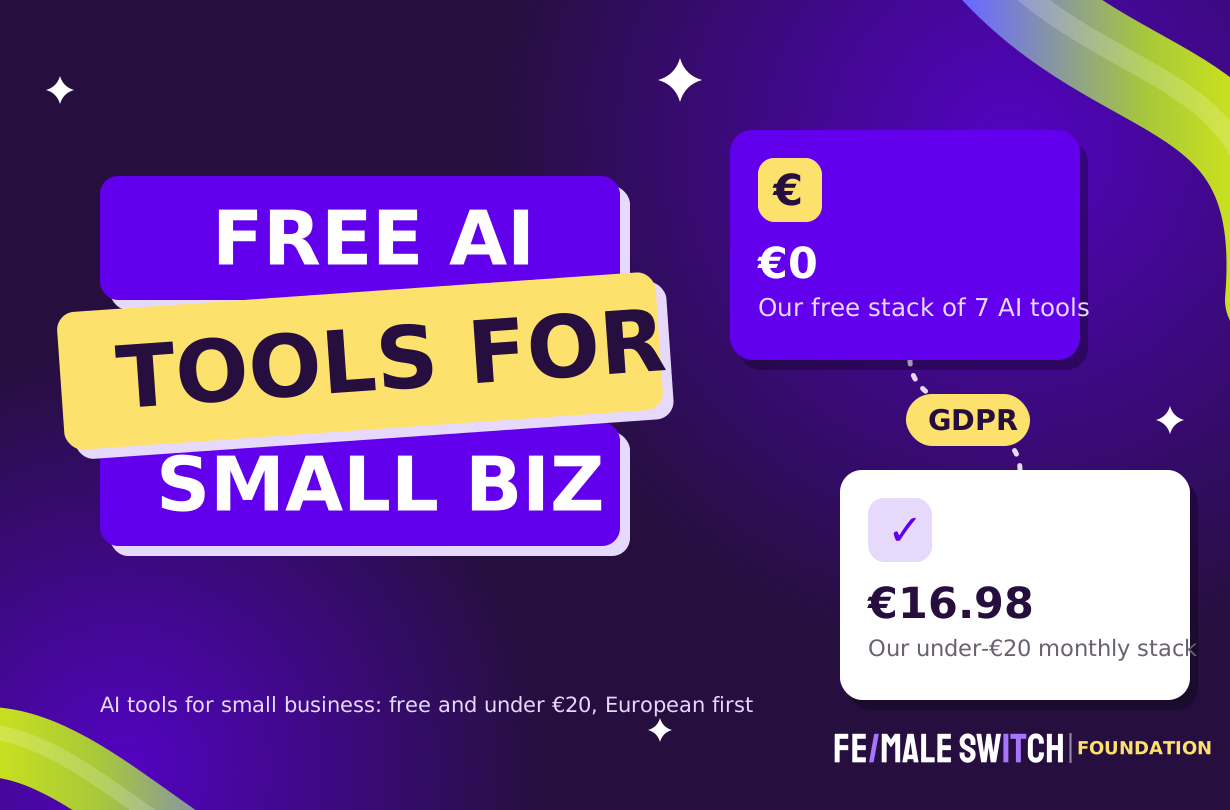
TL;DR: Which AI tools for small business are free or cheap, and safe to use in Europe?
AI tools for small business don't have to cost money: 9 of the 12 tools below have a free plan, and our free stack of seven of them costs €0 a month. Start with European tools that say on their own pages where your data lives: Mistral Vibe (formerly Le Chat, data hosted in the EU by default), Tally (forms, stored in Europe), Brevo (email, servers in the EU) and tl;dv (meeting notes, mainly EEA). For €16.98 a month you add an AI email writer, a private translator and an AI website. Switch off model training wherever the tool allows it, and keep client data out of free plans.
👉 Not sure what to build yet? Read how to use AI to validate a business idea first.
AI tools for small business sound like a big-company budget line, and most lists online are written by the vendors themselves. As a bootstrapping founder I care about two things: what a tool costs after the trial, and where my customers' data goes when I paste it in. So I opened the pricing, privacy and help pages of every tool here on 24 October 2026 and put European tools first. If a vendor's page doesn't say where data is stored, I say so.
Here is why the European angle matters. According to Eurostat, 48.8% of EU firms that considered AI and then dropped it named data protection and privacy worries. Our data on solo founders in Europe shows three in four new companies start with one founder, and one person can't hire a data protection officer. The tool choice has to do part of that job.
Which AI tools for small business are free or under €20 a month?
Here are the 12 tools I recommend, with the free plan, the first paid price and what each vendor says about where it is based and where data sits, in the currency each page showed.
Sources: each vendor's pricing, privacy and help pages, checked 24 October 2026.
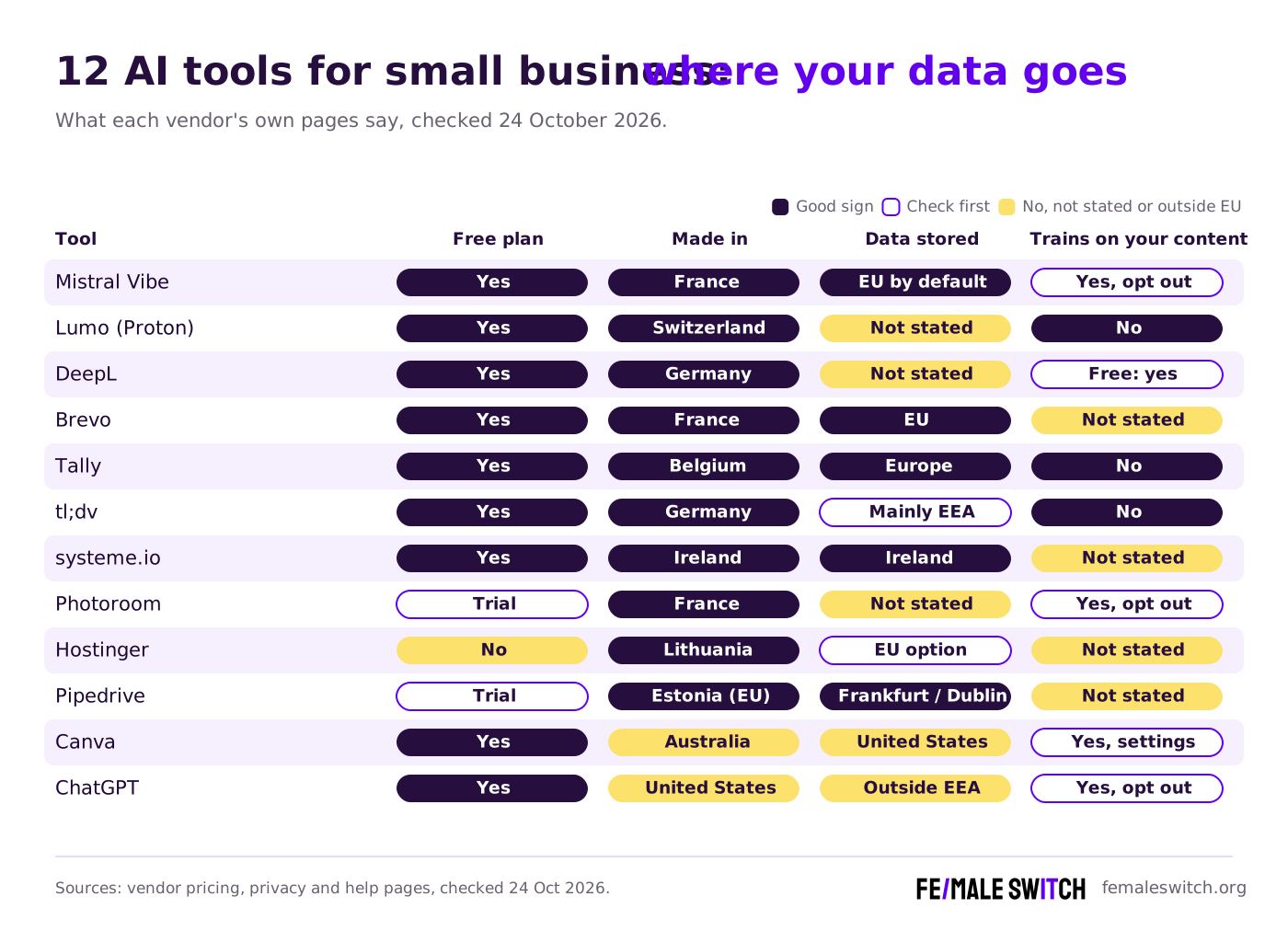
Read the matrix from right to left: the last column decides what you can safely paste in, and the third one goes into your privacy notice. Our GDPR guide for European startups explains what that notice needs to say.
Which AI assistants keep your chats in Europe?
You will open your AI assistant ten times a day, so pick the one you trust with your thinking.
1. Mistral Vibe (formerly Le Chat)
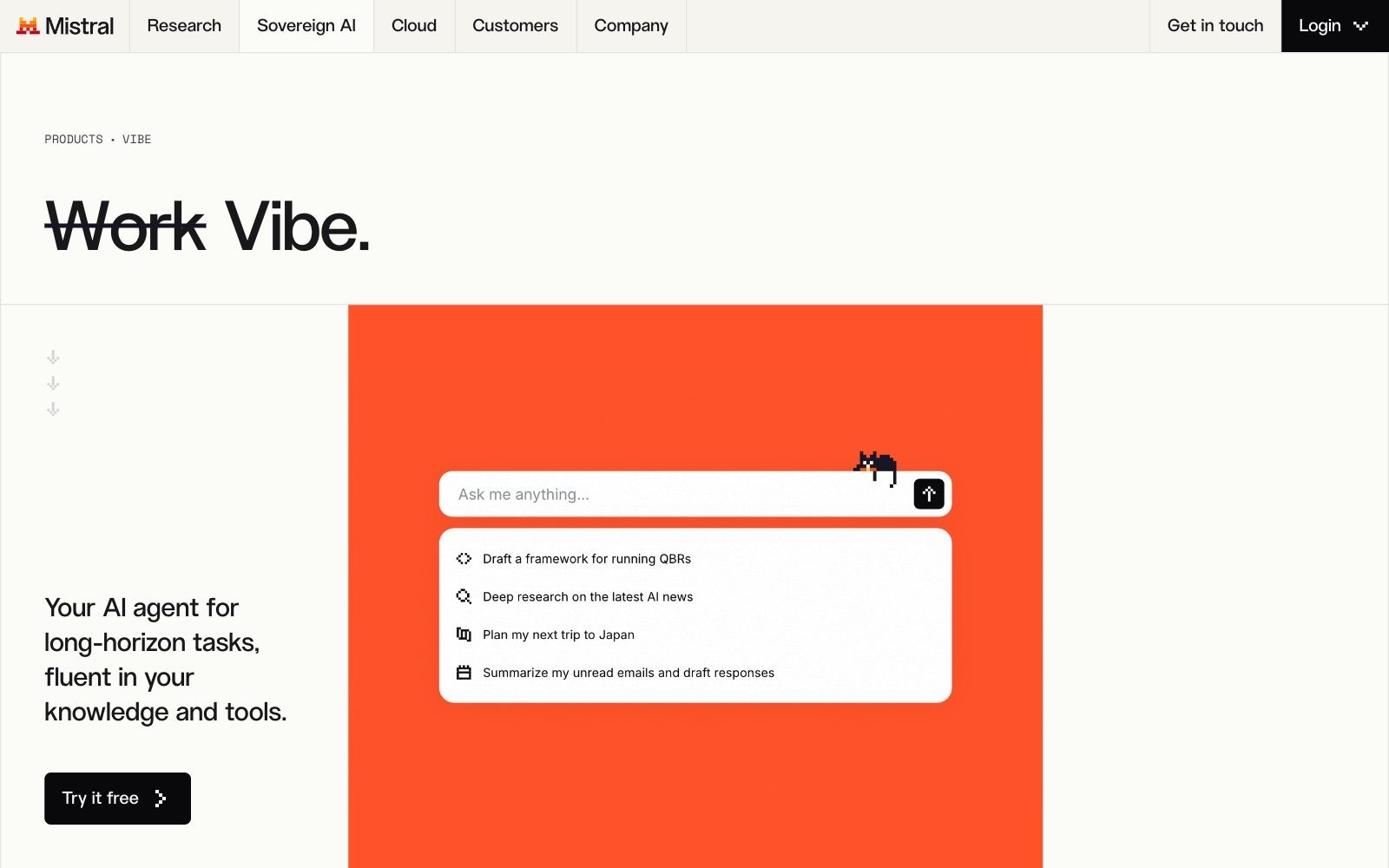
Mistral's FAQ says it plainly: "Le Chat is now Vibe", and your conversations and plans carry over. Vibe comes from Mistral AI, a French company registered in Paris. It drafts emails and offers, summarises PDFs and searches the web.
- Free plan: limited messages and web searches, image generation, 100+ connectors to tools such as email and calendar.
- First paid price: Pro at $14.99 a month excluding taxes; verified students pay $5.99.
- GDPR note: data is hosted in the European Union by default, and some features send data outside the EU for a while under standard contractual clauses. Input and output train Mistral's models by default until you opt out.
- Founder tip: switch training off on day one: Admin panel, Vibe, Privacy, then turn off "Allow your interactions to be used to train our models". Uploaded documents count as input too.
2. Lumo by Proton
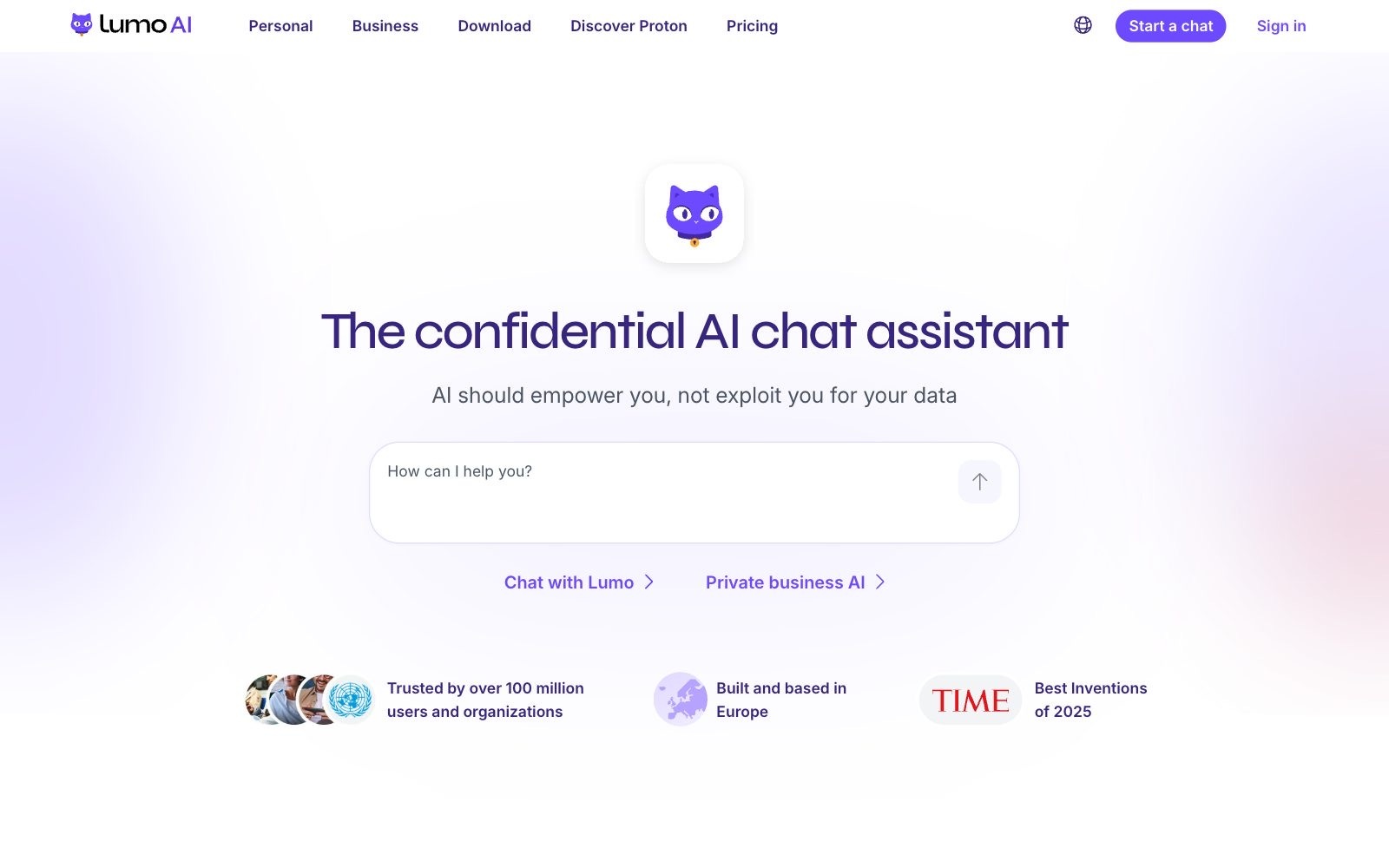
Lumo comes from Proton AG in Geneva, Switzerland, the team behind Proton Mail. Chats are stored with zero-access encryption, the code is open source and Proton says it never uses your data to train AI models.
- Free plan: limited messages, chat history and image generations, 1 project.
- First paid price: Lumo Plus at €12.99 a month, or €9.99 a month billed yearly.
- GDPR note: Proton calls Lumo a European service that complies with GDPR. Switzerland sits outside the EU, and the page doesn't say in which country chats are stored.
- Founder tip: keep Lumo for confidential thinking and a second assistant for public work such as blog drafts.
Which free AI tools help you sell and talk to customers?
The next five tools cover the jobs that bring in money, and all five have a free plan and an EU-registered company behind them.
3. DeepL
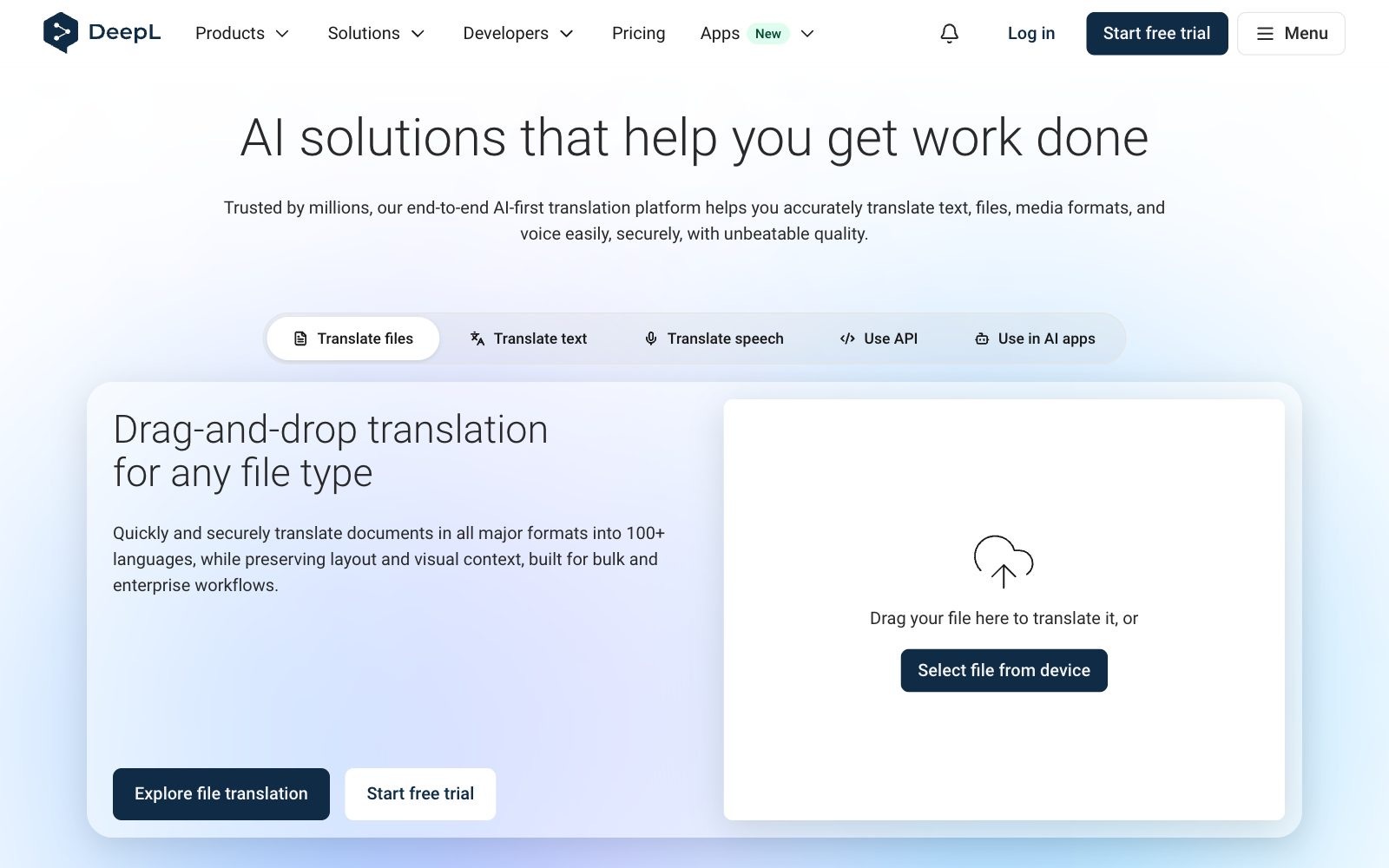
DeepL is the AI translator from DeepL SE in Cologne, Germany. It turns your Dutch offer into German or French that you then polish.
- Free plan: 50,000 characters and 1 file translation (up to 5 MB) a month.
- First paid price: Individual at €7.49 a month billed yearly, VAT included: 300,000 characters, 3 files a month, no data training.
- GDPR note: the privacy policy says free-plan texts are processed for a limited time "to train and improve our neural networks". Pro texts are deleted after translation.
- Founder tip: translate your website on the free plan, and pay the €7.49 the day you translate a client contract.
4. Brevo
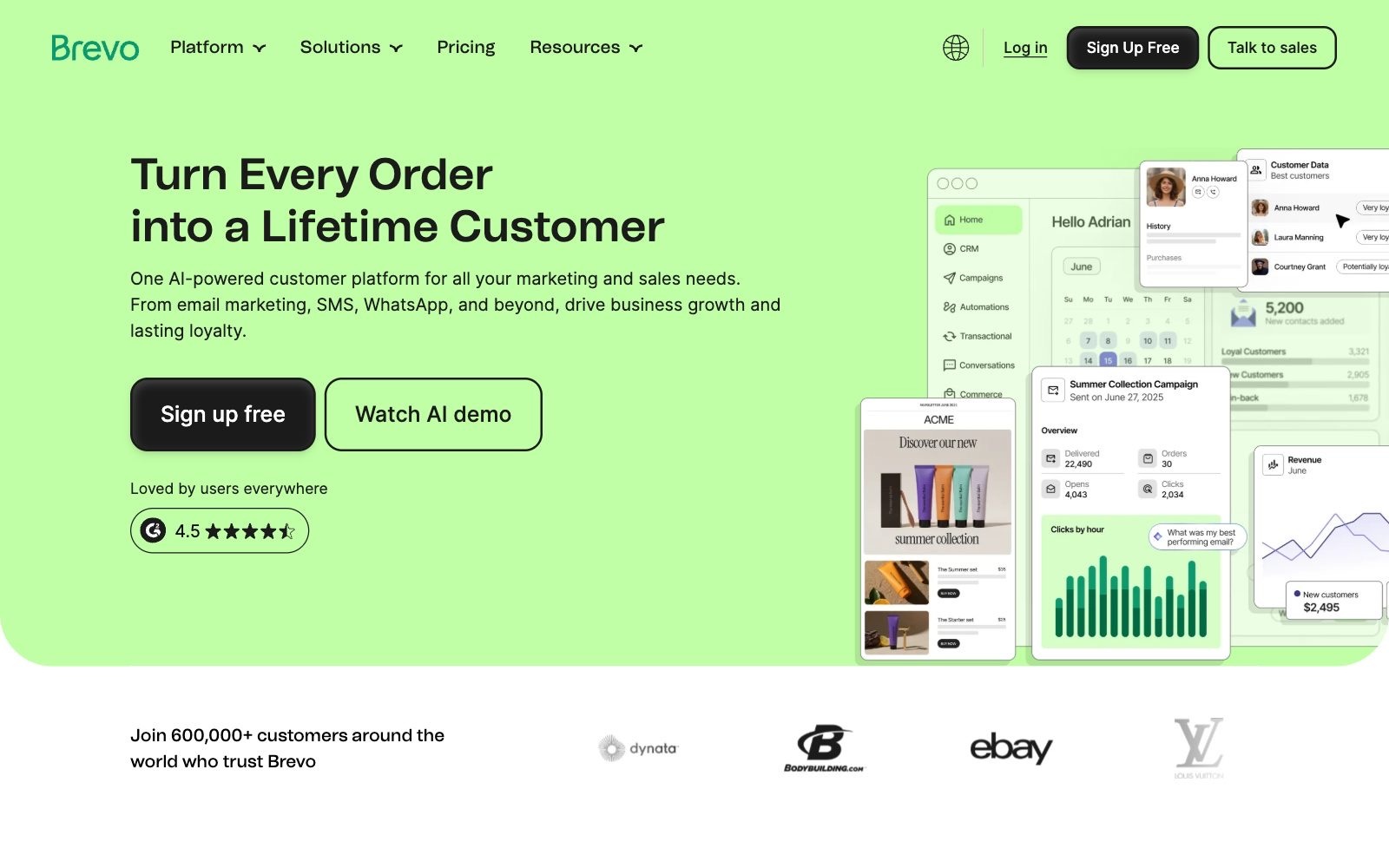
Brevo is an email marketing platform from Paris for newsletters, welcome emails and order confirmations. From the Starter plan its AI content generator drafts subject lines and email copy and adjusts the tone.
- Free plan: free forever, no credit card, up to 300 emails a day once your account is approved.
- First paid price: Starter at €7 a month, from 5,000 emails a month, with the AI content generator and a connector for ChatGPT and Claude.
- GDPR note: Brevo's help centre says all its hosting servers are in the European Union: OVH in France and Germany, Google Cloud in Belgium.
- Founder tip: 300 emails a day covers a list of a few hundred people. Grow it with our guide to your first 1,000 email subscribers, then pay.
5. Tally
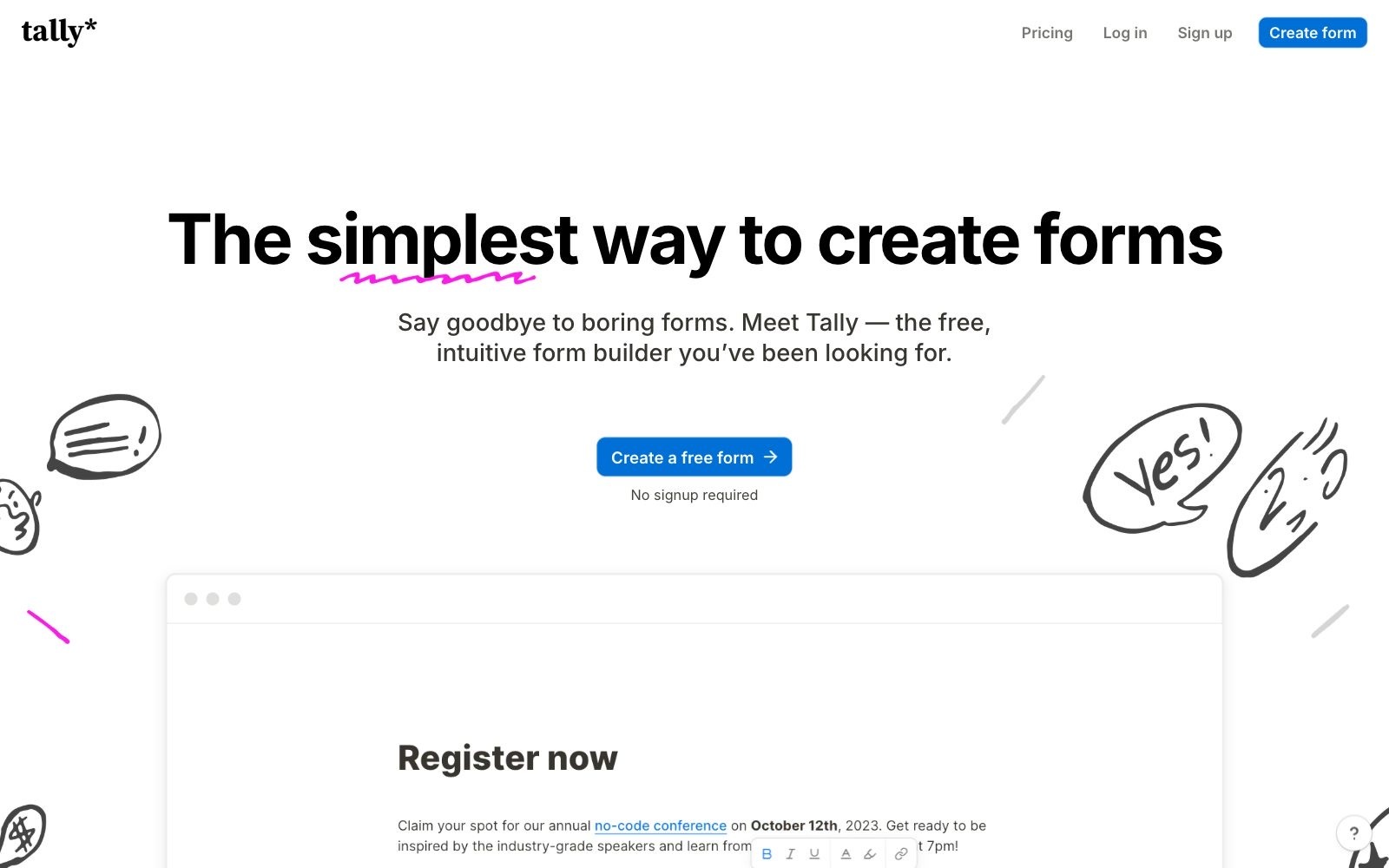
Tally is a form builder from Belgium for waiting lists, order forms and surveys. Tally AI builds a whole form from one sentence such as "a booking form for a 1-hour coaching call with three time slots", free on every plan.
- Free plan: unlimited forms and submissions within fair use, Tally AI included.
- First paid price: Pro at €20 a month; yearly billing gives two months free.
- GDPR note: Tally says form data is encrypted and stored in Europe, and forms and submissions are never used to train AI models.
- Founder tip: run your customer interview sign-ups and your pre-sale waiting list through Tally before you build anything.
6. tl;dv
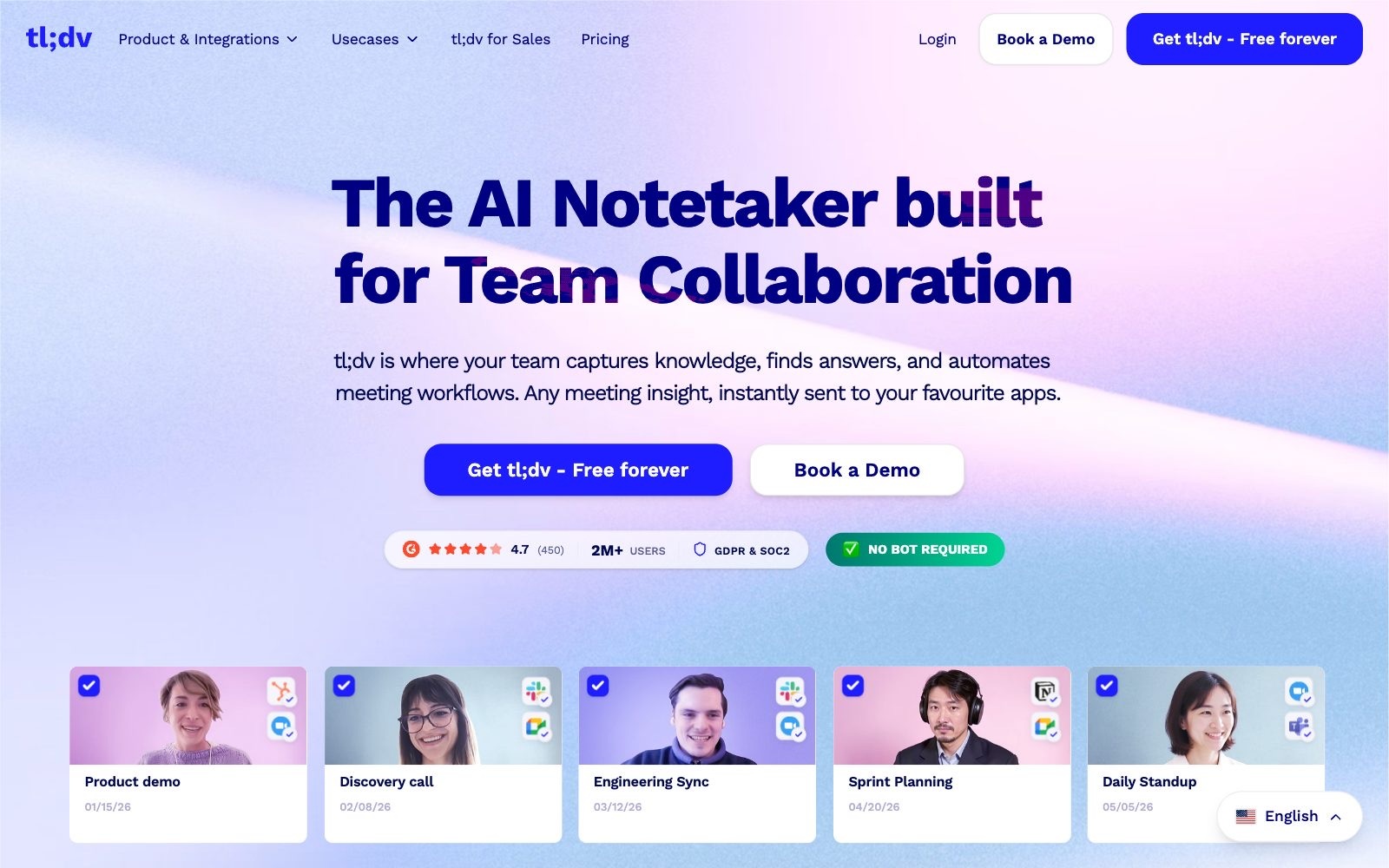
tl;dv, made by Tldx Solutions GmbH in Aachen, Germany, records Google Meet, Zoom or Teams calls, transcribes them in 30+ languages and writes AI notes. You stop typing while a client talks.
- Free plan: unlimited recordings and transcription, 10 meetings with AI notes and 10 Ask AI questions.
- First paid price: Pro at €18 per seat a month billed yearly, with unlimited AI notes and an email follow-up drafter.
- GDPR note: data is mainly processed and stored in the EEA, on Google Cloud data centres including Germany. AI summaries run in the EU or elsewhere, depending on the AI hosting location you pick. tl;dv says it doesn't train models on customer content.
- Founder tip: set the AI hosting location to the EU before your first call, and tell people the call is recorded.
7. systeme.io
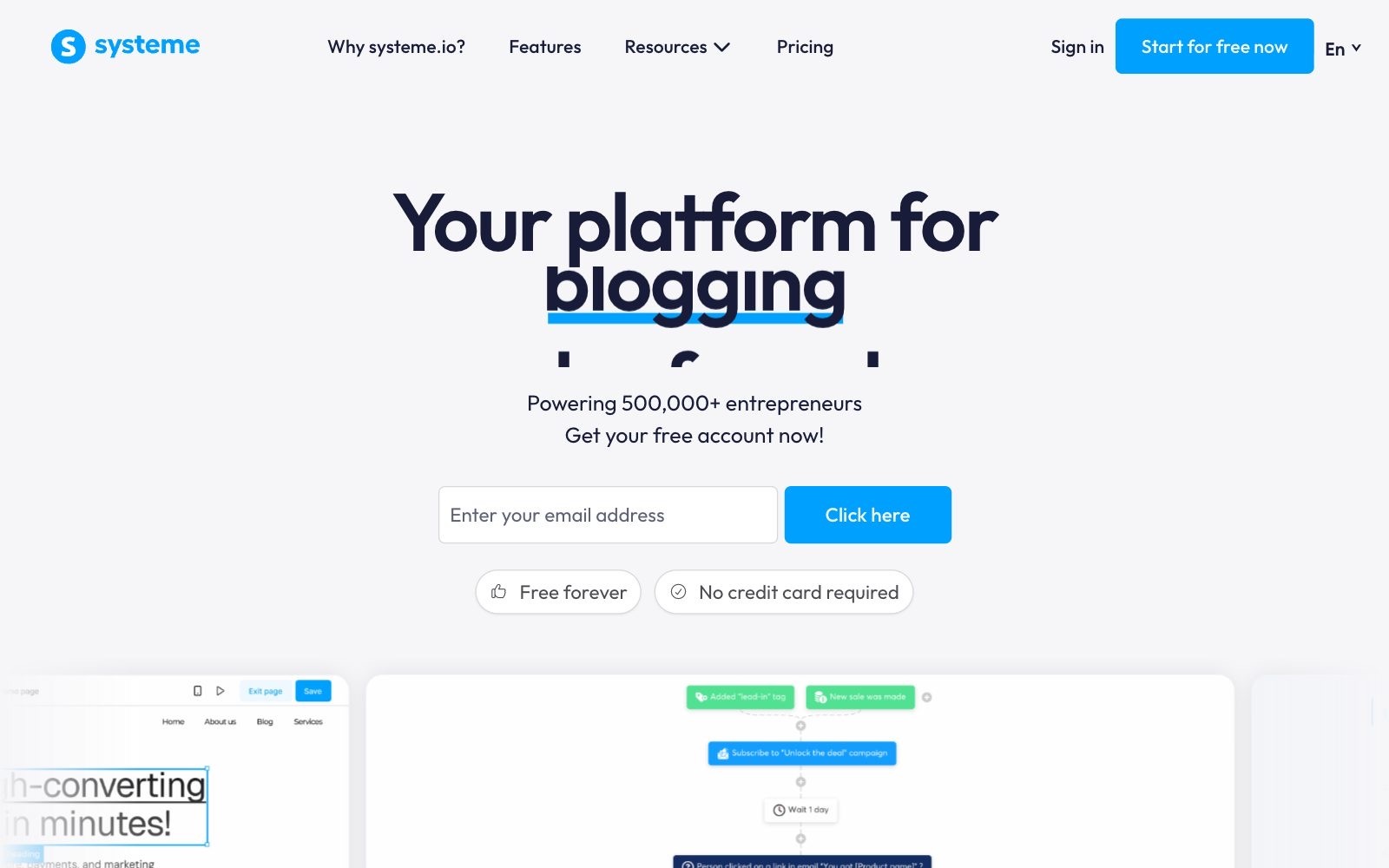
systeme.io is an all-in-one platform for funnels, email, a blog, courses and payments, run by ITACWT Limited, an Irish company. It has no built-in AI writer on the pages I checked. It has an MCP server (a standard connection for AI assistants) that lets ChatGPT or Claude build funnels and manage contacts inside your account, included in all plans, Free too.
- Free plan: 2,000 contacts, 3 sales funnels, 1 blog, 1 course, 1 custom domain, unlimited emails, 0% transaction fees.
- First paid price: Startup at $17 a month for 5,000 contacts and 10 funnels.
- GDPR note: servers are hosted by Amazon Web Services in Ireland, and the privacy policy says data is not transferred outside the EU. The AI assistant you connect follows its own rules.
- Founder tip: this is the free website in our €0 stack. Our comparison of zero-code website builders covers the alternatives.
Which cheap AI tools build your website, visuals and sales pipeline?
These three have no free plan, so each has to earn its euros. All three start under €15 a month.
8. Photoroom
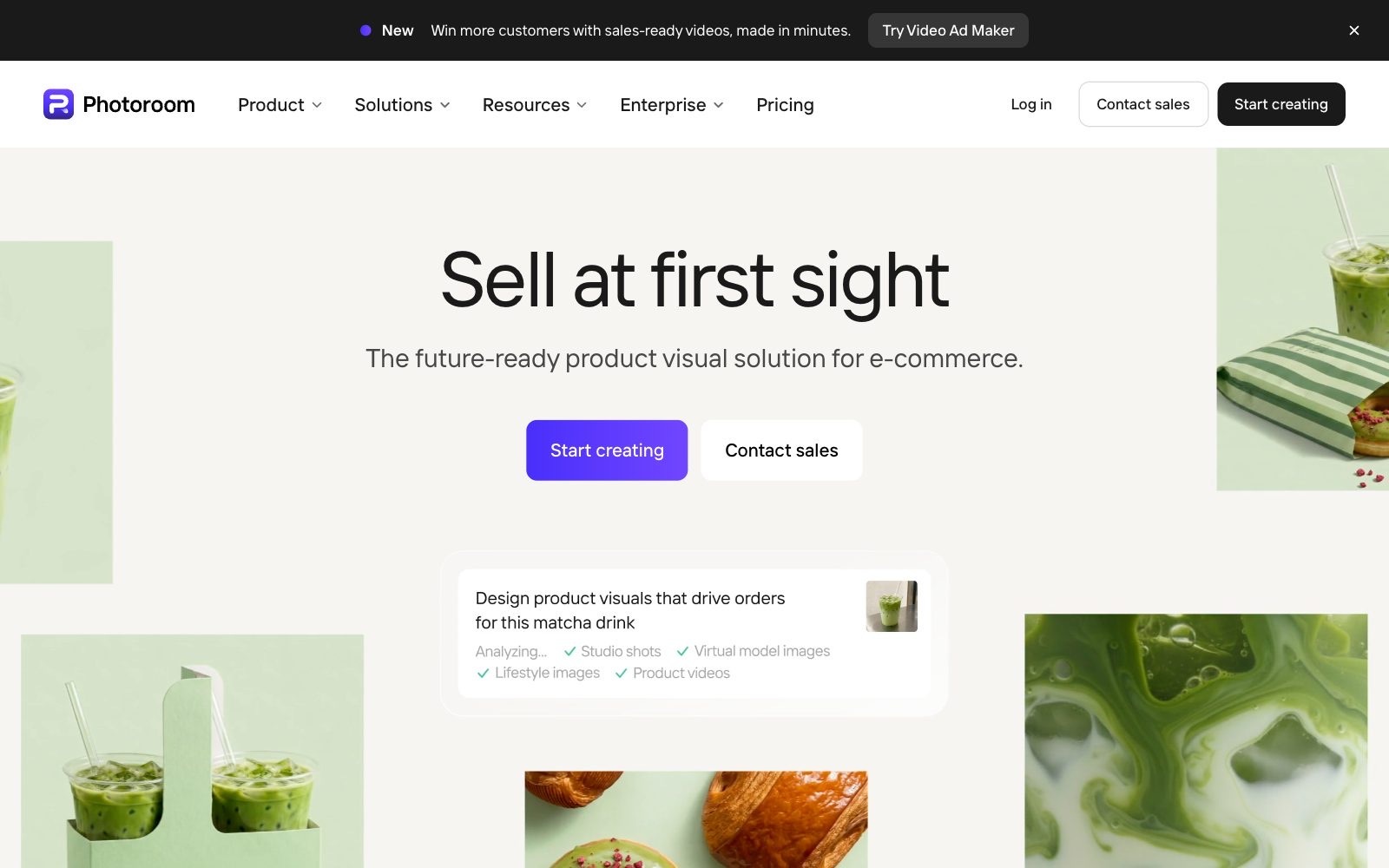
Photoroom is an AI photo editor from Paris that places your product on new AI backgrounds and shows clothes on AI fashion models. For handmade jewellery, cosmetics or clothes, it stands in for a photographer.
- Free plan: a free trial; no free plan on the pricing page.
- First paid price: Pro at €5.99 a month billed yearly.
- GDPR note: uploaded images train Photoroom's models unless you opt out in account settings, and personal data may leave the EEA with GDPR safeguards.
- Founder tip: opt out before you upload unreleased products, and keep real customers' faces out.
9. Hostinger Website Builder
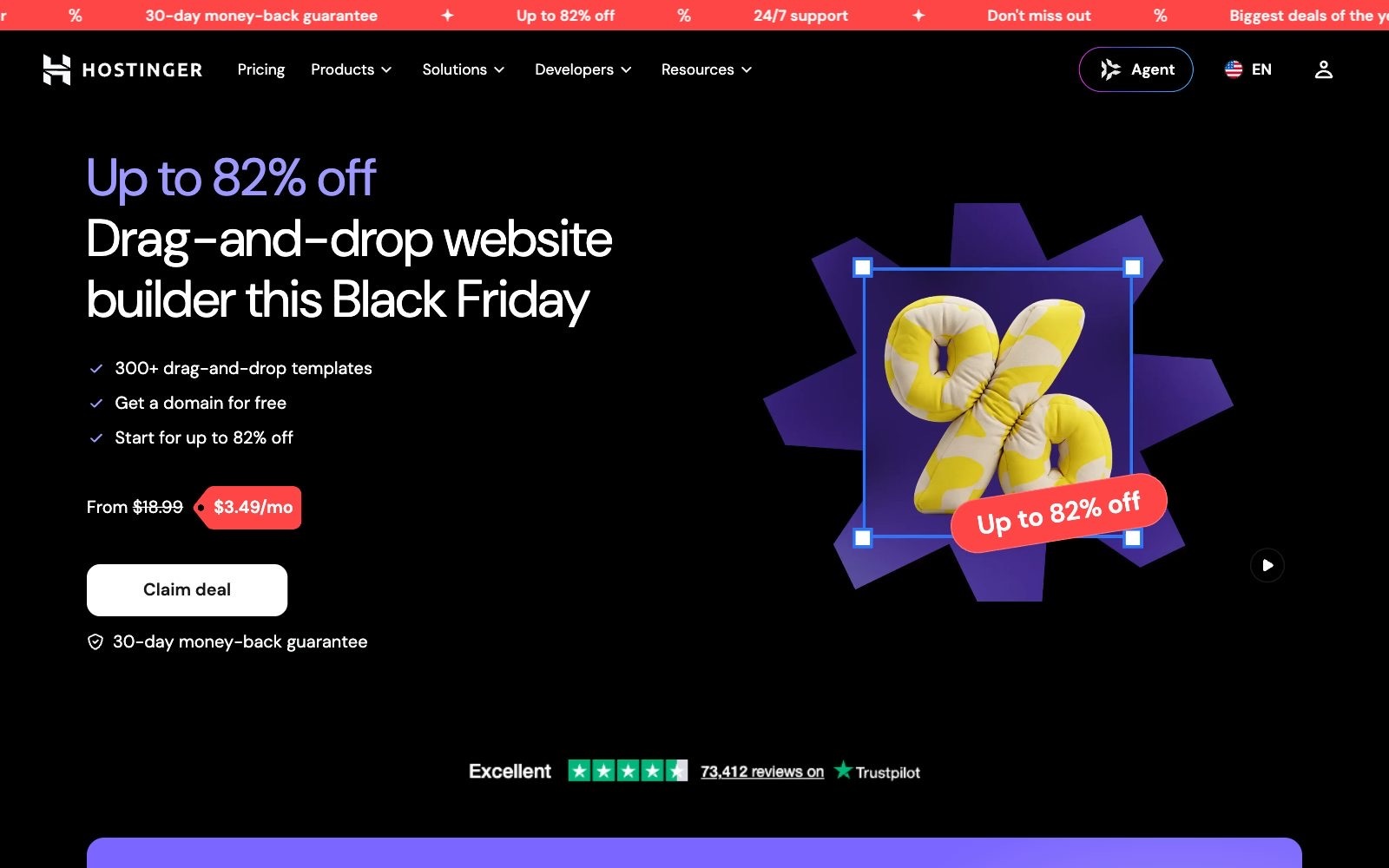
Hostinger started in Kaunas, Lithuania, where, in its own words, young entrepreneurs bootstrapped a personal company. Its builder uses AI to create a starting design, write page copy and product descriptions, and make a logo.
- Free plan: none.
- First paid price: Premium at €2.49 a month on a 48-month term (€119.52 upfront), with up to 3 websites and a free domain for a year. It renews at €9.99 a month.
- GDPR note: Hostinger lists European data centres for web hosting (France, Germany, Lithuania, the Netherlands, the UK), chosen at setup. The page doesn't say which one the website builder uses, so ask support.
- Founder tip: put the renewal date in your calendar. Our guide to what a low-cost business really costs to start shows how small renewals add up.
10. Pipedrive
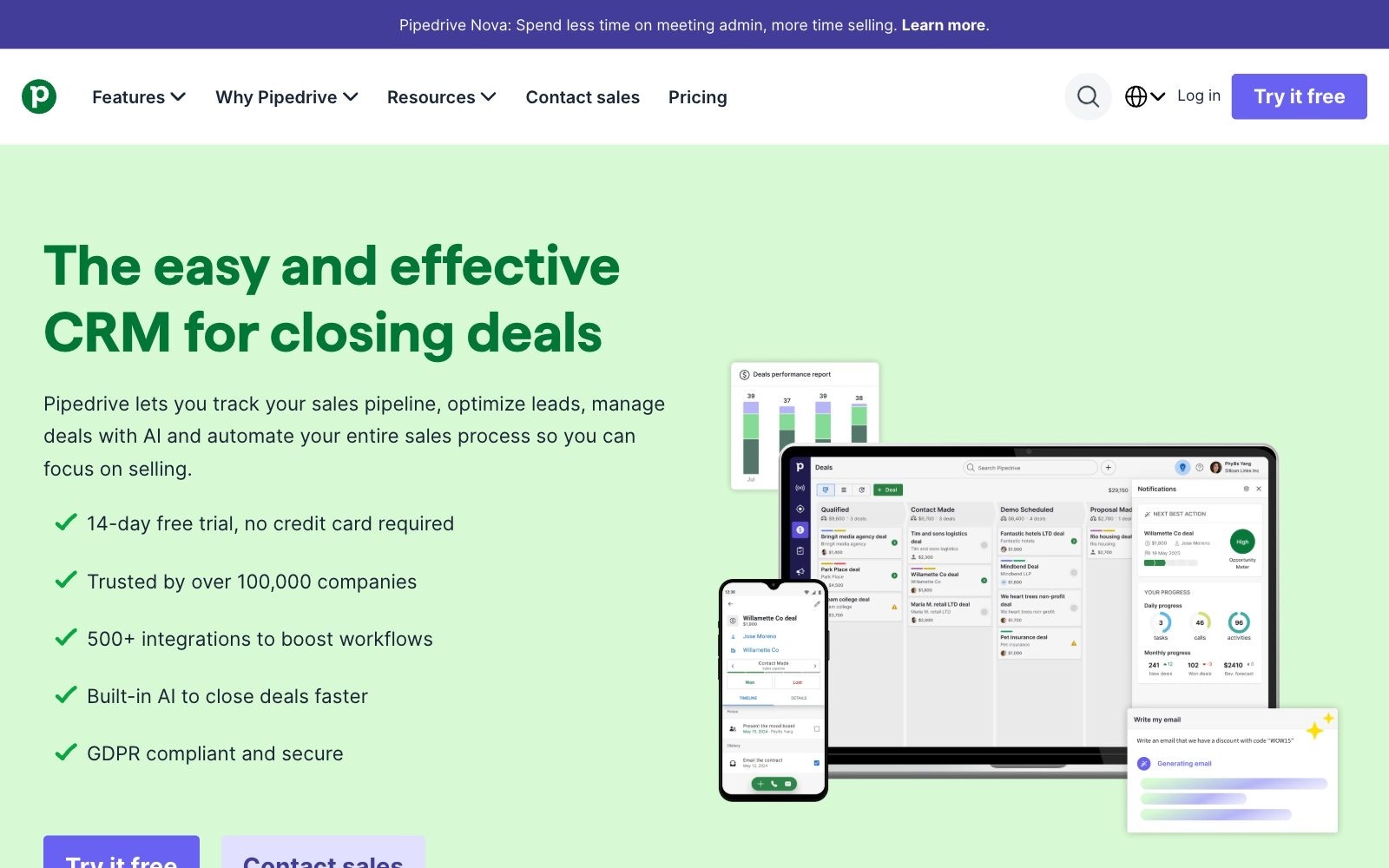
Pipedrive is a sales CRM (customer relationship management: one list of every lead, deal and follow-up) whose story began "in an Estonian garage in 2010". The Lite plan writes reports from a plain-text question and includes Pipedrive Nova, which briefs you before a meeting, transcribes the call and prepares CRM updates.
- Free plan: none; a 14-day trial without a credit card.
- First paid price: Lite at €14 per seat a month billed yearly.
- GDPR note: EU customers contract with Pipedrive's EU entity in Estonia, and its data hosting regions include Frankfurt and Dublin.
- Founder tip: a spreadsheet works until about your 30th open deal. Then compare CRM systems for early-stage companies.
Which global free AI tools are still worth it for European founders?
Two non-European tools stay in my stack because their free plans are generous. Use them with your eyes open.
11. Canva
Canva, from Canva Pty Ltd in Australia, makes social posts, flyers and presentations from more than 1.6 million templates. Our review of design tools for non-designers compares it with Adobe Express and others.
- Free plan: up to 20 Standard or Premium AI uses, 1 brand kit with 3 colours, 5GB of storage.
- First paid price: Pro at €110 a year, about €9.17 a month (our calculation), with AI resize, translation and background removal.
- GDPR note: Canva's trust page says "Canva stores your data in the United States", and its privacy policy allows AI training on your content, with choices in your settings.
- Founder tip: check the AI training setting, and design with stock photos, never photos of clients.
12. ChatGPT
ChatGPT from OpenAI is the assistant most of your customers already use, and the free plan now gives unlimited text chats.
- Free plan: unlimited text chats (subject to abuse guardrails), limited uploads, image creation, voice and deep research.
- First paid price: Go at €8 a month, which the pricing page says may include ads. Plus costs €23.
- GDPR note: OpenAI Ireland Limited is the controller for EEA users, and data is processed on servers outside the EEA, including the United States. Content can train models unless you opt out.
- Founder tip: use ChatGPT for public material such as captions and name ideas. Anything with a client's name goes to a European tool with training off.
What does a €0 AI stack look like, and what does €20 a month buy?
Here are two stacks for a one-person business in Europe. Prices come from the vendor pages on 24 October 2026; totals are our calculation.
If you sell physical products, swap DeepL for Photoroom Pro at €5.99 and the stack costs €15.48 a month. If you want one paid AI assistant, Lumo Plus at €9.99 a month (billed yearly) is the cheapest European option here.
My rule as a bootstrapping founder: pay for a tool the week its free limit blocks a sale, never before. More picks sit in our lists of free tools for bootstrapped startups and no-code tools for female founders.
How do you set up your free AI stack in one weekend?
Two days are enough if you go in this order. Let's break it down:
- Saturday morning, assistant and offer: sign up for Mistral Vibe and Lumo, switch off training, then ask Vibe for three versions of your offer and translate the best one with DeepL Free.
- Saturday midday, waiting list: describe your sign-up form to Tally AI in one sentence and add a question about what people would pay.
- Saturday afternoon, website and visuals: build a one-page site and blog in systeme.io Free with the Tally form embedded, then make a logo and five social posts in Canva Free.
- Sunday morning, email: connect the form to Brevo and write a three-email welcome series. Send it to yourself first.
- Sunday midday, calls: install tl;dv, set the AI hosting location to the EU and book three customer calls.
- Sunday afternoon, paperwork: list every tool, the personal data it receives and where it stores it, then update your privacy notice.
- Sunday evening, systems: write one page on which tool does which job. Our guide to building systems when you're the only employee has a template.
Then go and sell. The stack exists to get you to your first 10 customers without paid ads, and every extra hour on tools is an hour away from buyers.
What stops small businesses in Europe from using AI?
Eurostat's 2025 survey of 157,000 enterprises shows a gap by size: 17% of small enterprises (10 to 49 people) used AI, against 30.4% of medium and 55% of large ones. Across all EU firms with ten or more people, the share jumped from 13.5% in 2024 to 20% in 2025.
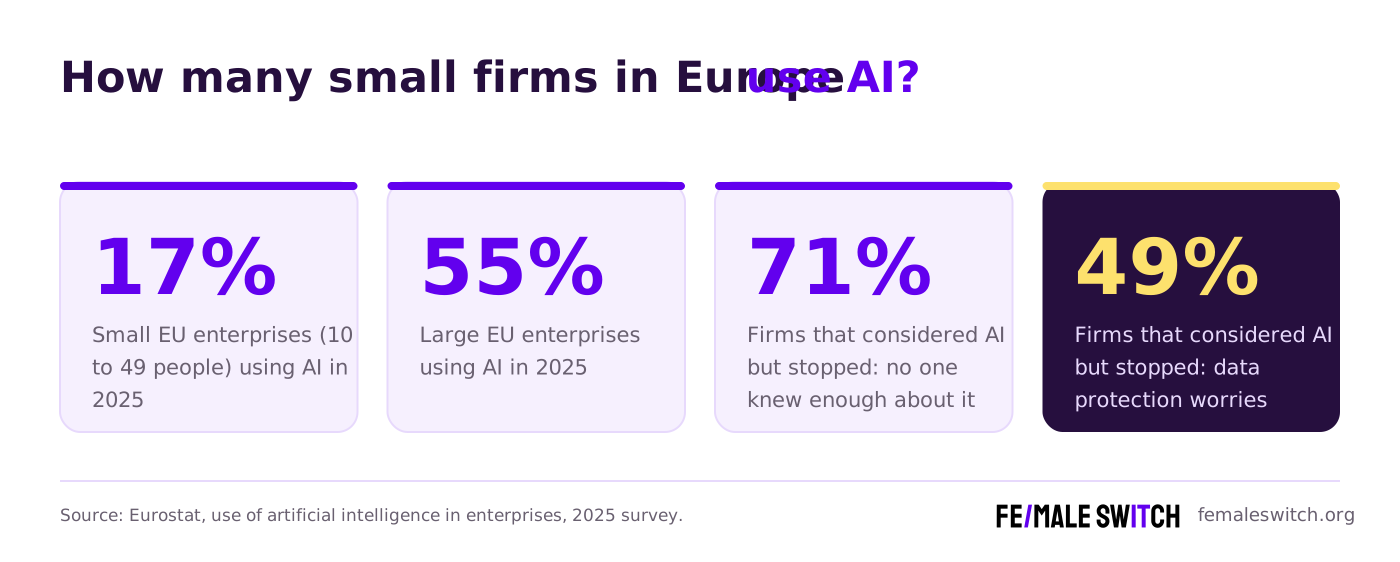
Among firms that considered AI and didn't use it, 70.9% lacked people who knew enough about it, 52.5% were unsure about the legal consequences and 48.8% worried about data protection. Solo founders aren't even counted: the survey skips companies under ten people. The first barrier takes one weekend to fix. See also our take on ethical AI use in your startup.
What mistakes do founders make with free AI tools?
- Pasting client data into a free plan. Free DeepL texts, default Mistral chats, Photoroom uploads, Canva content and ChatGPT chats can all train models under the vendors' own policies. Names, invoices and health details stay out until training is off.
- Leaving training on. Opting out takes a minute in Mistral Vibe, Photoroom, Canva and ChatGPT. Do it on sign-up day: Photoroom says its opt-out has no retroactive effect.
- Ignoring where the AI part runs. A European company can still send your text to an AI model elsewhere. tl;dv lets you choose the AI hosting location; check the same setting everywhere.
- Locking your list into one platform. Export your contacts from Brevo or systeme.io every month as a CSV file, so moving after a free plan changes takes you one hour.
- Collecting five tools for one job. One assistant, one email tool, one form tool. Our guide to automating your business without developers shows how to connect them.
- Skipping the privacy notice. Every tool that touches personal data belongs in it, with the country where it stores data. The EU is working on simpler GDPR and cookie rules, and that duty stays.
What do the EU AI Act transparency rules mean for a small business?
According to the European Commission, the transparency rules in Article 50 of the AI Act apply from 2 August 2026. Most of the work falls on providers such as Mistral, OpenAI and Proton: they must tell people they are talking to an AI system and mark AI-generated content in a machine-readable way. When you use their tools in your business, you are a deployer, and two duties can reach you:
- Deepfakes: AI-generated or manipulated images, audio or video that look like real people, places or events must be disclosed as artificial. For evidently artistic or satirical work, a light disclosure is enough.
- Public-interest text: AI-generated text published to inform the public on matters of public interest must be labelled, unless a human reviewed it and someone holds editorial responsibility.
- Timing and help: people must get the information at the latest at first exposure. The EU offers three optional icons for labelling AI content, and a voluntary Code of Practice came out in June 2026.
- Fines: up to €15 million or 3% of worldwide annual turnover, with proportionality for SMEs according to the Commission.
For a one-person business that means: review every AI text before you publish it under your name, label AI images of realistic people, and add "You're chatting with an AI assistant" to any chatbot on your site.
Want to practise with AI on a real business, for free?
The Fe/male Switch startup game takes you from idea to first paying customers in weekly quests, with an AI co-founder and a community of founders who bootstrap too. You test the tools from this guide on a real offer before you spend a euro.
👉 Start the game
Where should you start this week?
AI tools for small business pay off when they replace hours, and the best ones for a bootstrapping founder in Europe cost nothing to start. Set up the €0 stack this weekend, switch off training, and write down where each tool stores your customers' data. Pay for DeepL, Brevo Starter or a website the week a free limit costs you a sale. Our guide to bootstrapping as a female founder shows where the rest of your first euros should go.
FAQ: AI tools for small business
What is the best free AI tool for a small business?
A free assistant plus free task tools beats any single app. My pick: Mistral Vibe Free for writing and research (data hosted in the EU by default), Tally AI for forms, Brevo Free for email and tl;dv Free for meeting notes.
Which free AI tools for small business are GDPR friendly?
GDPR compliance depends on how you use a tool, so check what the vendor says. Tally stores form data in Europe and never trains on it, Brevo keeps its servers in the EU, systeme.io hosts data in Ireland and Mistral hosts data in the EU by default.
Which AI tools are made in Europe?
In this guide: Mistral Vibe, Brevo and Photoroom (France), DeepL and tl;dv (Germany), Tally (Belgium), systeme.io (Ireland), Hostinger (Lithuania), Pipedrive (EU entity in Estonia) and Lumo by Proton (Switzerland).
Is ChatGPT free for small business use?
Yes. ChatGPT Free gives unlimited text chats with limited uploads, and Go costs €8 a month and may include ads. Data is processed outside the EEA, so keep client data out.
What happened to Mistral's Le Chat?
Le Chat is now called Mistral Vibe. Mistral says conversations, settings and plans carried over. The free plan stays, and Pro costs $14.99 a month excluding taxes.
Can I put customer data into a free AI tool?
Only if the vendor doesn't train on it and the tool is in your privacy notice. DeepL Free, Photoroom, Canva, ChatGPT and Mistral (by default) can use your content for training; Tally, tl;dv and Lumo say they don't.
Do I have to tell customers I use AI under the EU AI Act?
Not for every use. From 2 August 2026, deployers must disclose deepfakes and label AI-generated text on matters of public interest that no human reviewed. Chatbot disclosure is the provider's duty.
How much should a small business spend on AI tools per month?
You can start at €0. Our under-€20 stack costs €16.98 a month (Brevo Starter, DeepL Individual, Hostinger Premium) and €24.48 once Hostinger renews.
