
TL;DR: what small business can you start in the countryside?
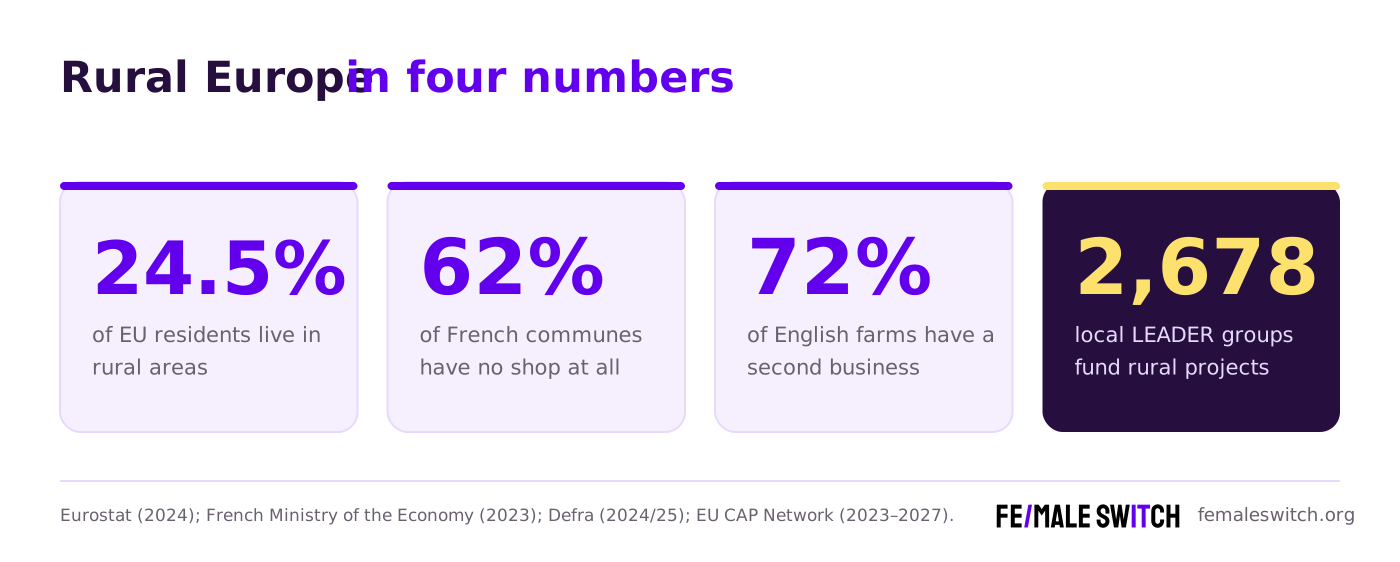
Businesses that fill gaps in rural life or sell the countryside to visitors: farm stays and agritourism, pop-up campsites, farm shops and veg boxes, community-owned village shops, mobile shops and services, rural co-working hubs, outdoor guiding, barn venues, rural care, and online businesses run from a village. A quarter of EU residents live in rural areas, 62% of French communes have no shop at all, and 2,678 local LEADER groups fund small rural projects. Below are 10 ideas, each with the evidence, the rules and a low-cost way to start.
👉 Plan your rural business in the Fe/male Switch startup game
Most lists of small business ideas assume you live in a city. But a quarter of Europeans don't, and rural areas have their own opportunities: fewer competitors, loyal local customers, lower costs and visitors looking for exactly what the countryside offers. They also have their own gaps, from closed shops to missing services.
This guide covers small business ideas for villages and the countryside. For 25 local businesses with the money math, and which ones work in a village, a small town or a city, see our sister guide to small business ideas. For small businesses with a clear path to grow into companies, see our scalable small business ideas on mean.ceo.
In a village, a small business is rarely just a business. It's the shop, the meeting place or the service people would otherwise drive an hour for.
Why rural Europe needs small businesses
In 2024, 24.5% of EU residents lived in rural areas, according to Eurostat. Many predominantly rural regions are losing population, especially people of working age, and services follow them out: shops, banks, cafés and care. That creates gaps a local founder can fill, often with less competition and more community support than in a city.
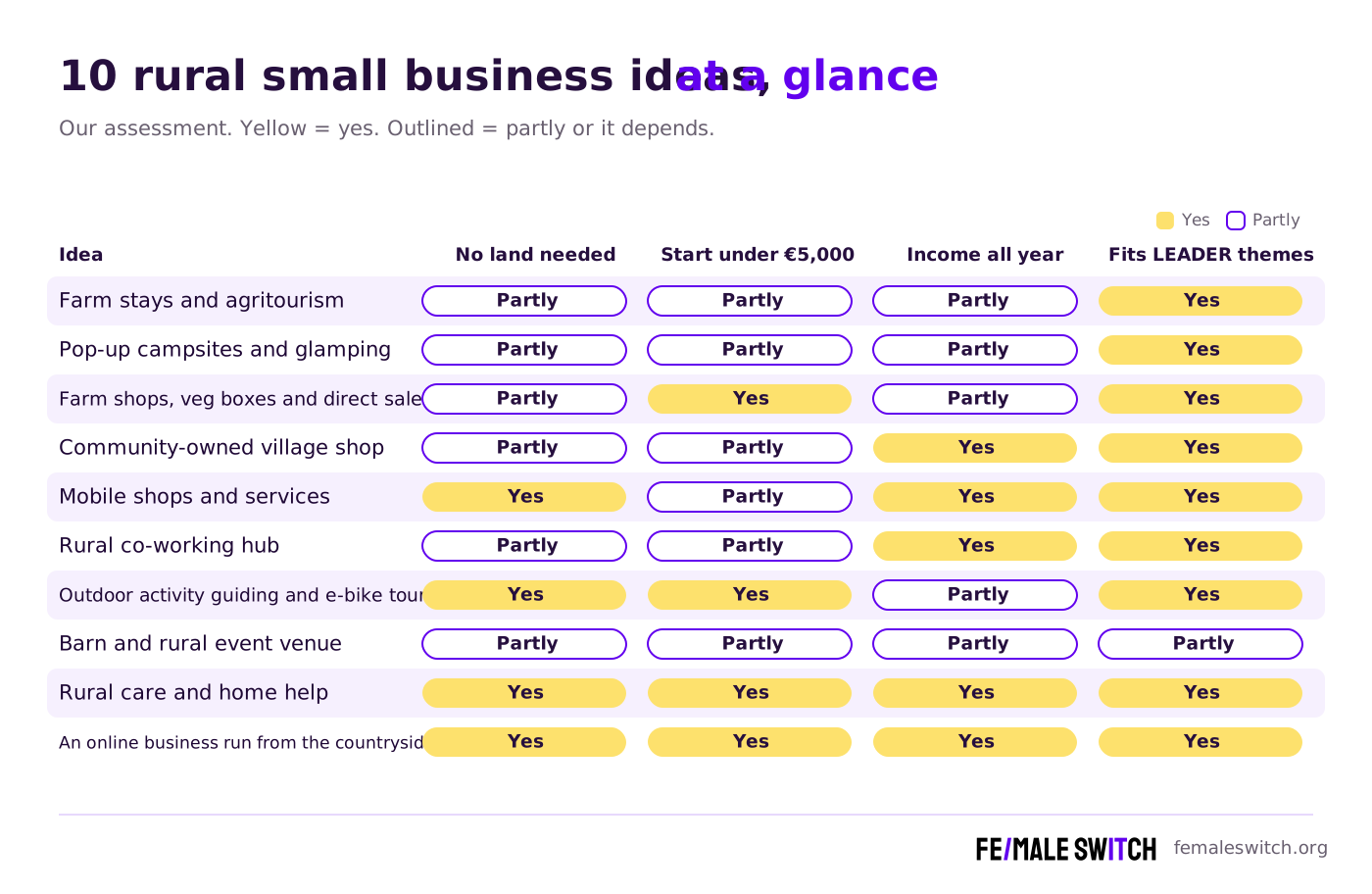
10 small business ideas for rural areas
1. Farm stays and agritourism
Guests pay to sleep, eat and help out on working farms, from family holidays to cooking and harvest weekends. If you live on or near a farm, it turns land, buildings and know-how into a second income.
- Proof: Italy had 26,360 agriturismi in 2024, hosting 4.7 million guests, more than half from abroad, according to ISTAT. In England, 72% of farm businesses had some diversified activity in 2024/25, according to Defra.
- Rules: Many countries reserve the agritourism label for working farms and set limits on rooms and meals; check tourist accommodation registration, food hygiene and fire safety.
- Bootstrapper version: Start with one or two rooms or a single self-catering unit, plus paid farm experiences such as a cheese-making morning.
- First step: List what guests could do on your farm in a weekend and test one paid experience.
Source: ISTAT agritourism data.
2. Pop-up campsites and glamping
Campers want quiet fields, simple facilities and nature. A seasonal pop-up campsite or a few glamping tents can earn well in summer with modest investment.
- Proof: EU campsites recorded about 396 million nights in 2024, 13% of all tourist nights in a record year, according to Eurostat.
- Rules in England: Since July 2023, landowners can run a temporary campsite for up to 60 days a year with up to 50 pitches without planning permission, if they provide toilets and waste facilities and notify the council first.
- Bootstrapper version: Start with a 60-day pop-up campsite to test demand before investing in permanent glamping units.
- First step: Check whether your land qualifies, then list a summer pop-up on one camping platform.
3. Farm shops, veg boxes and direct sales
Selling food straight to customers, through a farm shop, honesty stall, veg-box scheme or market, keeps more of the price than selling to wholesalers.
- Proof: According to the most recent EU-wide estimate, about 15% of EU farms sell more than half of their production directly to consumers, mostly small farms.
- Rules: Food businesses must register with the competent authority, and labels must show allergens; some products need extra approvals.
- Bootstrapper version: A weekly veg-box or egg-and-bread subscription for 20 local households, delivered on one route.
- First step: Ask 30 neighbours what they'd buy weekly and at what price, then run a four-week pilot.
4. Community-owned village shop
When a village loses its last shop, residents can buy shares and run one together, often with a café, post office counter and local produce.
- Proof: In the UK, 459 community-owned shops were trading in 2024, and community businesses have a 94% long-term survival rate, according to the Plunkett Foundation. Plunkett estimates that 300 village shops closed in 2024 alone.
- Where the gap is: In France, more than 21,000 communes, about 62%, have no shop at all, up from 25% in 1980, according to the Ministry of the Economy.
- Bootstrapper version: Start as a weekly pop-up shop in the village hall, then raise community shares for a permanent shop.
- First step: Hold a village meeting and survey what residents would buy locally.
5. Mobile shops and services
Bring the shop, the hairdresser or the repair service to villages instead of waiting for customers to drive to town. A van with a weekly route can serve dozens of villages.
- Proof: Where shops have closed, governments are paying to bring commerce back; France launched a national programme in 2023 to restore shops in rural communes.
- Rules: Street trading licences or market permits vary by town, and food vans need food registration.
- Bootstrapper version: One weekly route with set stops and pre-orders by phone or messaging.
- First step: Map ten villages without a shop within 30 minutes of you and ask the mayors where you could stop.
Source: the French rural commerce programme.
6. Rural co-working hub
Remote workers who move to the countryside still want a desk, fast internet and company. A small co-working hub in a former school, bank or shop can fill that need.
- Proof: Ireland's Connected Hubs network reached 400 remote-working hubs in November 2025, meeting its national rural target, according to the Western Development Commission.
- Broadband: Gigabit-capable networks reached about 62% of rural EU households in mid-2024, so check your connection first.
- Bootstrapper version: Rent a room in the village hall on two days a week and sell day passes and memberships.
- First step: Find ten local remote workers through community groups and ask what they'd pay for a desk.
Source: Western Development Commission.
7. Outdoor activity guiding and e-bike tours
Walking, cycling, foraging and nature guiding turn local knowledge into a business, and e-bikes open hilly countryside to many more visitors.
- Proof: EU tourist accommodation recorded about three billion nights in 2024, a record, according to Eurostat.
- Rules: Qualifications for mountain and water activities are regulated in many countries; check guiding rules, insurance and land-access rights.
- Bootstrapper version: Run guided walks or foraging sessions with no equipment, then add e-bike tours with rented bikes.
- First step: Design one half-day route and sell it through the local tourist office and accommodation hosts.
Source: Eurostat tourism data.
8. Barn and rural event venue
Weddings, retreats, workshops and company away-days look for character venues in the countryside. A barn, orchard or meadow can earn far more as an event space than as storage.
- Rules: Expect planning, licensing for alcohol and music, fire safety and toilet requirements; start with smaller events while you check them.
- Bootstrapper version: Host small workshops and retreats before full weddings.
- First step: Ask local planners what's allowed, then host one paid workshop day.
9. Rural care and home help
Older people in villages often have family far away and few services nearby. Companionship, help at home, shopping and lifts to appointments are in steady demand.
- Proof: Predominantly rural EU regions are losing population, especially working-age people, according to Eurostat, which leaves more older residents in need of help.
- Rules: Personal care such as washing and dressing is regulated in most countries; companionship and help at home usually aren't.
- Bootstrapper version: Weekly visits and errands for a monthly fee, coordinated with local doctors and pharmacies.
- First step: Offer a month of weekly visits to three families through the local pharmacy.
More ideas that suit an ageing population are in our business ideas for women over 50.
10. An online business run from the countryside
Many rural founders run online businesses: freelancing, bookkeeping, design, online courses or e-commerce. Lower living costs make it easier to start.
- Proof: Rural areas had the EU's highest employment rate for people aged 20–64 in 2025, 76.4%, according to Eurostat.
- Broadband: Check gigabit or fibre coverage at your address; LEADER funds often support digital projects in villages.
- Bootstrapper version: Pick a service from your past job and sell it online before you move or invest.
- First step: Win your first two remote clients while you still have your current income.
See also how remote work is changing startup formation and our small business ideas from home.
How EU LEADER funding helps rural small businesses
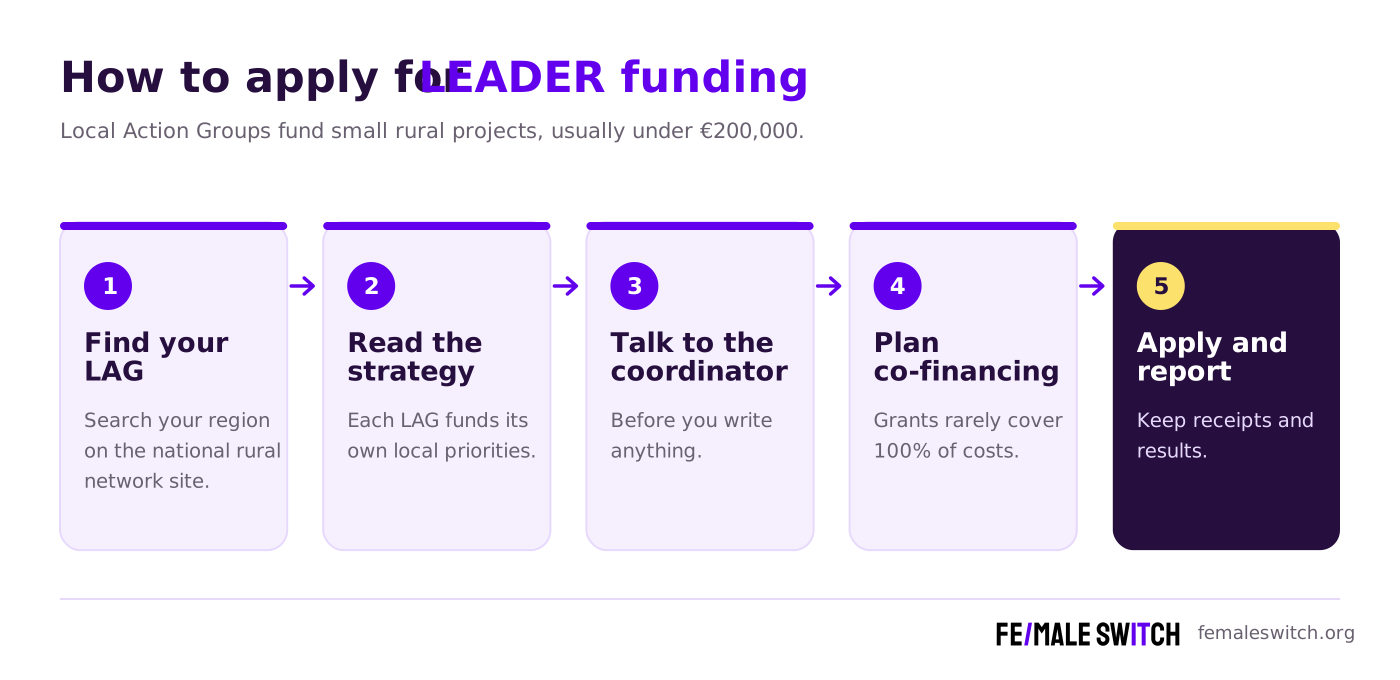
LEADER is the EU's bottom-up rural development programme. In the 2023–2027 period, member states planned 2,678 local development strategies, run by Local Action Groups that cover about 65% of the EU's rural population, with about €5 billion from the EU's rural development fund. More than 2,600 groups became operational in 2023 and fund mostly small projects, usually under €200,000, in areas such as diversification, local food, rural services, entrepreneurship and digital transition, according to the EU CAP Network.
Each group funds its own local priorities, so your first step is to find yours and read its strategy. For other grant options, see grants for female entrepreneurs in Europe, government support programmes for women entrepreneurs and the free finder at grant-grants.com.
How to start a small business in a village
- Ask the village what's missing. A survey at the shop, school gate or village hall beats any market report.
- Check the rules early. Planning, food registration, tourism registration and licences take longer in the countryside.
- Start with the light version: a pop-up shop, a weekly route, one room or a 60-day campsite.
- Build recurring income to get through the quiet season; see our low risk business ideas built on recurring revenue.
- Keep costs small with the budgets in our low cost business to start guide, and follow our 90-day plan to start a startup.
Build your business wherever you live
The Fe/male Switch startup game runs online, so you can go from idea to first customers in weekly quests from any village, with an AI co-founder and a community of founders across Europe.
👉 Start your rural business in the game
Conclusion: the countryside rewards founders who fill the gaps
Rural small businesses succeed by doing what the city doesn't need and the village can't get: bringing back the shop, hosting visitors, selling food directly, giving remote workers a desk, or looking after older neighbours. Start small, check the rules, talk to your Local Action Group, and let the community help you grow.
FAQ: small business ideas for rural areas
What is the best small business to start in a rural area?
One that fills a local gap or serves visitors: a farm shop or veg-box scheme, a community or mobile shop, a farm stay, a pop-up campsite, outdoor guiding, a co-working hub or rural care services.
What businesses are missing in villages?
Shops, cafés, banks, care and everyday services are often missing. In France, 62% of communes have no shop at all, and in the UK an estimated 300 village shops closed in 2024.
Can I run a campsite without planning permission in England?
Since July 2023, landowners in England can run a temporary campsite for up to 60 days a year with up to 50 pitches without planning permission, if they provide toilets and waste facilities and notify the council first. Some protected sites are excluded.
What is LEADER funding?
An EU rural development programme run by local groups. In 2023–2027, about 2,678 Local Action Groups fund mostly small projects, usually under €200,000, in areas such as diversification, local food, rural services and entrepreneurship.
How does a community shop work?
Residents buy shares and own the shop together, often run with volunteers and a manager. In the UK, 459 community-owned shops were trading in 2024, and community businesses have a 94% long-term survival rate according to the Plunkett Foundation.
Is agritourism profitable?
It can be, especially combined with farming. Italy had 26,360 agriturismi in 2024, hosting 4.7 million guests. Rules on who may run an agritourism business vary by country.
Can I run an online business from the countryside?
Yes, if your internet is good enough. Gigabit-capable networks reached about 62% of rural EU households in mid-2024, so check your address before you move or invest.
What small business can I start on a farm?
Farm stays, farm shops, veg boxes, pop-up campsites, event venues and farm experiences. In England, 72% of farm businesses had a second activity in 2024/25.
