
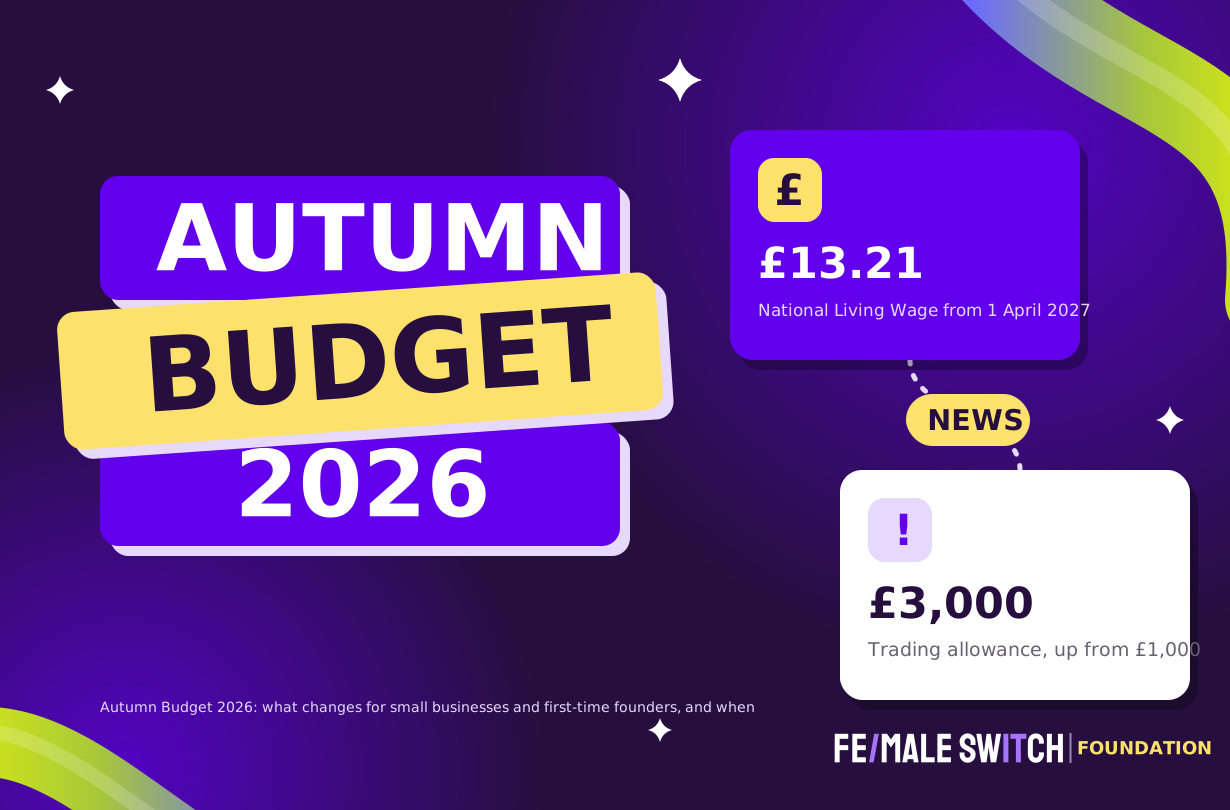
TL;DR: What does the Autumn Budget 2026 change for small businesses?
Chancellor John Healey delivered the Autumn Budget 2026 on Wednesday 28 October 2026. For small businesses and first-time founders, the big lines are: the National Living Wage rises to £13.21 an hour from 1 April 2027; the trading allowance for side income triples to £3,000; about 70,000 more shops, cafés, pubs and salons in England pay no business rates; a new Founders' Relief taxes qualifying exits at 10%, while Business Asset Disposal Relief is cut to a £500,000 lifetime limit; and from 2029 VAT invoices go electronic. Most changes start in April 2027, so you have five months to plan.
Searches for the Autumn Budget 2026 jumped by up to 1,000% across the UK on Wednesday, with tens of thousands of people asking Google what time the Budget started. The speech is over and the documents are out. I read the Budget 2026 document and HMRC's tax overview line by line, so you don't have to.
As a bootstrapping founder, I care about three things in any Budget: what it does to my costs, what it does to my side projects, and what it does to the day I sell. This one moves all three. Here is the full list for small businesses, with dates and the maths.
What did the Autumn Budget 2026 announce for small businesses?
Everything below is announced in the Budget. Most tax items still need the Finance Bill 2026-27 to pass, and the Founders' Relief design is out for consultation until 30 November 2026.
Source: HM Treasury, Budget 2026 document, and HMRC, Overview of tax legislation and rates, both 28 October 2026.
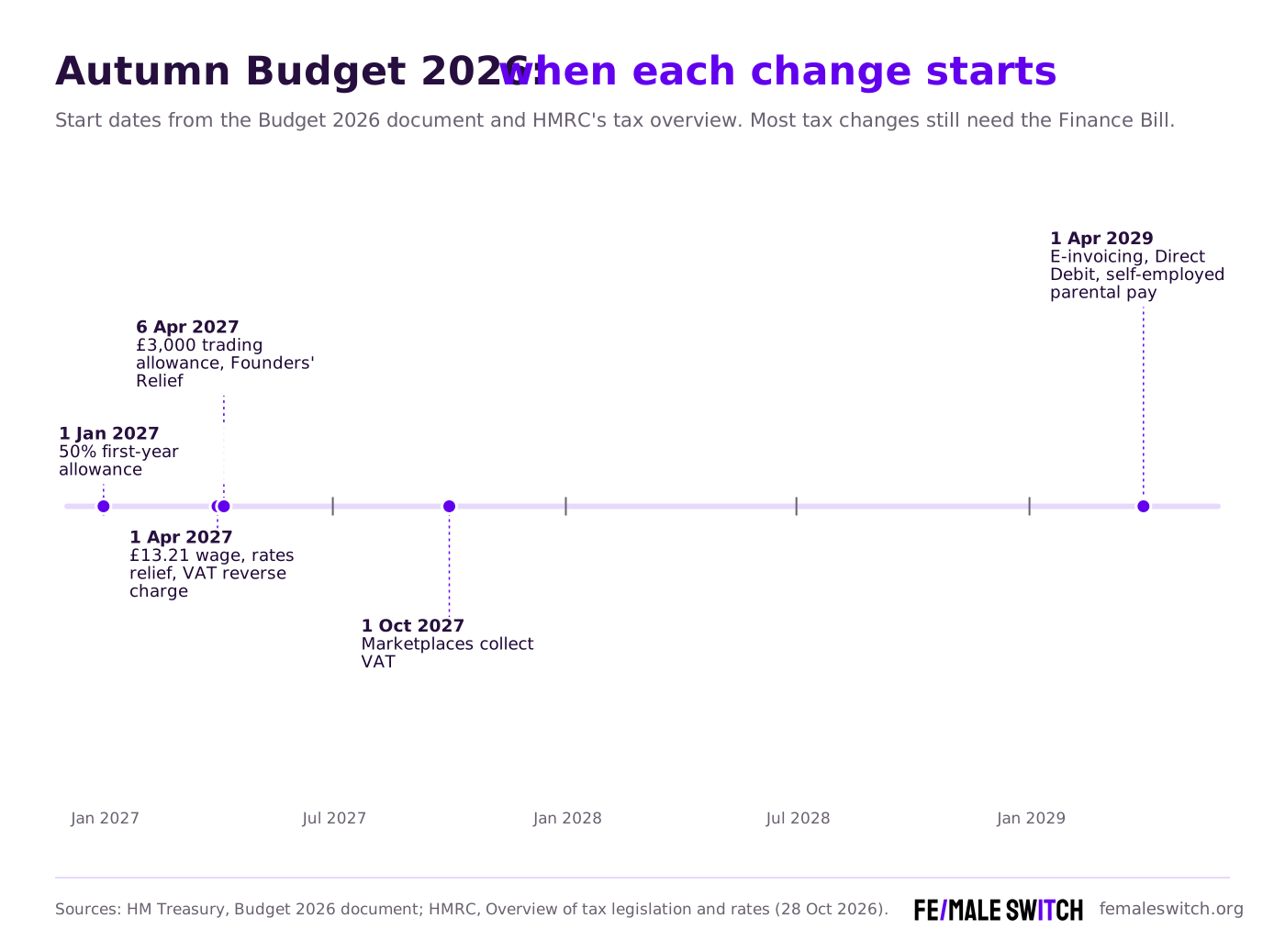
A few things did not move, and that matters for planning too: the VAT registration threshold stays at £90,000, corporation tax stays at 19% for profits up to £50,000 and 25% above £250,000, dividend tax rates and the £500 dividend allowance stay put, and the employer National Insurance rate stays at 15% with the Employment Allowance at £10,500, according to HMRC's rates annex.
How much will the £13.21 National Living Wage cost an employer?
The Chancellor accepted the Low Pay Commission's advice in full. On 1 April 2027 the National Living Wage goes from £12.71 to £13.21 an hour, which the Treasury says adds £910 a year to a full-time worker's pay. Our earlier piece on the UK minimum wage increase for 2027 used the reported £13.20, so the confirmed figure is a penny higher.
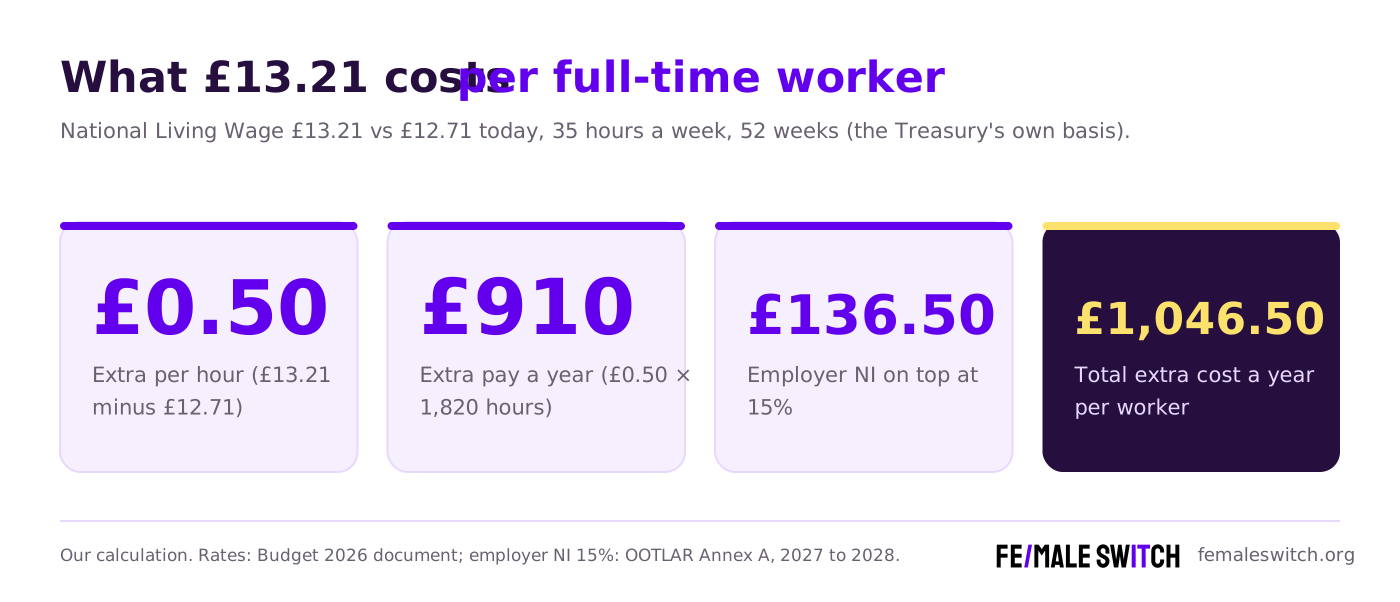
Let's break it down on the Treasury's own basis of 35 hours a week for 52 weeks, which is 1,820 paid hours:
- Extra per hour: £13.21 minus £12.71 is £0.50.
- Extra pay per year: £0.50 × 1,820 hours is £910.
- Employer National Insurance: 15% of £910 adds £136.50, since this worker already earns above the £5,000 threshold.
- Total: about £1,046.50 a year per full-time adult worker.
Three people on that wage cost you about £3,140 more a year. The Employment Allowance cuts the National Insurance part for many micro employers, so check whether you qualify. If you're about to hire your first employee, plan around £13.21, and put the new figure into your cash flow plan today.
Who gets the new business rates relief?
From 1 April 2027, retail, hospitality and leisure properties in England with a rateable value up to £18,000 get 100% Small Business Rates Relief, up from £12,000. Tapered relief now runs up to £21,000, up from £15,000. The Treasury expects about 70,000 more businesses to pay nothing, including 3,500 pubs, 3,900 restaurants, 2,200 cafés and 1,700 hairdressers and beauty salons, and says half of all such properties will pay no business rates at all.
- All retail, hospitality and leisure bills get a two-year real-terms freeze.
- Pubs and most live music venues keep the extra 20% cut announced in July.
- Vape shops lose Small Business Rates Relief and the lower multipliers from April 2027.
- Scotland, Wales and Northern Ireland set their own rates, so these numbers apply to England.
Your rateable value sits on your rates bill. If it falls between £12,000 and £21,000 and you run a shop, café or salon, this is the single biggest saving in the Budget for you.
What changes for side hustles and new founders?
The trading allowance triples from £1,000 to £3,000 from 6 April 2027. If your trading and miscellaneous income stays within £3,000 before expenses, you no longer declare it or pay tax on it, and the Self Assessment reporting threshold moves to £3,000 too. That covers a lot of first steps: a market stall, a few freelance gigs, the first sales of a product you're testing. If you're still choosing what to start, our itemised first-year budgets for low-cost businesses show how far £3,000 goes, and our trading allowance guide for side hustles has worked examples and a checklist for April 2027.
Two smaller lines matter for the self-employed. Tax-free mileage stays at 55p a mile for the first 10,000 business miles and rises from 25p to 35p above that. From April 2029, self-employed fathers, partners and adopters in Great Britain get access to parental pay for the first time, which the Treasury says covers more than 150,000 parents a year.
The government will also pilot a Young Entrepreneurs Allowance that pays towards living costs in the first year of a business, and it is launching Scale UK as one front door to existing support. Neither has published eligibility rules yet. The money side of the Budget, including a £450 million venture debt product, is in our British Business Bank Budget report on grant-grants.com.
What does the Budget do for women founders?
The Budget notes that women hold just 21% of jobs in the digital workforce. It promises a new scale-up programme for women founders across the UK, testing peer learning, investor networks and help with finance and governance. The Women in Tech Taskforce is publishing two voluntary standards, Tech Forward and Inclusive Investment, and the British Business Bank says it has a pipeline of more than £100 million for women-led funds, including first-time fund managers.
Voluntary standards don't move money on their own. The funding gap is real: women-founded startups' share of European VC fell to 11%, as our analysis of women-founded startups and VC shows. While the programme details land, the accelerators and incubators for women-led startups list is the faster place to start.
What is Founders' Relief, and who loses from the BADR cut?
Founders' Relief is a new Capital Gains Tax relief: a 10% rate on up to £10 million of lifetime gains for founders and big early investors in high-growth companies, for sales on or after 6 April 2027. The bar is high. According to the Founders' Relief consultation, you need to have held at least 25% of the shares when trading started, kept them for five years and been UK resident for five years, and the company needs at least £10 million turnover and 15 full-time staff, plus two of three growth tests. MeanCEO's Founders' Relief guide works through every proposed test with an £8 million example.
For most small business owners the bigger news runs the other way. Business Asset Disposal Relief, the 18% rate on selling a business, drops to a £500,000 lifetime limit from 6 April 2027, down from £1 million. On a £1 million gain, that moves £500,000 from 18% to the 24% higher rate, which is £30,000 more tax for a higher-rate taxpayer (our calculation). If a sale is already in motion, talk to an adviser now about timing.
What changes for VAT, invoices and tax payments?
- Software and services from abroad: from 1 April 2027, overseas suppliers must charge UK VAT to UK businesses that aren't VAT-registered. If you pay foreign apps and tools without being registered, prices go up by the VAT.
- Online marketplaces: from 1 October 2027, platforms collect VAT on sales by UK VAT-registered sellers and other UK sellers above £90,000 a year per platform. Personal and second-hand sales stay out. Our Fe/male Switch guide to online marketplace VAT explains who is in scope and why many sellers will wait for VAT refunds.
- E-invoicing: VAT invoices must be issued in a set electronic format from 1 April 2029, with full details promised by April 2028. Our MeanCEO guide to UK e-invoicing from April 2029 explains Peppol, who is covered and what to do now.
- Direct Debit: from April 2029 you'll need a Direct Debit set up for VAT and PAYE return payments, with some exceptions.
- Self Assessment: people who make payments on account will pay more regularly during the year from April 2029, through automated payments.
- Making Tax Digital for Income Tax: no late-submission penalty points for quarterly updates in 2027-28 for those joining in April 2027. Every sole-trader change from 2027 to 2029, with worked examples, is in our MeanCEO list of self-employed tax changes.
Savings and property income tax also rises by two points from 6 April 2027, to 24%, 44% and 49%. If you rent out a room or a flat on the side, update your numbers. Earned income and dividend rates don't change.
What this means for you: next steps
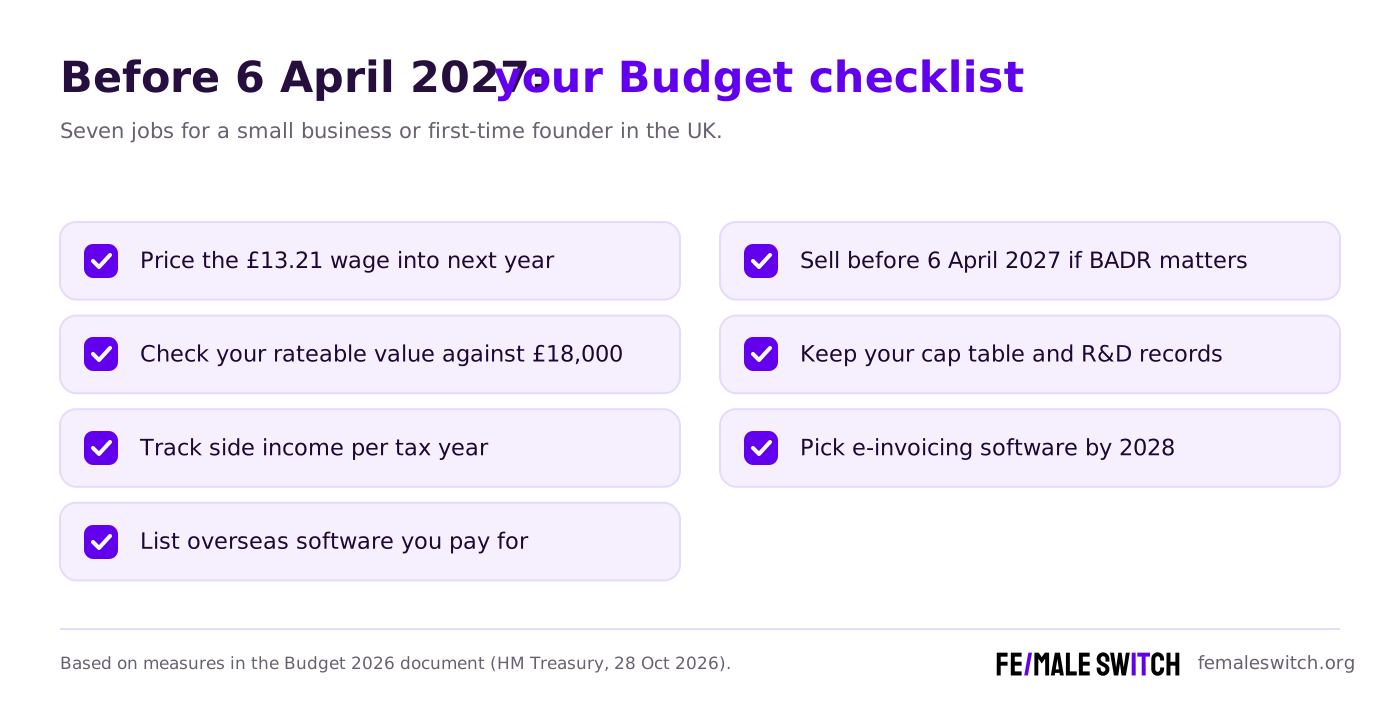
- Rebuild next year's wage budget at £13.21. Then review your prices: our guide on pricing services versus products shows where a 3.9% cost rise lands.
- Look up your rateable value. Between £12,000 and £21,000 in retail, hospitality or leisure in England means a lower bill from April 2027.
- Track side income by tax year. The £3,000 allowance starts on 6 April 2027, so income before that date still counts against £1,000.
- List every overseas tool you pay for. If you aren't VAT-registered, expect 20% added from April 2027 and budget for it.
- Plan any sale early. BADR keeps its £1 million limit only for disposals before 6 April 2027.
- Keep founder records from day one. Your cap table at the start of trading, yearly turnover and headcount decide whether Founders' Relief applies one day.
- Choose bookkeeping software that will handle e-invoicing. 2029 sounds far away, and switching systems mid-year hurts.
Running a business across borders? Our Budget 2027 guide for freelancers in six EU countries covers the changes on the other side of the Channel.
More on this story: Founders' Relief: a 10% CGT rate on up to £10 million from April 2027, the proposed tests and the BADR cut (MeanCEO); British Business Bank gets £5bn in the Autumn Budget 2026: £450m venture debt, £1.4bn equity and £6.5bn of guaranteed SME loans (grant-grants.com); Trading allowance triples to £3,000 from 6 April 2027: what Budget 2026 means for your side hustle (Fe/male Switch); UK e-invoicing from April 2029: what the Budget 2026 plan means for SaaS founders, plus the two VAT changes that land in 2027 (MeanCEO); Online marketplace VAT: from October 2027 Amazon and eBay collect VAT for UK sellers (Fe/male Switch); Self-employed tax changes in Budget 2026: the full list for sole traders and freelance founders (MeanCEO).
More on this story: Founders' Relief: a 10% CGT rate on up to £10 million from April 2027, the proposed tests and the BADR cut (MeanCEO); British Business Bank gets £5bn in the Autumn Budget 2026: £450m venture debt, £1.4bn equity and £6.5bn of guaranteed SME loans (grant-grants.com); Trading allowance triples to £3,000 from 6 April 2027: what Budget 2026 means for your side hustle (Fe/male Switch); UK e-invoicing from April 2029: what the Budget 2026 plan means for SaaS founders, plus the two VAT changes that land in 2027 (MeanCEO); Online marketplace VAT: from October 2027 Amazon and eBay collect VAT for UK sellers (Fe/male Switch); Self-employed tax changes in Budget 2026: the full list for sole traders and freelance founders (MeanCEO).
Building your first startup on a budget?
The Fe/male Switch startup game takes you from idea to first paying customers in weekly quests, with an AI co-founder and a community of founders. Test your prices, costs and side-income plans in the game before the April changes hit.
👉 Start the game
FAQ: Autumn Budget 2026
When was the Autumn Budget 2026?
Chancellor John Healey delivered it on Wednesday 28 October 2026, and the Treasury published the Budget documents the same afternoon.
What is the National Living Wage from April 2027?
£13.21 an hour for workers aged 21 and over from 1 April 2027, up 3.9% from £12.71. The 18 to 20 rate is £11.27 and the 16 to 17 and apprentice rate is £8.31.
Did the Budget raise employer National Insurance?
No. HMRC's rates annex keeps the employer rate at 15% above £5,000 a year and the Employment Allowance at £10,500 for 2027 to 2028.
What is the new trading allowance?
From 6 April 2027 you can earn up to £3,000 of trading and miscellaneous income a year, before expenses, without declaring it or paying tax on it. The current limit is £1,000.
Which businesses pay no business rates from April 2027?
Retail, hospitality and leisure properties in England with a rateable value up to £18,000 get 100% Small Business Rates Relief, with tapered relief up to £21,000.
What is Founders' Relief?
A new 10% Capital Gains Tax rate on up to £10 million of lifetime gains for qualifying founders of high-growth companies, for sales from 6 April 2027. The conditions are out for consultation until 30 November 2026.
Is Business Asset Disposal Relief changing?
Yes. Its lifetime limit falls from £1 million to £500,000 for disposals from 6 April 2027. The rate stays at 18%.
Did the VAT threshold change?
No. VAT registration stays at £90,000 and deregistration at £88,000 from April 2027.
